Scuba diving puts a lot of physical stress on people, which can lead to exhaustion or trouble breathing. However, checking on a diver’s health underwater is difficult to do. Traditional medical sensors don’t work because thick wetsuits and drysuits block the sensors from touching the skin, and wireless signals struggle to travel through water.
Researchers at the University of Minnesota Twin Cities created an AI system for underwater companion robots. Instead of using wearable sensors, the robot watches the bubbles a diver breathes out.
Watching the Bubbles
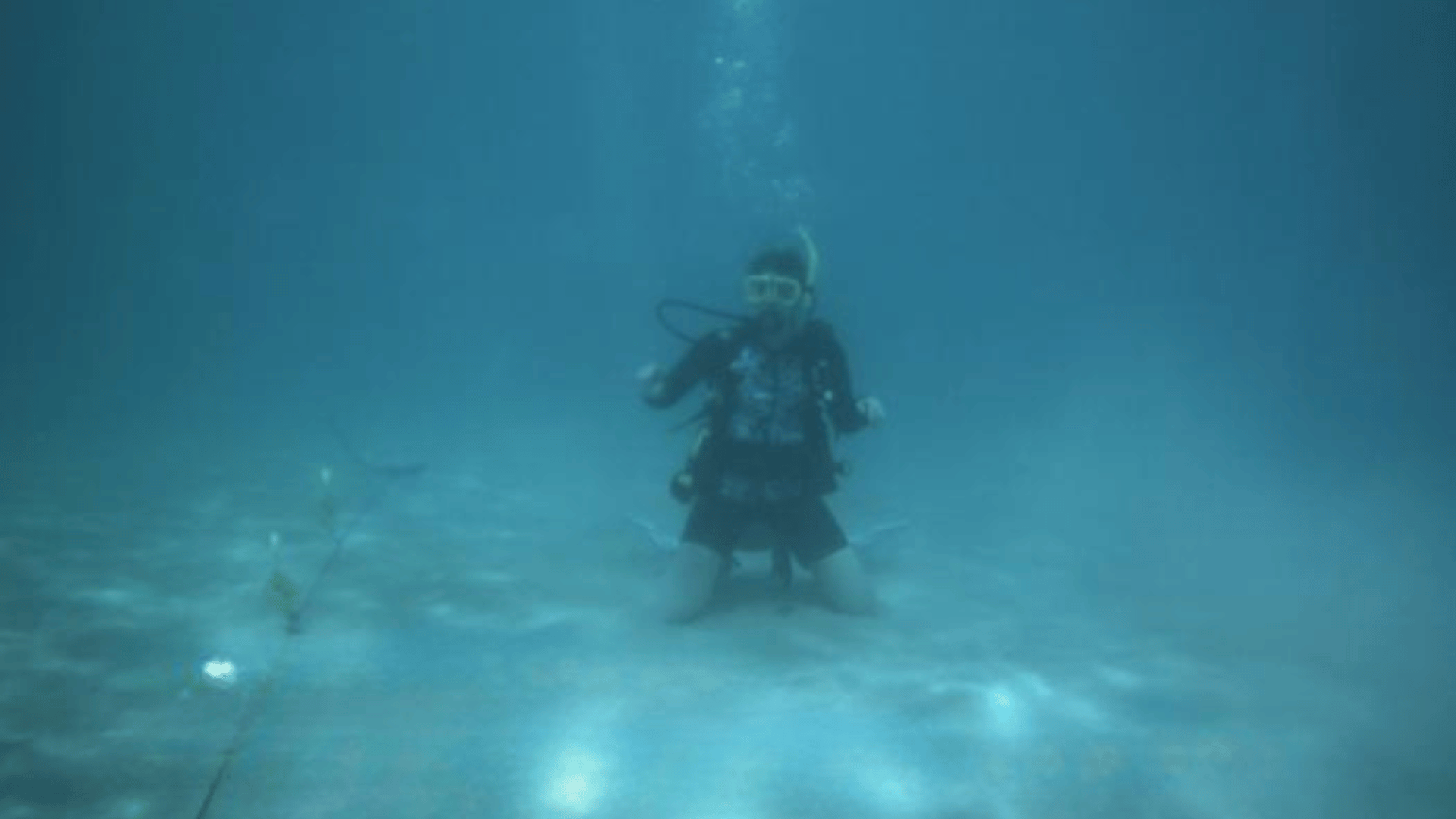
The robot tracks how often and how much air a diver exhales from their regulator. By watching these bubbles, the robot’s camera can spot signs of stress, hyperventilation, or exhaustion right as it happens. This is the first time robotic vision has been used to estimate a person’s breathing rate.
“Our goal was to give divers a dedicated robotic safety partner to provide a second set of ‘eyes’ capable of reading physiological stress underwater,” said Junaed Sattar, Associate Professor in the Department of Computer Science and Engineering and senior author on the paper. “This work is a first step towards assessing not just one but a group of divers in the robot’s field of view.”
Advertisement
Teaching the AI Robots
“While monitoring breathing is a standard vital sign on land, doing so underwater presents immense technical challenges,” said Demetrious Kutzke, a Ph.D. student in the Robotics & Vision Laboratory at the University of Minnesota and the study’s lead author.
To make it work, the team trained their AI using a method they called “fuzzy labeling.” The researchers sorted through thousands of images while listening to the audio of regulator sounds, which help teach the robot exactly what a breath looks like.
They tested the robot in Lake Superior and Square Lake in Minnesota, as well as the Caribbean Sea near Barbados. This made sure the AI could handle different water temperatures and clarity levels.
The robot uses a communication system called HREyes to check status. It sorts breathing into three groups: below-normal (under 14 breaths a minute), normal (14 to 20), and above-normal (over 20). This helps the robot know if a diver is struggling.
Looking ahead, the team wants to mix this breathing data with tracking how the diver moves to create a complete wellness profile to keep people safe in deep water.
 Read Exclusive Stories
 Bookmark & Save Articles For Later