Current AI systems are getting smarter every day, but they require an abundance of energy to train and run. Your brain, on the other hand, is highly efficient and runs on just about 20 watts.
Researchers at Graz University of Technology teamed up with international partners to try a different path. They built a new AI model that copies how the human brain solves problems. This new model’s most promising feature is how it uses a lot less power than the big AI networks we usually hear about.
“The brain works in a completely different way to today’s AI systems,” said Wolfgang Maass from the Institute of Machine Learning and Neural Computation at Graz University of Technology. “We are trying to translate the way it works into algorithms and apply them to AI systems.”
AI that Thinks Like a Human
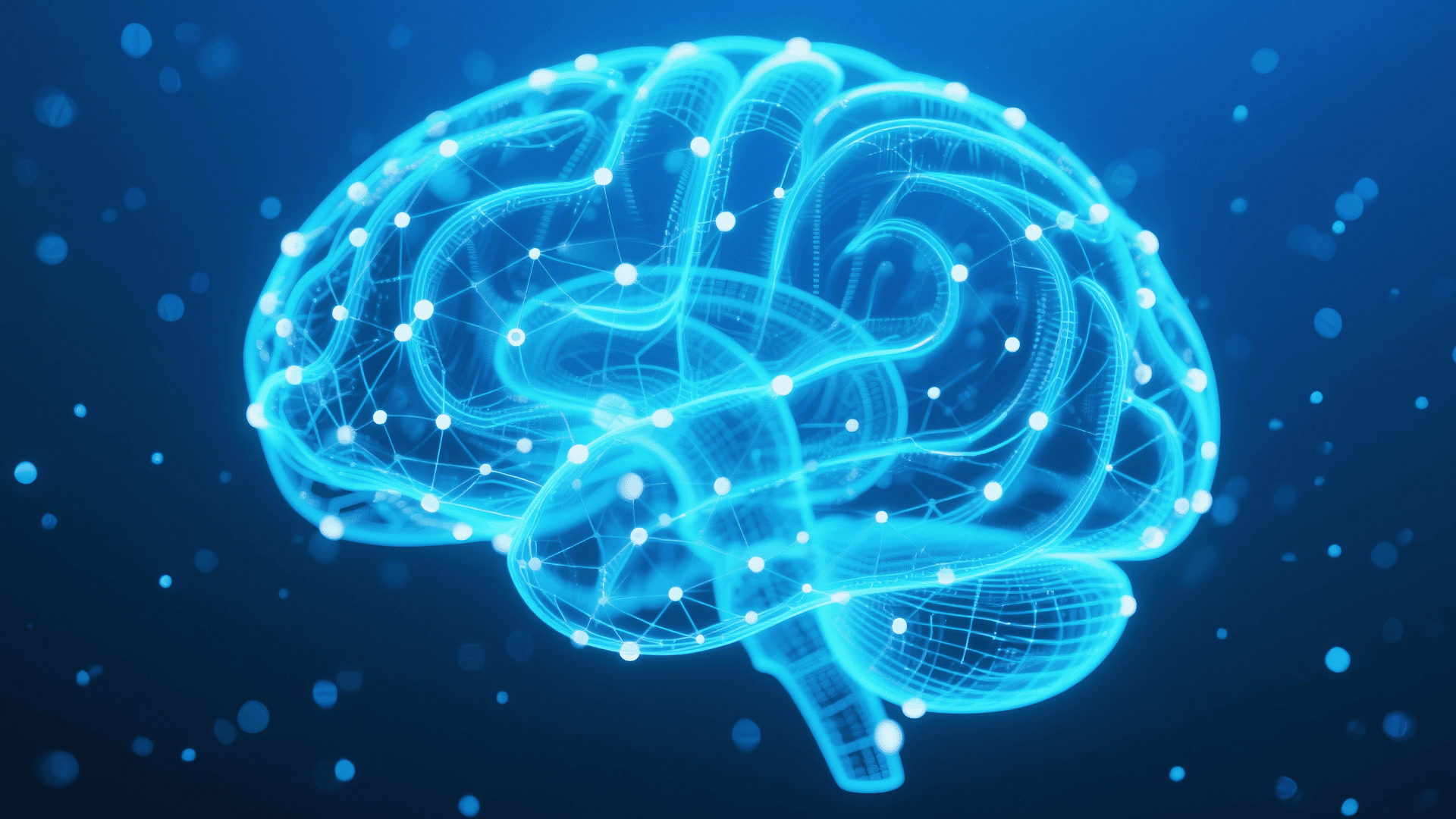
Maass and his colleague Yukun Yang looked at the hippocampus, the part of the brain responsible for memory, learning, and spatial navigation, and found three things we do to solve problems. First, we make mental maps to give us a sense of direction. Second, we guess and imagine different scenarios. Third, we break big plans down into smaller, reusable pieces.
Advertisement
They turned these natural habits into math. Instead of calculating every single possibility until the very end, this AI just guesses a middle step. If that step looks like it’s heading the right way on its mental map, it takes it. Then it evaluates its options and guesses again.
“With this approach, our AI model can also react flexibly to changed or new situations without needing to be retrained,” explained Yukun Yang.
They tested this by having the AI navigate flat spaces and complex abstract spaces. Additionally, they had it assemble and take apart a silhouette made of building blocks.
Knowing the Limits
“We are still at a relatively early stage of development,” said Maass. “But our work shows that powerful AI does not necessarily require huge data centres and enormous amounts of energy.”
Later on, this tech could run in places where plugging into a major power grid isn’t an option. For example, it could power robots, self-driving cars, or small local devices.
 Read Exclusive Stories
 Bookmark & Save Articles For Later