Birds like puffins and loons can fly in the sky and swim underwater. Using birds of this nature as inspiration, engineers from MIT and EPFL built a robot that does the exact same thing.
They created the “flapping-wing aerial-aquatic vehicle,” or FAAV. It weighs under half a pound and has a body, flexible wings, and a steerable tail.
Moving Between Water and Air
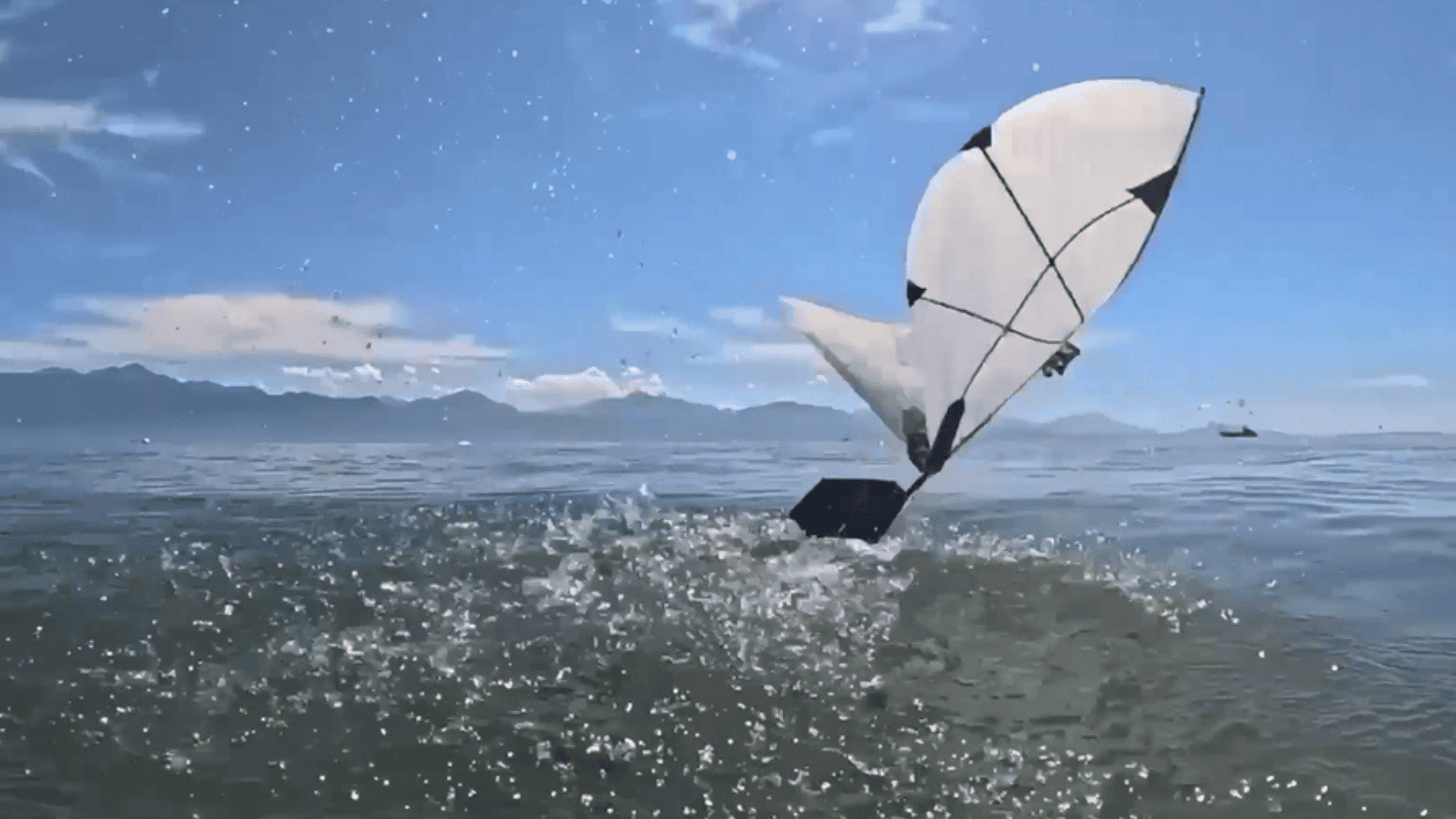
Water is 1,000 times denser than air, so moving through both requires completely different mechanics.
“You have to do some adaptation to make that transition work. But there’s a solution that exists in nature,” said Raphael Zufferey, assistant professor of mechanical engineering at MIT. “Birds like puffins can fly very fast through the air, and can dive and swim through water at speeds of 3 meters per second. They’re able to do pretty amazing things. So we knew it was possible. Just no one had tried this in a mobile robotic system.”
The team tested the robot in a tank and at Lake Geneva Switzerland and found that the robot swims at about 1 meter per second and flies at 6 meters per second. To pop out of the water, the robot just tilts at a steep 70-degree angle without needing to paddle with feet to get airborne.
Advertisement
“If you look at birds, most birds need to paddle at the surface to take off. And the question was, do we need the same for robots? And it turns out we don’t,” Zufferey said.
Helping Scientists Study the Ocean
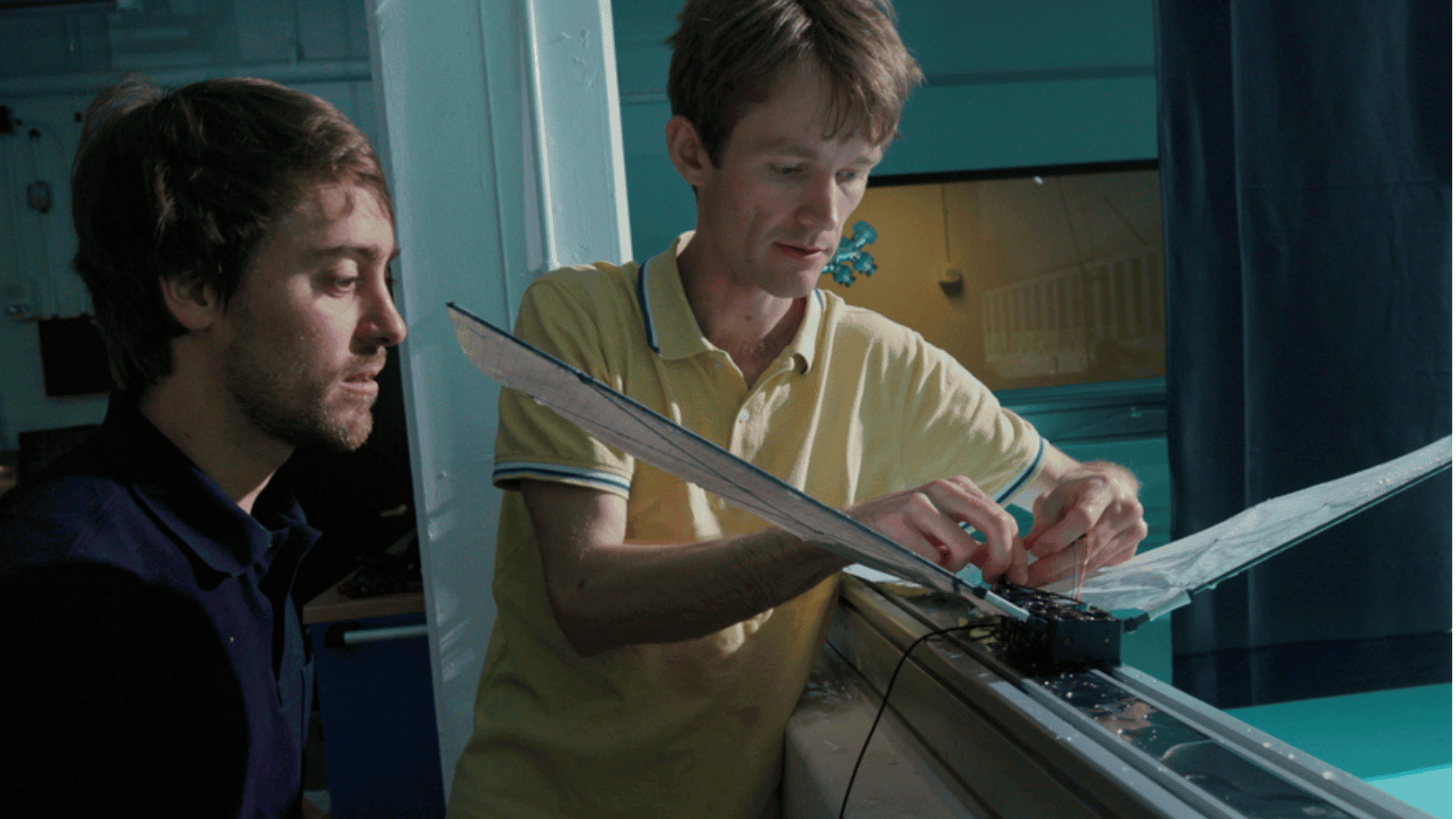
Ultimately, researchers believe this robot could help scientists study hard-to-reach ocean spots safely and on a budget.
“Our dream vision is for oceanographers, marine biologists, and members of coastal communities to launch this robot from a boat, or from shore, and it would fly close to the area of interest, such as an iceberg or a port facility, or over a pod of whales,” Zufferey said. “It would dive into the water to take a measurement or collect a sample, and fly back to deliver the data at a fraction of the cost of traditional methods. Then it could go back out to dive for more.”
 Read Exclusive Stories
 Bookmark & Save Articles For Later