Have you ever looked at the pictures of the Giant’s Causeway in Northern Ireland? It looks completely fake. The Giant’s Causeway is a massive stretch of coastline with around 40,000 stone pillars. Most of these pillars have the shape of a perfect hexagon.
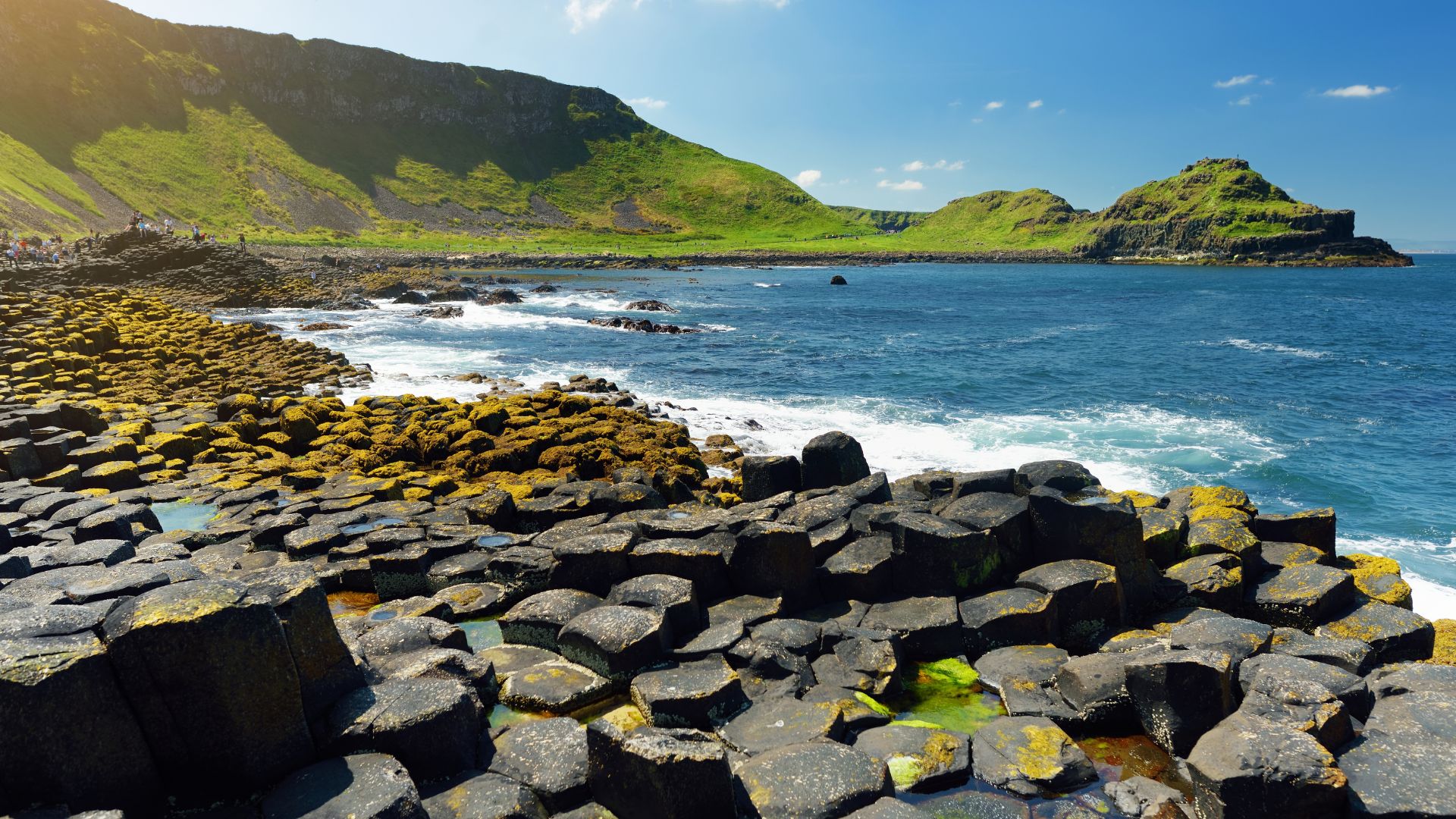
According to legend, a giant in Ireland created these pillars to walk across the sea and battle another giant from Scotland. The truth behind the legend, however, is that the Giant’s Causeway was formed by a volcano around 50 to 60 million years ago.
Geometry In Nature
Scientists believe the lava that erupted from the volcano was extremely hot as it emerged from the earth. However, as the lava cooled on the planet’s surface, it began to cool. As the lava cooled, it contracted.
As the lava contracted, it developed cracks in its surface. Scientists have determined that if lava contracts on the planet’s surface under the right conditions, the lava will crack in the shape of a perfect hexagon. This particular shape allows for the best release of the physical stress that forms in the lava as it cools.

In the Giant’s Causeway in Northern Ireland, scientists believe that the lava met the air and water in the area, contracted rapidly, and formed pillars that are almost 40 feet in height. The pillars appear to have been created by a different process altogether, as if they were carved by some giant machine.
Learning From The Rocks
Advertisement
While it may seem improbable that a topic discussing the impact of the future on our present day would discuss a site as ancient as the Giant’s Causeway, there is a valuable lesson to be learned from these rocks.
One such idea is known as biomimicry, which means that individuals in disciplines like science, architecture, and engineering often look to the natural world to solve problems in the modern world.

The structure of the Giant’s Causeway is one reason biomimicry is employed today. The Giant’s Causeway is an example of a structure that can withstand great amounts of weight and weathering over time. Today, engineers use similar structures in buildings, aerospace engineering, and even in the production of technology like the James Webb Space Telescope.
In the production of aerospace engineering products, for example, engineers use the structural strength of a honeycomb pattern to create components like airplane wings that are both lightweight yet structurally strong. Other examples include building materials for construction projects that save money and resources for the construction company, and other technological equipment constructed in the same way as the Giant’s Causeway.
Finally, this geological formation reminds scientists and engineers alike that sometimes the solution to a problem does not have to be invented. Often, nature has already figured out the solution to many of the world’s issues. Therefore, all that may need to be done is to discover these solutions and use them to create new technology for the future.
 Read Exclusive Stories
 Bookmark & Save Articles For Later