A German company recently announced a new way to build gas engine power plants using pre-made modules. It’s a move designed to support the German government’s latest power strategy, and the goal is to get these plants up and running much faster than traditional construction allows.
Instead of building a single, central plant, Rolls-Royce is using factory-tested modules that produce between 10 and 30 megawatts each. By chaining these together, they can create plants that generate anywhere from five to several hundred megawatts. Because the parts are pre-configured, a plant can be connected to the grid in as little as 12 to 18 months after someone hits the “order” button.
Keeping the Lights On
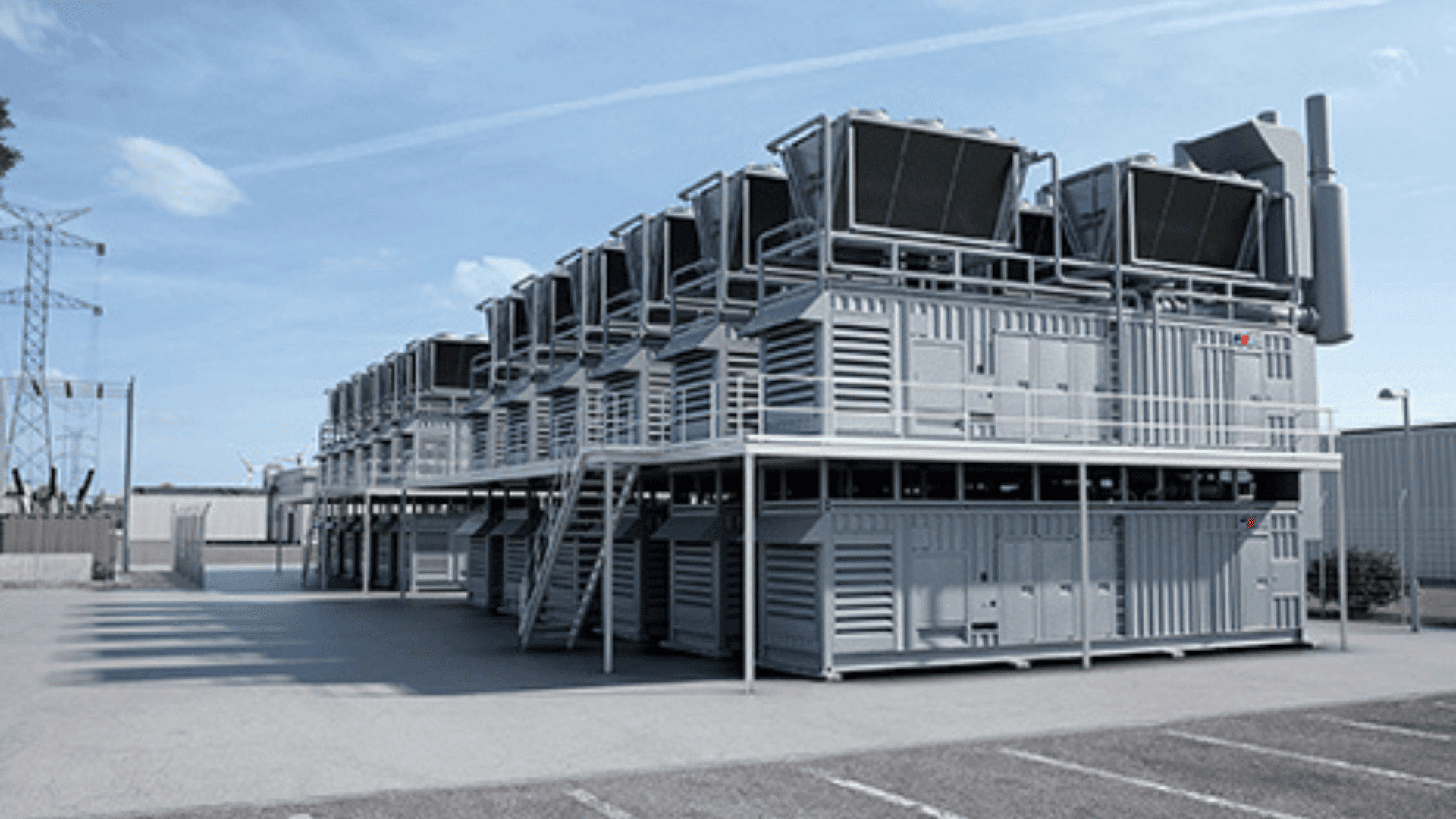
The biggest challenge with renewable energy, like wind and solar, is that it isn’t always there. When the wind stops blowing or the sun stays behind the clouds for a few days, the grid needs a backup. These modular plants are designed to step in during those gaps. Additionally, the plants can serve as a temporary bridge for sites like data centers that are waiting for a permanent grid connection.
Additionally, these engines are “H2-ready,” meaning they can eventually run on hydrogen. For now, they can run on biomethane or biogas to keep emissions lower.
Advertisement
Tobias Ostermaier, President of Stationary Power Solutions at Rolls-Royce Power Systems, says the modular approach is about speed.
“With our modular gas engine power plants, we are implementing the German Government’s Power Plant Strategy quickly and economically,” Ostermaier said. “Our partner network ensures speed and local value creation. Utilities and data centers around the world rely on our solutions – more than 17 gigawatts of installed capacity speak for themselves.”
Strength in Numbers
The company argues that spreading power generation across many smaller units is actually safer than relying on a few giants. If one small unit has an issue, the rest of the system keeps humming along.
“True resilience comes from decentralization, not centralization,” said Michael Stipa, Senior Vice President at Rolls-Royce Power Systems. “An energy system based on many distributed, modular generation units is less susceptible to large-scale disruptions and bottlenecks. Modular gas engine power plants offer exactly this structure.”
 Read Exclusive Stories
 Bookmark & Save Articles For Later