Before CGI or virtual reality, there was the pen of Eugène-Emmanuel Viollet-le-Duc.
Where he’s best remembered today as the architect who gave Notre-Dame de Paris its widely despised spire, a new exhibition argues that his true legacy lies not in buildings he restored, but those he conjured in a creative spree.
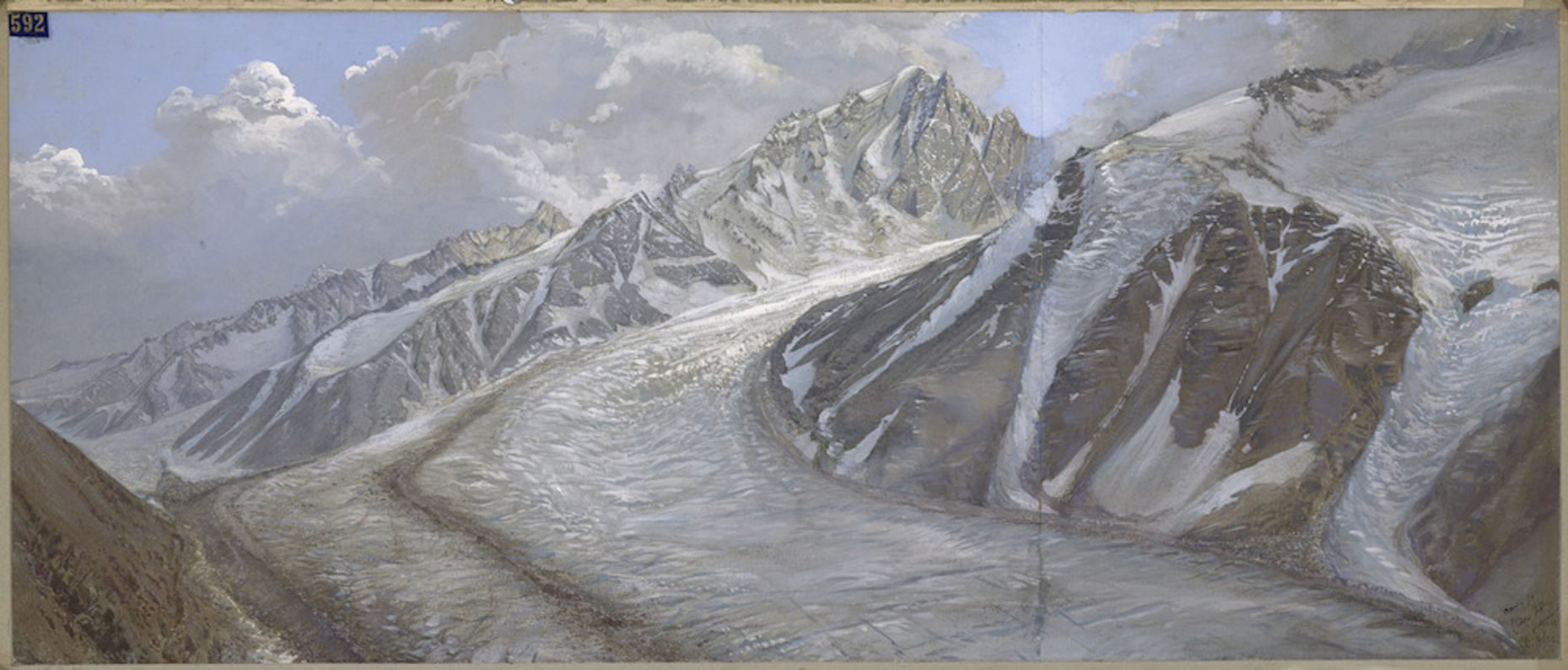
Viollet-le-Duc: Drawing Worlds, which opens today at Bard Graduate Center in New York, is the first comprehensive stateside presentation of the architect’s obsession with paper architecture. It investigates not just the buildings he imagined, but his painstakingly high-fidelity renderings of impossible worlds: fabricated cities, even a made-up geological history.
Advertisement
It gives a tantalizing taste of the 19th century’s “design fiction.” Eugène-Emmanuel didn’t just draw the Alps; he drew how the Alps should have been, according to Eugène-Emmanuel Viollet-le-Duc.
“Most people know Viollet-le-Duc as the restorer of Notre-Dame, but this exhibition reveals a far more expansive figure,” said co-curator Martin Bressani in comments released to reporters ahead of the show’s opening. “Rather than passively recording appearances, Viollet-le-Duc drew in order to make the world his own—rationalizing its forms, reconstructing its past, and projecting it into new futures.”
In this age of AI “fake” worlds, these hand-drawn realms, created with nothing but ink, geometry, and obsessive detail, show that the most powerful rendering engine of all is the human mind.
 Read Exclusive Stories
 Bookmark & Save Articles For Later