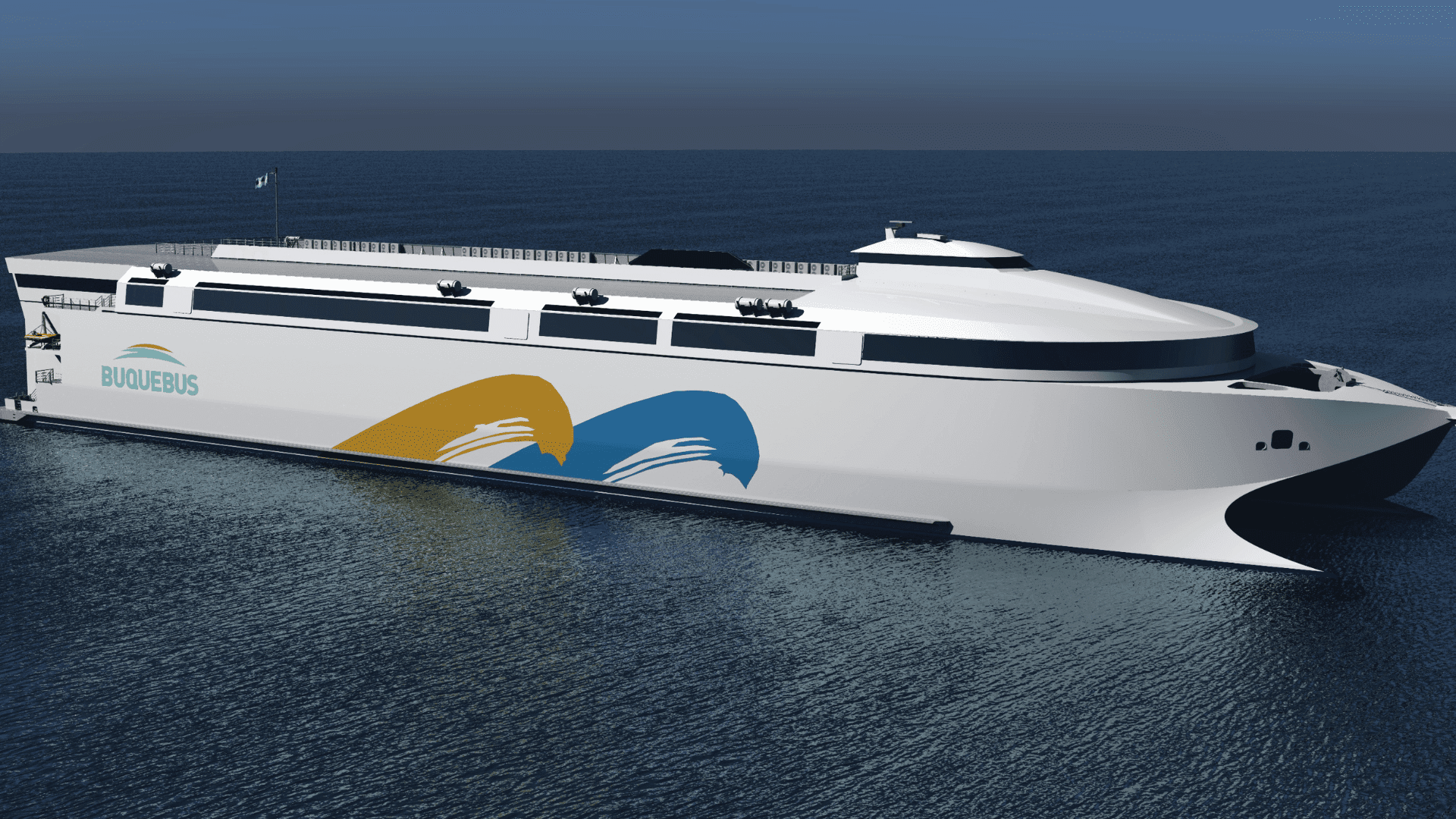
In a monumental moment in maritime history, Incat Tasmania completed the inaugural e-motor trial of the largest battery-electric ship to ever hit the water. The Hull 096 is the largest electric vehicle on the planet. Incat Tasmania calls this feat a “watershed moment” for the global maritime industry.
The vessel is 130 meters (approximately 426 feet) and is designed to carry 2,100 passengers and over 220 vehicles. Additionally, it features the largest battery-electric propulsion system ever installed on a ship. This groundbreaking trial involved company leaders powering up the waterjets and demonstrating the vessel’s propulsion capability.
Where It All Started
At the core of Incat’s work is the development of optimal, lightweight ship solutions for global ferry operators. The company is known for its advanced catamaran designs, which are lighter than equivalent steel ships. As a result, the catamarans have up to 40% less power consumption and lower emissions.
The company has a diverse product line that includes commuter ferries, large passenger and freight ships (Ro-Pax), military and coast guard craft, and work boats for the offshore industry. Additionally, the company’s shipyard has an emphasis on sustainability. According to Incat, 100% of its energy needs are met by renewables.
The World’s Largest Battery-Electric Ship
Advertisement
Ultimately, the scale of the ship’s electric power system is what sets it apart from the rest of the industry. Its Energy Storage System is powered by more than 250 tons of batteries, capable of delivering 40 megawatt-hours of installed capacity. According to Incat Tasmania, this achievement is four times larger than any previous maritime battery installation in the world.
Engineers say that the demonstration would not be possible without its capacity. They confirmed that the size, weight, and passenger-vehicle capacity can operate solely on battery power.
“This is the first time a ship of this size, anywhere in the world, has been trialled under 100 percent battery-electric propulsion,” said Incat Chairman Robert Clifford. It’s a remarkable achievement by our workforce and a turning point for shipbuilding.”
The successful trial expands on the potential benefits of all-electric marine systems. For example, it proves that pure battery power can propel vessels of this size. Additionally, it demonstrates the viability of zero-emission propulsion for major transport links and sails towards cleaner operations.
“We are proving that advanced manufacturing in Australia is not only alive but setting global benchmarks,” said Clifford. “This ship will stand as a flagship for what’s possible when industry, design, and clean-energy technology come together.”
Before its first departure in the coming months, the vessel will go through a series of further trials.