BMW officially commissioned its Cell Recycling Competence Center (CRCC) in Salching, Lower Bavaria. A significant milestone in battery production, the site focuses on a joint project to implement “direct recycling. Localizing this process allows BMW to close the loop on battery cell production materials through an efficient and mechanical approach.
BMW’s Circular Economy
BMW’s circular economy model focuses on enhancing efficiency in mobility. The strategy centers on maintaining a continuous cycle of materials to prevent value loss. It’s simple, the approach is built on four pillars: Re: Think, Re: Duce, Re: Use, and Re: Cycle. Under this framework, vehicles are designed and manufactured with their eventual end-of-life in mind, ensuring they can be recycled and serve as a source of raw materials.
Currently, the company returns specific production residues to suppliers for recovery and reintroduction into new manufacturing processes, integrating recycled materials into modern vehicle production.
The Benefits of Direct Recycling
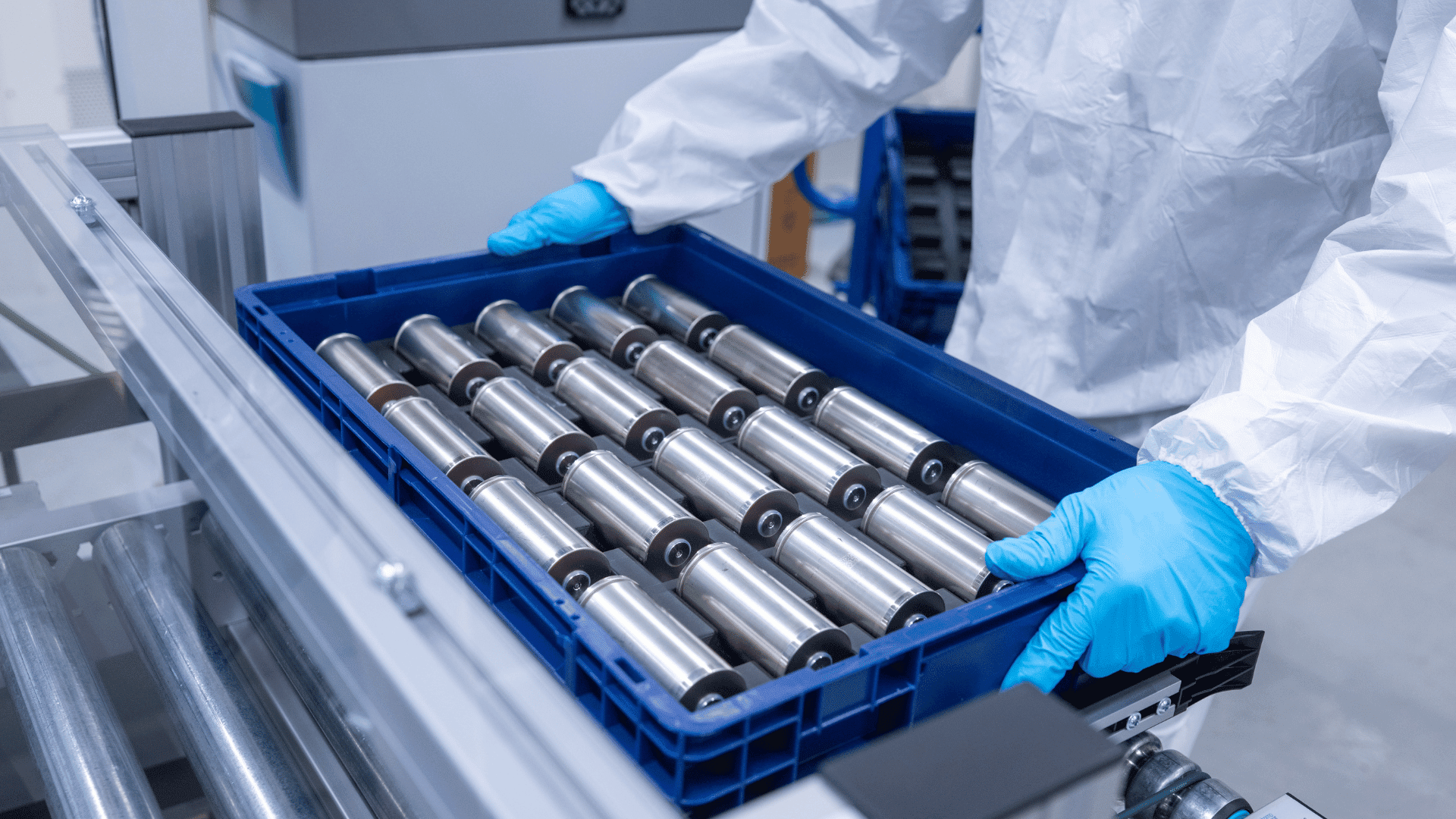
BMW researchers and experts explain that the direct recycling methodology offers several advantages over traditional methods. For example, unlike conventional recycling, direct recycling uses mechanical dismantling. This is a vastly different strategy from the energy-intensive processing that conventional recycling uses to return materials to their original state. As a result, battery production residuals, sometimes complete cells, are fed directly back into the production cycle.
“Our direct recycling process puts us at the forefront of the industry,” said Markus Fallböhmer, SVP of Battery Production at BMW AG. “This technology has tremendous potential to further optimize battery cell production.”
Bypassing high-heat treatments reduces energy consumption and minimizes the distance materials must travel. According to the BMW Group, the recovered materials from the Salching facility will be sent to the Cell Manufacturing Competence Center (CMCC) for pilot production. Project leaders explained that this allows valuable resources to stay within a tight geographical and industrial loop.
Once the center reaches full operational capacity, researchers expect to process an annual volume of battery cell material in the mid-double-digit tonne range.