3D bioprinting is when scientists take living cells, mix them into a gooey gel called “bio-ink,” and print them layer by layer to create human tissue. It’s a great idea, but gravity actually causes very basic, frustrating problems.
Because cells are heavier than the gel they sit in, they eventually sink to the bottom of the printer’s syringe. If you’re trying to print a large piece of tissue, the cells settle before the job is done. This leads to clogged printer nozzles and uneven tissues that don’t work the way they should.
“This cell settling, which becomes worse during the long print sessions required to print large tissues, leads to clogged nozzles, uneven cell distribution, and inconsistencies between printed tissues,” Ritu Raman, an assistant professor at MIT, explained. She notes that current fixes, like stirring the ink by hand before starting, just don’t work once the printing actually begins.
A Magnetic Solution
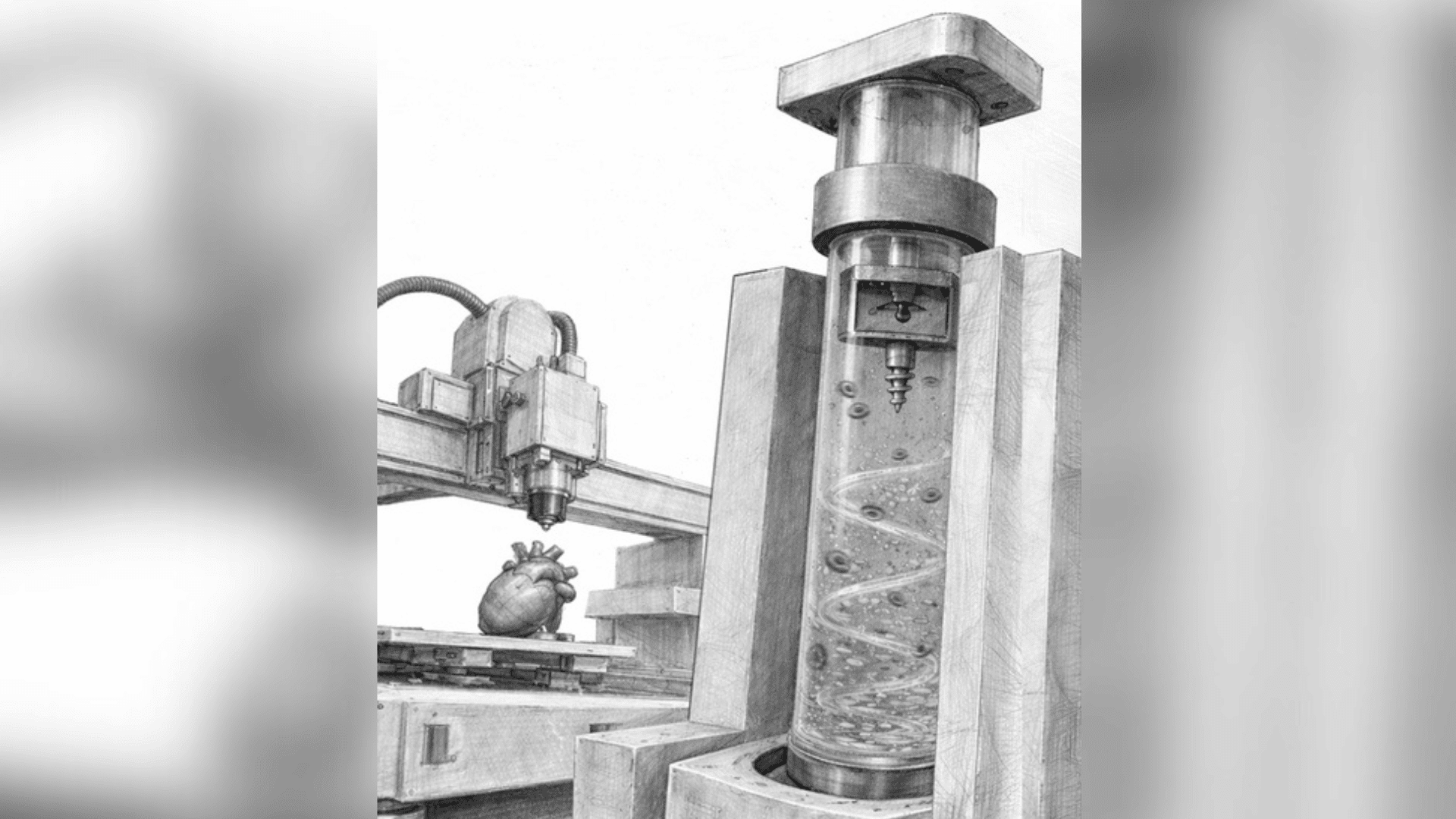
To fix this, Raman’s team at MIT created a tool called MagMix. It’s a simple, two-part system where a tiny magnetic propeller goes inside the ink syringe, and a magnet on a motor moves up and down outside of it. This keeps the cells spinning and mixed perfectly without needing to change the ink recipe or mess with the printer’s settings.
Advertisement
The team used computer simulations to find the best speed and shape for the propeller so it wouldn’t hurt the living cells. In tests, it kept the ink uniform for over 45 minutes.
“Across multiple bioink types, MagMix prevented cell settling for more than 45 minutes of continuous printing, reducing clogging and preserving high cell viability,” said Raman. “Importantly, we showed that mixing speeds could be adjusted to balance effective homogenization for different bioinks while inducing minimal stress on the cells.”
Why Bioprinting Matters
This matters because better printing means better medical research. If we can print tissues that actually act like the ones in our bodies, we can use them to test new drugs or study diseases without relying on animal testing.
“If we can print tissues that more closely mimic those in our bodies, we can use them as models to understand more about human diseases, or to test the safety and efficacy of new therapeutic drugs,” Raman said. “Replacing diseased or injured tissues in our bodies with 3D printed tissues that can help restore healthy function.”
Beyond medicine, the team is even looking at using these printed muscles to power “biohybrid” robots. By solving a simple problem like sinking cells, they’re making these big ideas much more realistic.
 Read Exclusive Stories
 Bookmark & Save Articles For Later