Eye surgery is one of the most persistent health challenges, specifically cataract surgery. USLA researchers helped make this challenging operation a little “simpler” for surgeons.
Researchers and surgeons completed the world’s first human clinical trial of a robotic-assisted cataract surgery.
Cataracts remain the leading cause of global blindness. Clouding of the eye’s natural lens affects approximately 94 million people worldwide. However, over 26 million cataract procedures are performed annually. The traditional cataract surgery is incredibly demanding for surgeons. It requires them to visualize transparent ocular tissues and operate with extreme precision.
However, surgeons hope that those difficult surgeries will be a thing of the past.
Robotic-Assisted Cataract Surgery
Advertisement
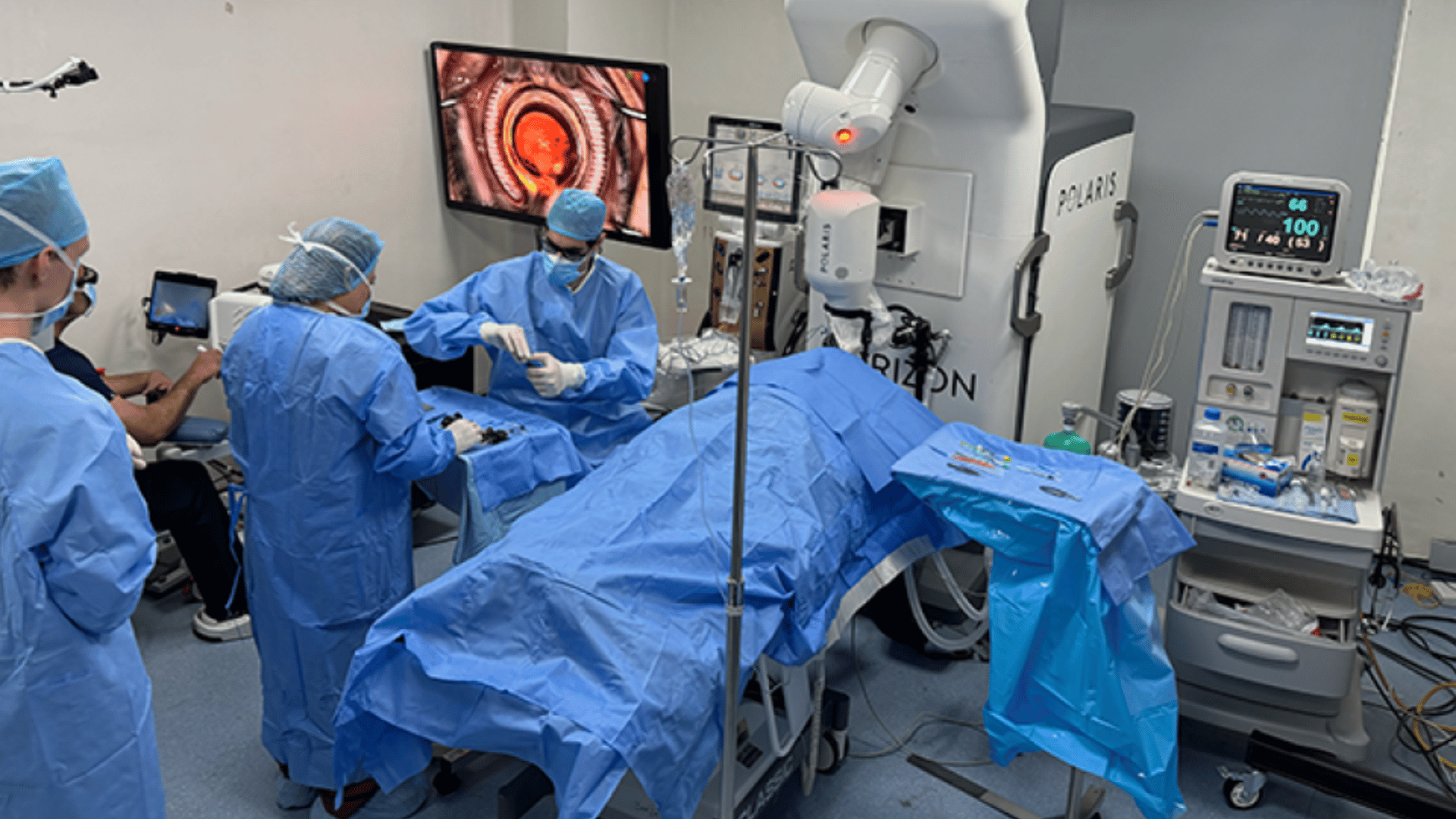
Researchers report that the first-in-human study treated 10 patients without any adverse events. Dr. Uday Devgan, a former professor of ophthalmology, and Dr. David Lozano Giral, an assistant clinical professor of ophthalmology, performed the historic procedures.
The robotic platform is designed to enhance human capability, rather than perform the surgery autonomously. According to researchers, it allows surgeons to operate from a specialized “cockpit” in the operating room. These surgeons have a 3D monitor that displays the eye’s anatomy through multimodal imaging.
Additionally, the system provides real-time augmentation, guidance, and tactile feedback. Robotic arms equipped with microsurgical tools provide precision for making small corneal incisions and removing cataracts. Then, surgeons implant a clear, patient-specific artificial lens. Laboratory testing showed a remarkable tooltip accuracy of 0.053 millimeters. According to researchers, this level of precision suggests potential for improving the safety and consistency of complex eye surgeries.
After more than 15 years of development, the technology was licensed through UCLA’s Technology Development Group (TDG).
“This milestone demonstrates the strength of UCLA’s innovation ecosystem, where cutting-edge engineering, medical expertise, and entrepreneurial support come together to improve lives,” said Amir Naiberg, associate vice chancellor and president and CEO of UCLA Technology Development Group.