We wear smartwatches to track our steps, sleep, and oxygen levels. Now, researchers at Tufts University are giving plants their own version of wearable tech.
Normally, farmers use drones, weather stations, or soil sensors to check on their crops. However, by the time those tools show curling leaves or dry soil, the plants are already suffering.
To fix this, the Tufts team built two tiny sensors that work like a temporary tattoo that sticks to leaves. The other is a stretchy band that wraps around stems. Together, they track temperature, humidity, and growth in real-time.
“The leaf sensor is more of an early warning system showing how the plant is responding in the moment, before visible signs appear,” said Nafize Hossain, a graduate student at Tufts who led the research in the Sonkusale lab.
Smart Wearables for Plants
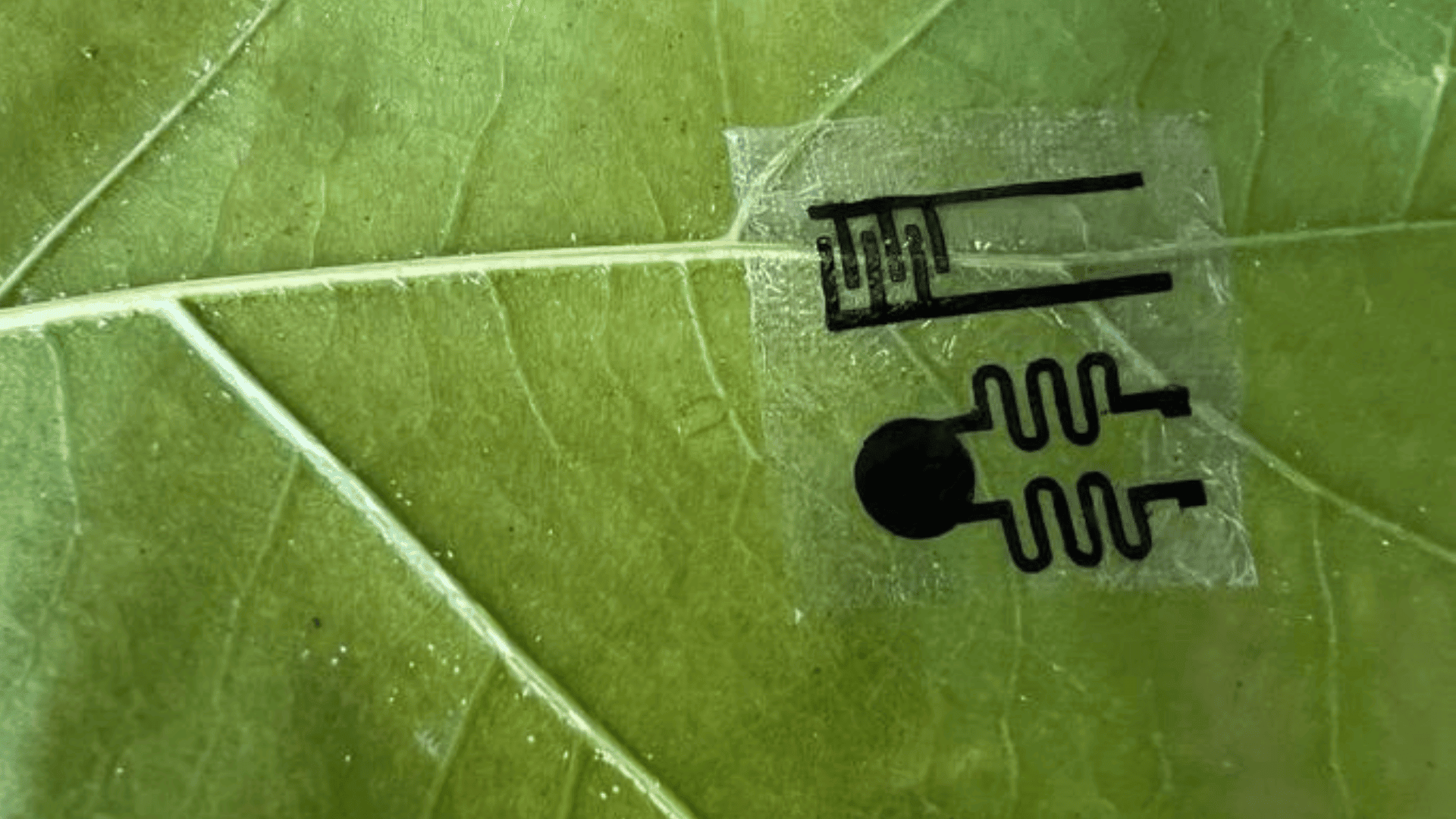
Instead of being plugged in, the sensors actually run on the plant’s own moisture.
Advertisement
The leaf sensor is made with thin crystal sheets and carbon. When water evaporates from the leaf, it passes through these materials and creates a tiny electrical current. This current gives the sensor all the power it needs to work.
“Other plant sensors exist, but their ability to track multiple stressors and growth-related parameters is limited,” said Hossain, “and the technology often relies on external batteries, which complicate field deployment.”
Meanwhile, the stem band borrows from kirigami, the Japanese art of paper cutting. This design lets the band stretch without breaking. It tracks if the stem is getting wider, which points to healthy growth, or shrinking from stress.
Putting the Sensors to the Test
To test the technology, the team put the wearable sensors on bell pepper plants. The devices easily told the difference between healthy plants, thirsty plants, and plants dealing with too much salt. The sensors are also tough enough to handle wind and bending in a real farm field.
Down the road, these devices could even track plant hormones and nutrients.
“The larger promise is not merely that one plant can wear one sensor,” said Sameer Sonkusale, professor of electrical and computer engineering at Tufts and senior researcher in the project. “It is that fields could one day contain networks of plant-level monitors, each reporting early signs of thirst, salt stress, disease or nutrient imbalance. Satellites and drones already give farmers a bird’s-eye view. Plant wearables could provide something more intimate: the plant’s-eye view.”
 Read Exclusive Stories
 Bookmark & Save Articles For Later