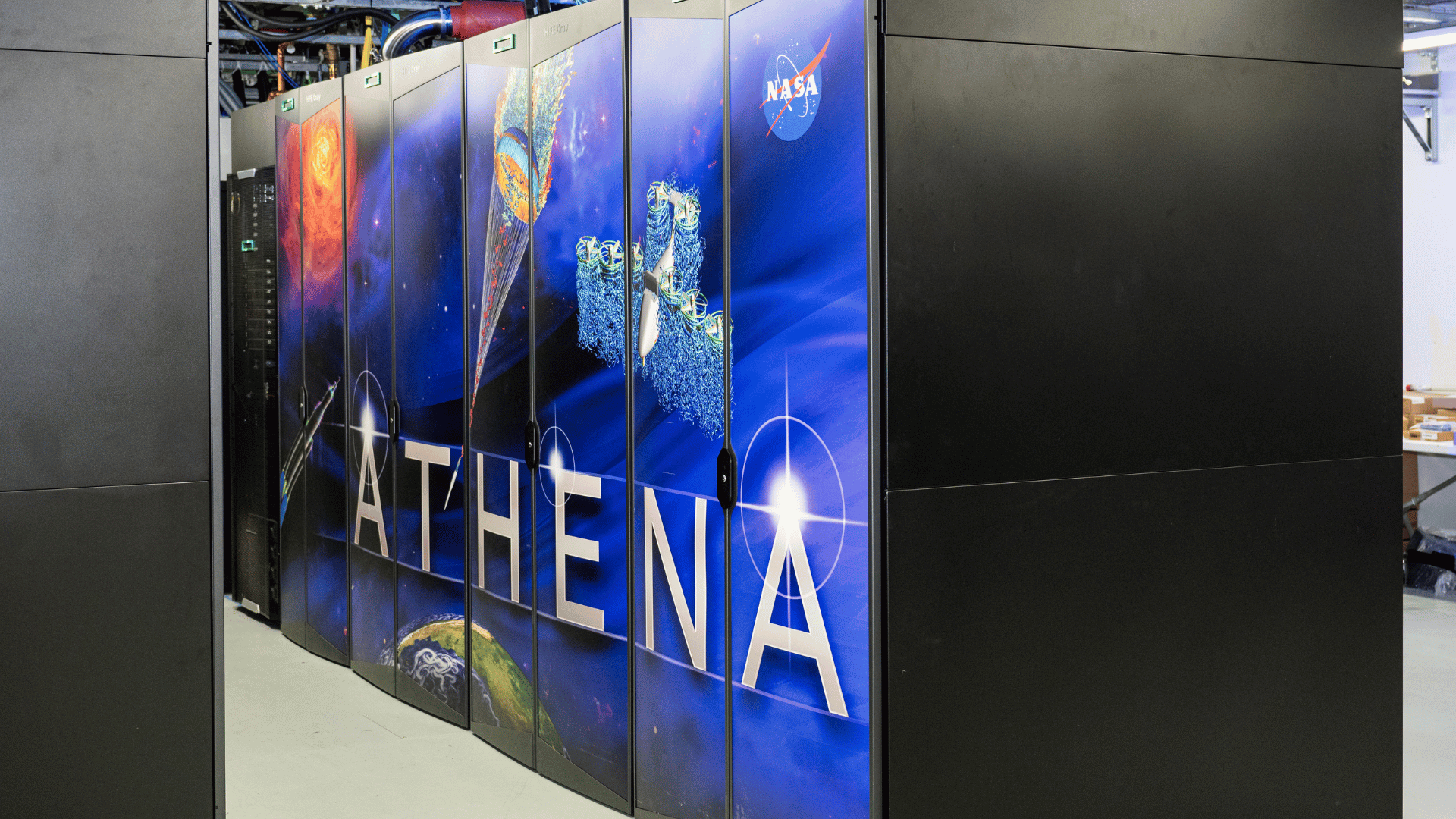
NASA just powered up its newest heavy hitter, a supercomputer named Athena. Located at the Ames Research Center in California’s Silicon Valley, this system is now the most powerful tool in NASA’s digital shed. It’s designed to handle the massive amounts of data coming from space missions and aeronautics research, helping scientists solve problems that are just too big for a standard computer.
Athena isn’t just about raw power, though. While it can perform over 20 petaflops, which is a way of saying it does quadrillions of calculations every second, it’s actually more efficient than the older systems it’s joining. It outpaces previous models like Aitken and Pleiades while actually cutting down on the agency’s electricity bills. After a short testing phase, it’s now officially open for business.
Why a Faster Supercomputer Matters
Advertisement
NASA needs this much computing power because designing a rocket or a new type of airplane requires thousands of simulations before anything ever touches a launchpad. Athena provides the muscle to run those simulations. It also helps train AI models to sift through giant piles of data to find things humans might miss.
“Exploration has always driven NASA to the edge of what’s computationally possible,” said Kevin Murphy, chief science data officer at NASA Headquarters. “Now with Athena, NASA will expand its efforts to provide tailored computing resources that meet the evolving needs of its missions.”
The name Athena actually came from a staff contest held last year. They chose it because, in Greek mythology, Athena is the half-sister of Artemis, a fitting nod to NASA’s current mission to return to the Moon.
By combining this new supercomputer with other tools like the commercial cloud, NASA is trying to give its researchers the best of both worlds.