Researchers at the University of Texas at Austin have created a new 3D-printable material that mimics human tissue. According to the researchers, it can sort and filter molecules, letting some pass through while keeping others out.
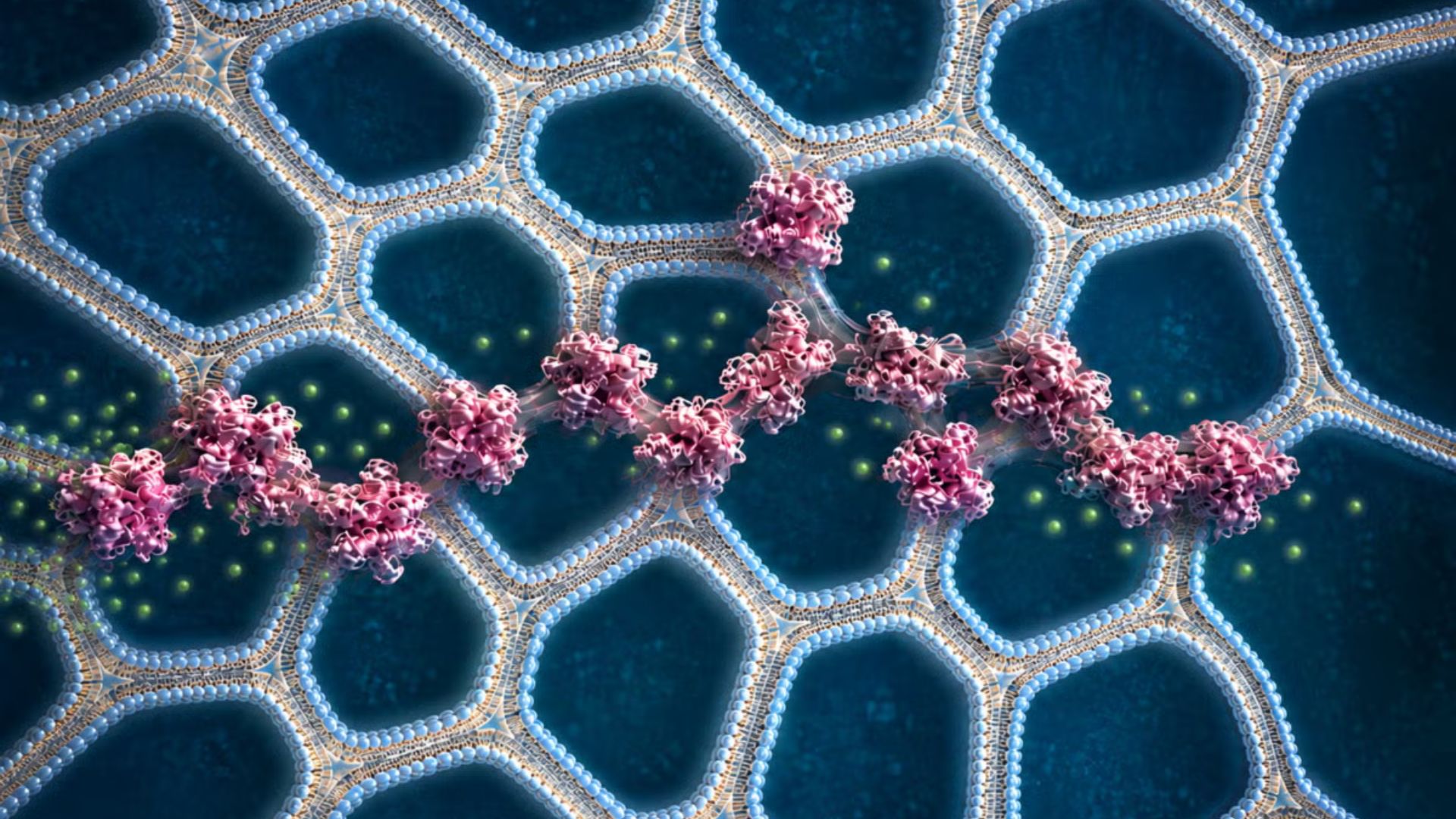
Making similar tissue-like materials is typically a slow process. It’s also difficult to make them big enough to be useful. The research team, however, fixed this problem by tightly packing billions of tiny water droplets together using a centrifuge. Now, it only takes a few minutes to make large materials. The droplets are separated by thin membranes that connect, working just like the organization of cells in human tissue.
“Tissues can separate and transport ions and molecules,” said Manish Kumar, a professor at UT Austin. “That’s how our kidneys or intestines work, taking only what they need and leaving the rest behind.”
The 3D-Printed Material’s Flexibility
This material is flexible and can be customized to act like different kinds of tissue. Since it can be 3D-printed from biocompatible materials, it could act as a base to grow new tissues or organs. It could also be used to build soft robots for surgical or search-and-rescue operations in dangerous environments.
Advertisement
Adding specific proteins enables the material to conduct ion currents just like nerve tissue. This could help researchers build computing systems modeled after the human brain. The team also added a protein that enables the tissue to filter ammonium from wastewater. This could help recycle nutrients and minerals from oil, gas, and city wastewater.
Putting the Pieces Together
This research took more than ten years. In the end, it was a student, Aida Fica, who finally put the pieces together. After hearing a new idea at a conference, she mixed two oils with different solubilities to form droplets, then used a centrifuge to pack them together.
“This technology now offers a simple, scalable process with endless applications that could be implemented in any laboratory since it only requires basic equipment,” Fica said.
Kumar added, “We encourage interested researchers to try this out, and we will heartily support anybody who would like to work in this field through visits and discussions.”
 Read Exclusive Stories
 Bookmark & Save Articles For Later