It may look like an AI creation, but this rainbow tree, also known as the Rainbow eucalyptus, is very real. The tall, fast-growing tree possesses a trunk that is striped with shades of yellow, green, red, brown, orange, and blueish-purple.
Rainbow Eucalyptus
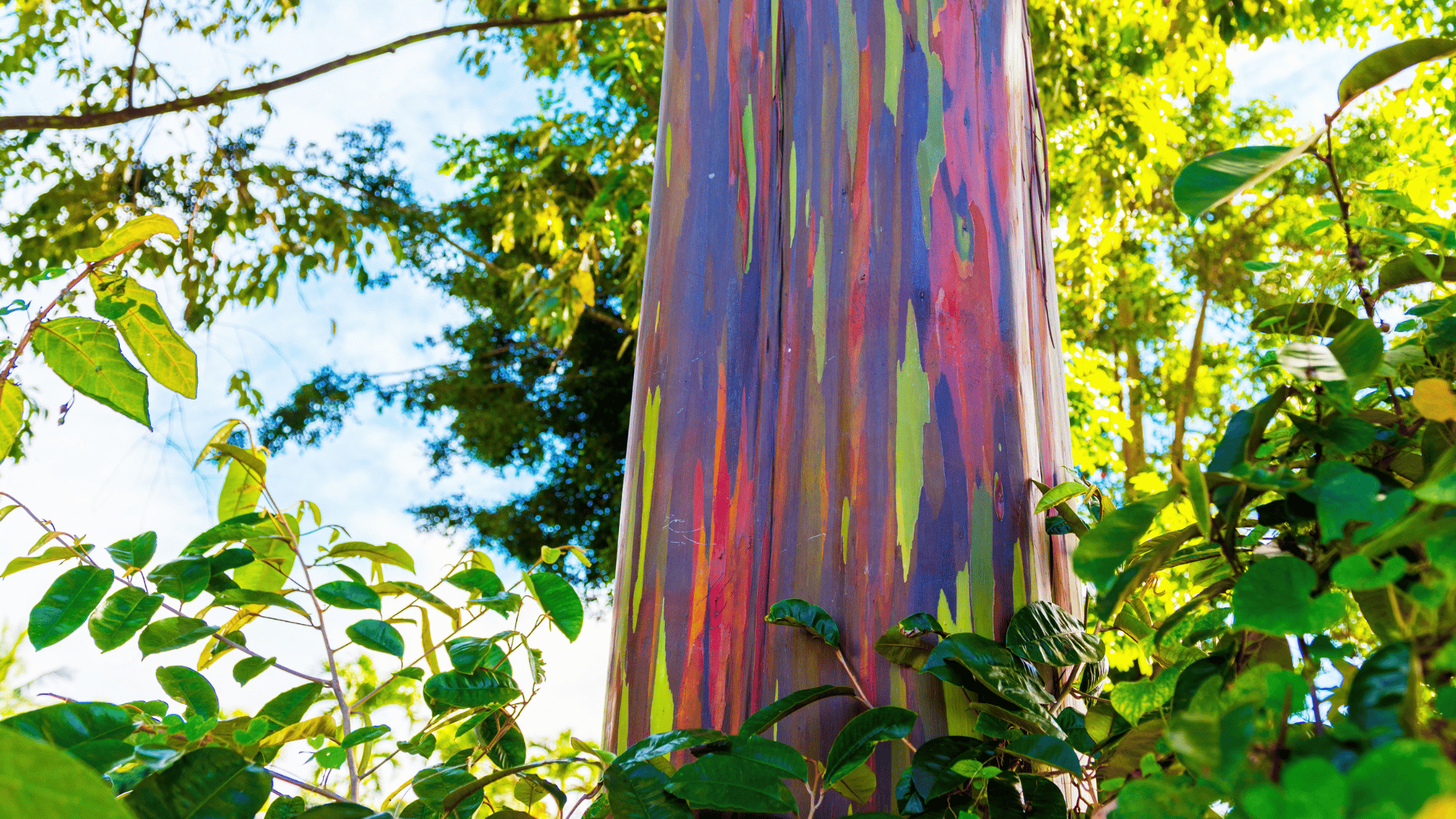
Native to the rainforest of the Philippines, Indonesia, and Papua New Guinea, the tree reaches up to 262 feet in ideal conditions. It has also been introduced to other parts of the world with compatible climates, including Florida, Hawaii, and Southern California.
The tree’s size means its ecological function is partly to help maintain the structural integrity of the forest. It offers a habitat to many species, from microorganisms to a series of bird species. The roots also help stabilize the soil, preventing erosion and maintaining watershed health.
Advertisement
The array of colors decorating the tree is due to the species’ shedding process. While most trees have continually thickening layers of bark, the eucalyptus continually peels away in thin ribbons.
When a strip of brown bark falls off, it reveals a transparent layer with chlorophyll, the green pigment used in photosynthesis. When exposed to outside air, this layer becomes rich in tannins.
As the tannins mature, they change color, turning a series of blues, purples, reds, and golds, before eventually returning to brown to start a new cycle. According to the IUCN Red List, the Rainbow eucalyptus is vulnerable to extinction.
In addition to its unique and colorful appearance, the wood is also valued for utilitarian purposes. The species is widely harvested for its timber, which is used for furniture, flooring, construction, and so on.
It’s also used for pulpwood to make white paper, as the timber loses its rainbow effect once it’s been harvested. This species is also being increasingly cultivated in ornamental parks and gardens.