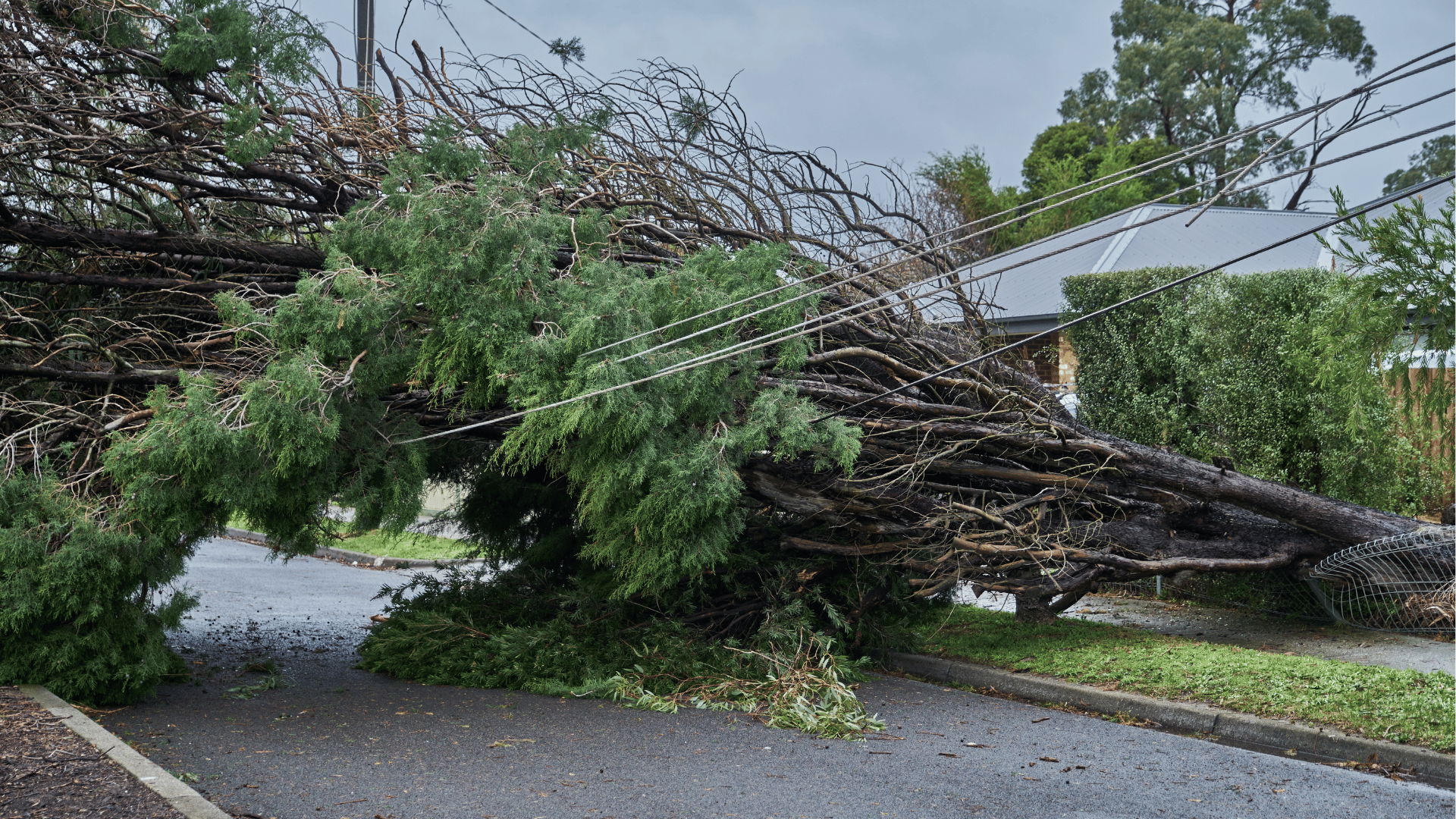
Power outages from extreme weather are getting worse. In past decades, the U.S. saw an average of nine weather events a year that caused over $1 billion in damages. But in the last five years, that average jumped to 23.
Utilities know they need to prep their systems, but deciding where to spend money to keep the lights on is hard when you have to plan years in advance.
Researchers at Washington State University (WSU) created a new model to help utilities figure it out. Their work was recently published in the Institution of Engineering and Technology’s Generation, Transmission, and Distribution.
“The main goal of this work is to understand how a weather event impacts the power grid, and how we can better plan the grid for similar events in the future,” said Anamika Dubey, an associate professor at WSU. “The central challenge is the long-term planning problem. The grid is a large interconnected critical infrastructure, and grid planners need to evaluate multiple interconnected decisions often years or decades in advance while accounting for significant uncertainties.”
Planning for the Next Extreme Weather Event
“They have started resilience-oriented initiatives, such as line upgrades, line hardening, and distributed generation deployment to mitigate impact of severe weather events,” said Shishir Lamichhane, a co-author of the study. “However, these measures are often planned separately rather than together within an integrated, risk-based framework. We need new ideas and different kinds of tools to support resilience planning.”
The WSU team’s new framework uses past weather data to predict how future storms will hit the grid. Then, it weighs the costs and benefits of different long-term solutions. As a result, a utility company can look at their specific system and see if it makes more sense to upgrade a power line or install new generators.
“That’s why this framework is useful because it’s not telling you that this is the solution that you should implement – it’s actually helping you evaluate the cost-benefit trade-off of the solution, so that you can come up with a portfolio that makes sense for your system,” Dubey said.
The team tested the model on mock grids and is now starting to use it with real utilities across the country.
 Read Exclusive Stories
 Bookmark & Save Articles For Later