Janelle Lynch’s work invites viewers to witness the practice of “slow seeing”, a technique that requires both precision and attention. An artist, educator, writer, and mentor, Lynch has spent over twenty-five years working primarily with large-format analogue photography, allowing time, light, and location to shape her images. In this conversation with Tomorrow’s World Today, she reflects on the formative experiences that led her to photography, the mentors and disciplines that influence her work, and how themes of intimacy, nature, and vulnerability have emerged across her evolving practice.
Tomorrow’s World Today (TWT): Tell us about yourself and what inspired you to begin your work in photography.
Janelle Lynch (JL): Thank you for the invitation to this interview and for your interest in my work.
I’m an artist and educator who works across disciplines. My primary medium is large-format analogue photography, with which I’ve worked for over twenty-five years. I received my MFA in Photography and Related Media in 1999 from the School of Visual Arts, where I studied with Stephen Shore and Joel Sternfeld. Their teachings and work have made a significant impact on my values as a photographer, and how and with what I make my work.
Between 2015 and 2025, I also studied at the New York Studio School of Drawing, Painting & Sculpture with the artists Graham Nickson, Fran O’Neill, Elisa Jensen, and Kaitlin McDonough. My experiences there were also consequential to my life as an artist, and they informed my photography and teaching practices. Graham taught me about color, light, and how to see relationally with an empathetic gaze. I learned about art history, and my studies led me to work with the cyanotype medium, which I began in 2020 with From Georgia to Heaven.
In the last year, I’ve started making sonic landscape recordings during residencies in Amagansett, New York, and on the Big Island of Hawaii, and short films—one about the Hawai’i Tropical Botanical Garden and one about the poet Nina Peláez and The Merwin Conservancy. The recordings can be found on Presque Tout, and the films are forthcoming by PlantPop.
I also have a writing practice. I write about photography and art for journals, artists’ monographs, and exhibition catalogues, and I write personal essays and ekphrasis. Creative writing was my minor concentration in college, and after many years of workshops, I decided to pursue more rigorous study at the Bennington Writing Seminars. I’m in my second term of an MFA program in Creative Nonfiction right now and honored to be studying with the poet and literary critic Craig Morgan Teicher.
Lastly, but equally important, I’m faculty at the International Center of Photography, and I host The Salon and The Workshops. I deeply value my teaching career and supporting photographers to evolve in their practices and careers. I’m grateful to be represented by Flowers Gallery and to have published three monographs with Radius Books, Los Jardines de México (2010), Barcelona (2012), and Another Way of Looking at Love (2018).
In response to the second part of your question—what inspired me to begin my work in photography—I would say that as a very young child, I experienced the power of photography to identify what is worthy of being looked at with intention and care. My mother and I lived with my maternal grandparents, and my grandfather was an enthusiastic amateur photographer. He photographed me often, and I believe that even at age two or three, I absorbed something about the possibility of the medium to transform the photographer, the subject, and the viewer through the act of imparting value by intentional looking.
I was gifted my first camera by my mother when I was ten. The gesture by her, despite the complexity of our relationship, also solidified my lifelong connection to the medium.
TWT: How would you describe your style as a photographer?
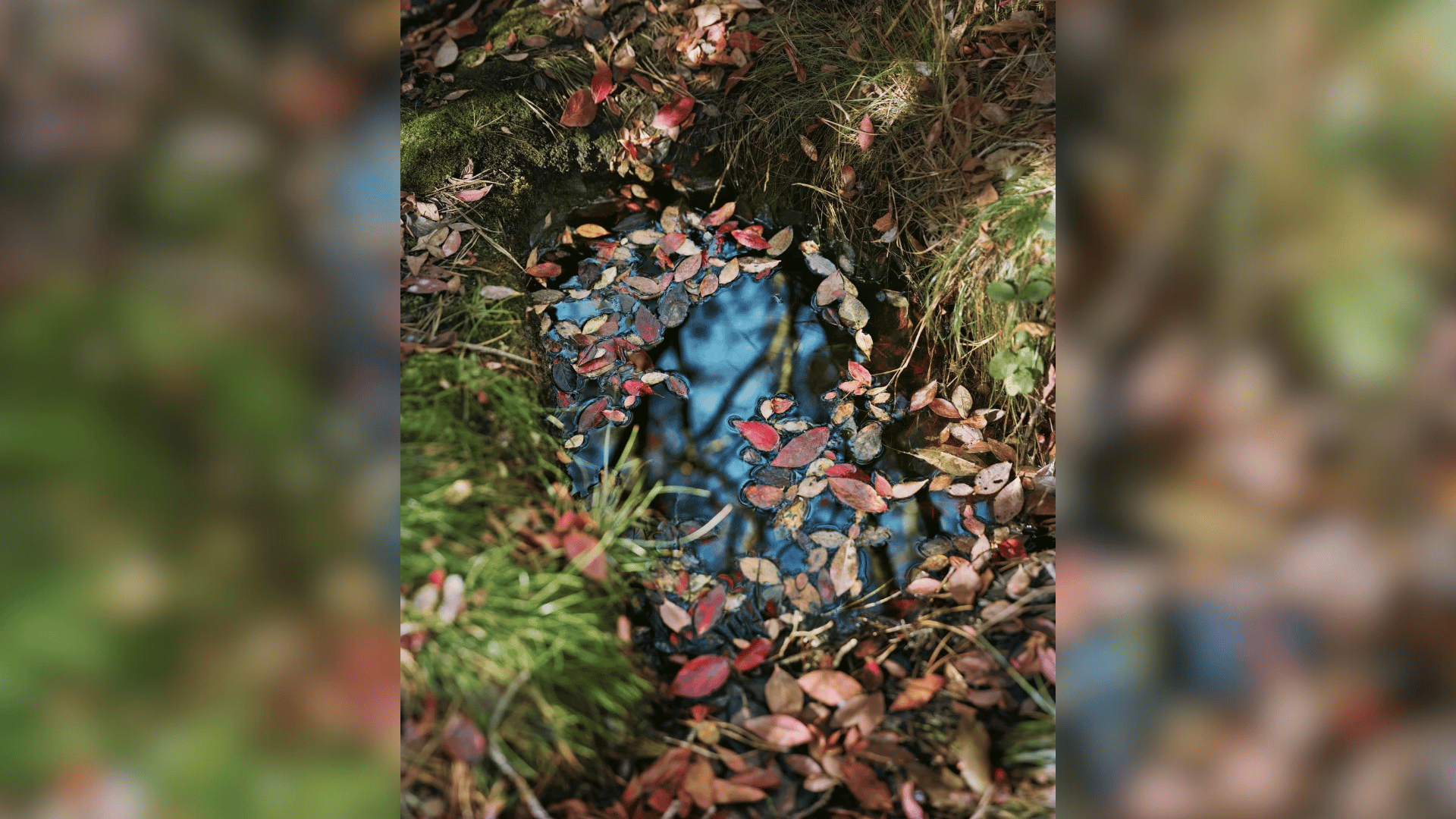
JL: My work is characterized by formal and technical precision and careful attention, what the author Rebecca Solnit describes as “slow seeing.” Light is a primary consideration. As I mentioned, I use an 8×10-inch view camera, which supports my contemplative, rigorous approach. I work primarily in color, and my subject matter ranges. In my current body of work in Amagansett, I’m making portraits, oceanscapes, still lifes, and images in nature. I work for years in a single place and, through an intuitive process, allow the conceptual themes to emerge organically. I’m interested in discovery, not in illustrating preconceived ideas or in storytelling, though my work is primarily informed by literature—including writings by Rainer Maria Rilke, Wendell Berry, Robert Adams, and Mary Oliver—and by being in solitude in nature.
TWT: What is it specifically about the natural world that inspires your work?
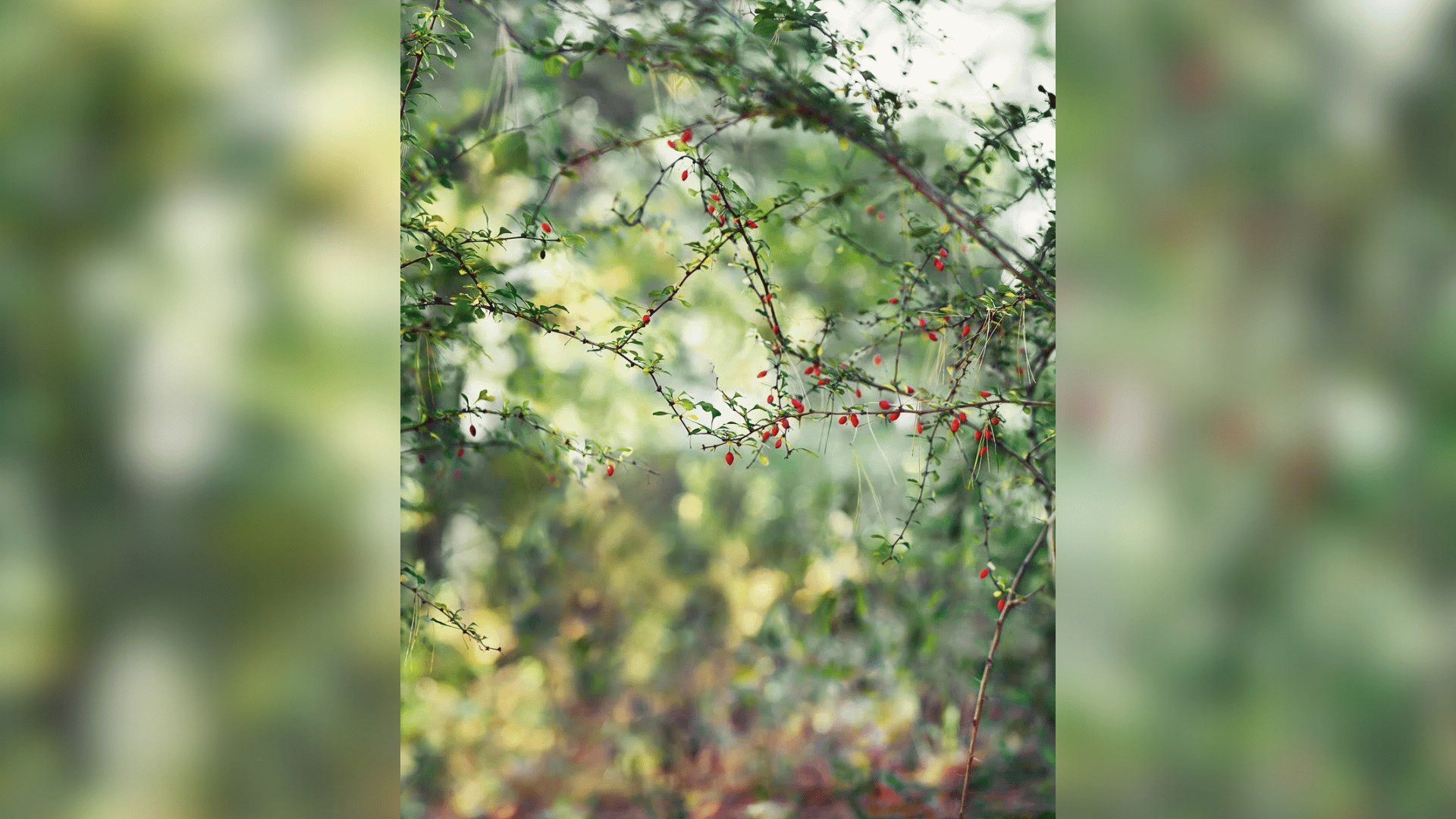
JL: I find deep resonance in nature and possibilities to explore and communicate about experiences—to, in fact, discover through the process of looking with care what I need to articulate through photographic language. Within nature’s life cycle, I have found representations of themes that have defined my life’s work—loss, love, hope, beauty, and connection. The very act of seeing itself has emerged as another theme in my work in recent years since studying with Graham at the Studio School.
TWT: Tell us about two of your favorite photographs you’ve made. Why are they your favorites?
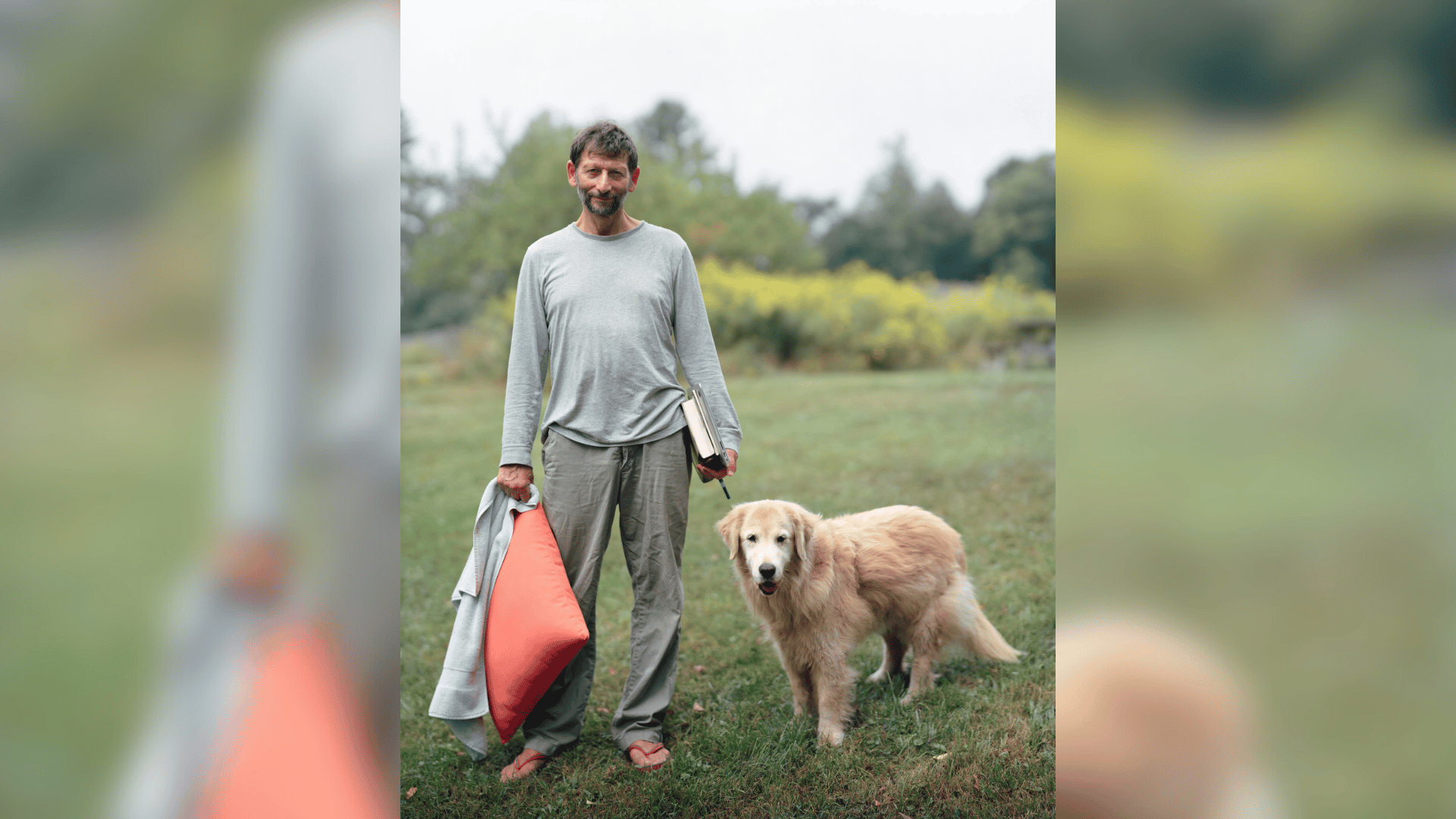
JL: David and Gracie, 2016 is a portrait I made with my view camera of David, my then-long-term partner, and Gracie, one of our two Golden Retrievers. It was my first-ever portrait. Before 2016, I had worked exclusively in the landscape. The picture is also notable because it evolved from my drawing and painting practice where I was working from live models. The experience at the Studio School, particularly under Graham’s mentorship, allowed me to begin approaching the figure in my photographic work. It was a crucial turning point in my evolution as an artist. David and Gracie, 2016 marked the beginning of Family, a body of work that now has forty portraits, including others of David, Gracie, her sister, Dollie, as well as friends, mentees, colleagues—those I love and care about.
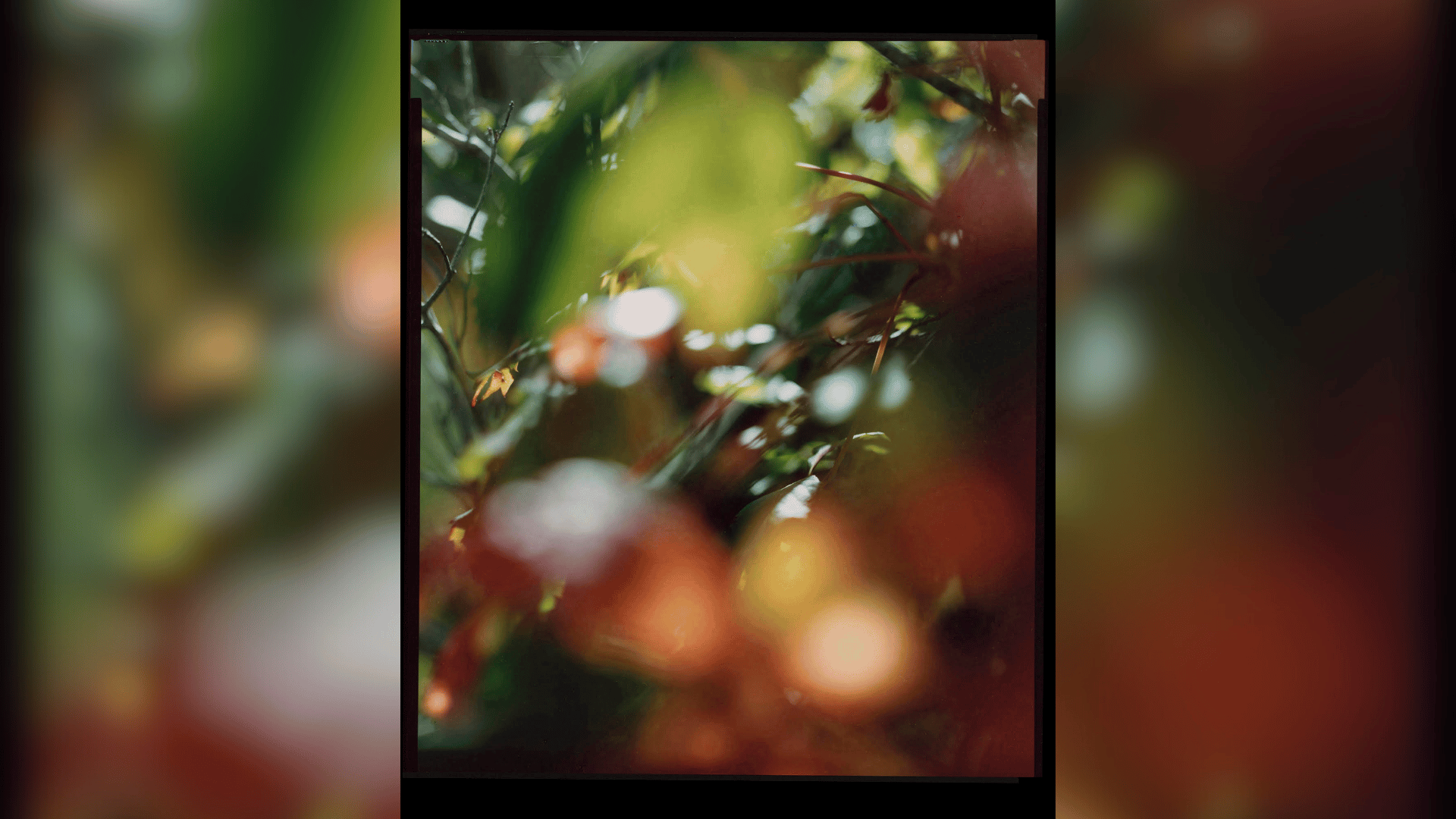
The other photograph I’ll discuss is one from September 2025, yet to be titled. I’m still getting to know the picture, but what’s exciting to me is that it’s unlike any photograph I’ve made. It was directly influenced by my writing and filmmaking practices, in which I’ve been getting physically and emotionally closer to my subjects. Intimacy is an emergent theme—a deep sense of knowing through vulnerability and courage. The picture references the three worlds that occupy my thoughts—the internal, the spiritual, and the physical. It’s part of my body of work in progress in Amagansett, and I made it right after I returned from my residency in Hawaii. I “found” the image by panning my view camera like I did the video camera. The formal and technical precision that I addressed in a prior question receded in favor of abandon.
TWT: What brings you the most joy when people see your work, and why?
JL: I really appreciate this question. I feel gratified when my work allows viewers to feel something, to make associations and connections, or to think about something for the first time. The poet David Whyte has spoken of his friendship with the late poet and philosopher John O’Donohue, and how their conversations would inevitably lead to new thoughts, ideas, or insights. That is also what I enjoy—and hope for—when sharing my work—the discovery of something new.
TWT: How has your work evolved over time? What are your goals for the future?
JL: I’ve already spoken to some degree about the evolution of my work. It has evolved as I have evolved. I am deeply committed to both endeavors. I’ll add for emphasis that my primary interest right now in my photographic work is portraiture and in how intimate, vulnerable, honest conversations with my subjects—people I care about—inform, even transform the portrait and, subsequently, the relationship through the collaborative experience. The closer I am to myself—the more I know myself—the closer I can be to others, and—if they are willing and able—together we can make a portrait that conveys the electric energy of intimacy, humility, vulnerability.
This year, I will be focusing on my work in Amagansett, my writing, and finishing the films from Hawaii. Some of my goals for the immediate future are to publish my erasure of Roland Barthes’ Mourning Diaries with my afterward—a fragmented essay—and some of my photographs that “erased” the pictures in his book. I would also like to publish a book of my recent cyanotypes, Endless Forms Most Beautiful, and when the work in Amagansett is finished, I would like to publish that, too.
My most important goal, however, is to keep learning and growing as an artist, evolving as a human being, teaching and mentoring other artists, making my work across all disciplines, and enjoying the process.
TWT: What equipment and/or tips would you recommend for anyone planning to photograph in nature?
JL: Leave your camera at home. Experience nature in an unmediated way. Practice paying attention. Engage your senses–all of them. Pause and look at something for a long time. Read anything by the poet Mary Oliver.
TWT: What advice would you give to aspiring photographers?
JL: I would point to this piece I recently wrote for FlakPhoto, “How to Make a Good Photograph,” and to the importance of cultivating gratitude and humility.
For more information about Janelle Lynch and her projects, follow her on Instagram and on janellelynch.net.