
Using infrared reflectography, historians and curators have found new evidence that a portrait of Anne Boleyn, Henry VIII’s second wife, was painted in order to rehabilitate her image after her death.
New Story Behind an Old Painting
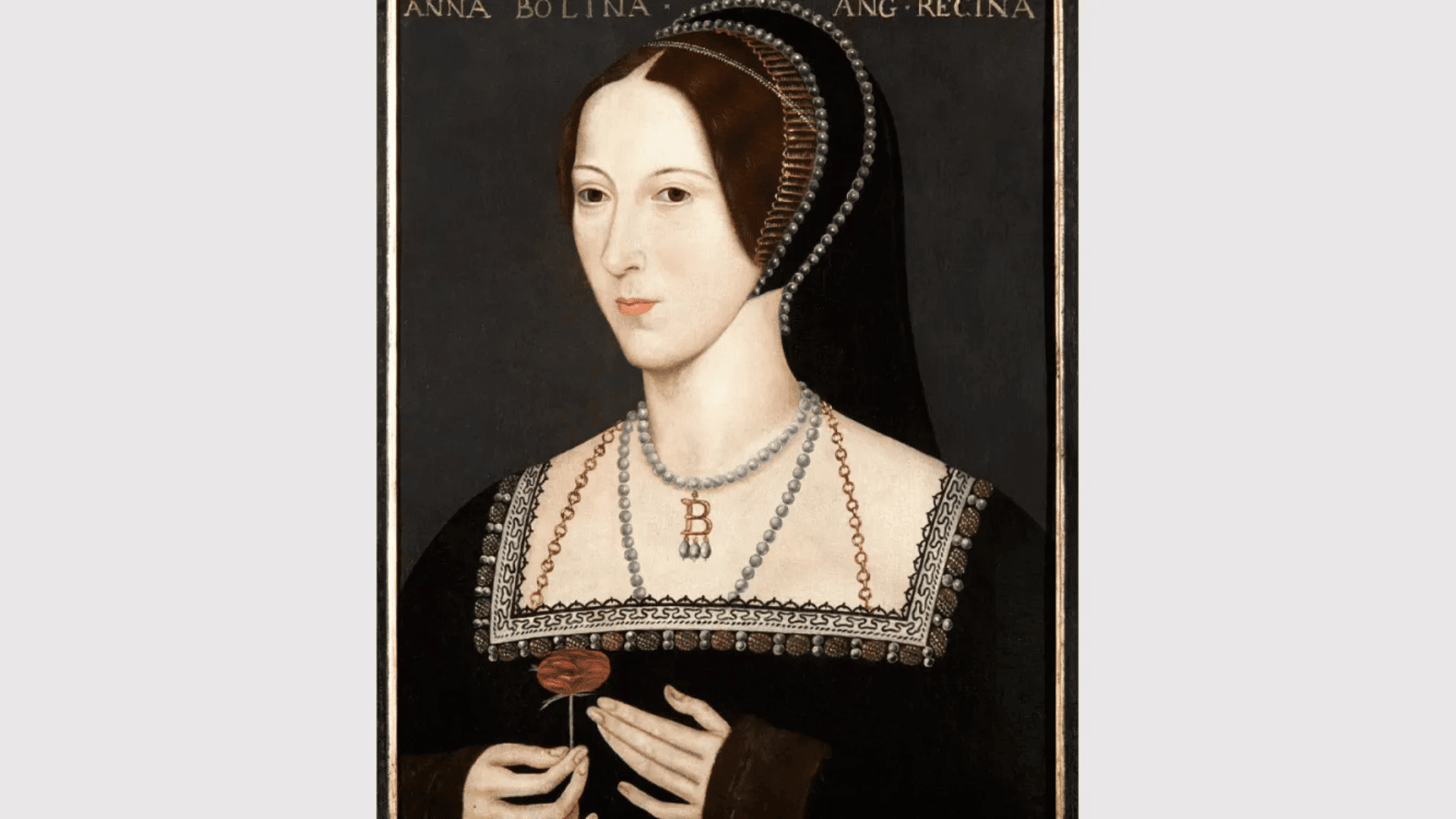
The painting, which resides in Hever Castle in England, shows both of Boleyn’s hands with five fingers. But new infrared scans have revealed that the underdrawing of the portrait didn’t show her hands at all, which suggests that the work’s unknown creator had purposefully deviated from the original drawing to include her hands.
Henry VIII divorced his first wife, Catharine of Aragon, to marry Anne Boleyn. This led to his eventual excommunication from the Catholic church and the English Reformation. But when Anne failed to provide him with a son, she was charged with treason and beheaded in 1536. Henry subsequently destroyed all traces of her in the royal residences, including any portraits made of her during her lifetime.
After Elizabeth 1 ascended to the throne in 1558, Nicholas Sanders, an activist who campaigned for the restoration of Roman Catholicism to England, sought to undermine her legitimacy by writing that her mother was “unnatural” and had “on her right hand six fingers.”
The new discovery of the underdrawing suggests that the painting may have been a direct rebuttal to Sanders. Tree-ring analysis of the painting’s oak support dates it to about 1583, which was during the reign of Boleyn’s daughter, Elizabeth I.
“It’s Elizabeth’s way of not only reclaiming her own legitimacy and lineage, but also restoring the legitimacy of her mother,” Kate McCaffrey, an assistant curator at Hever, told the Guardian. “It’s impossible to say that Elizabeth herself commissioned this portrait, but it certainly seems too much of a coincidence for it not to be in response to rumors that were circulating at this time.”
The painting will be featured in an upcoming exhibition titled “Capturing a Queen: The Image of Anne Boleyn,” which opens in February 2027 at Hever Castle and Gardens.