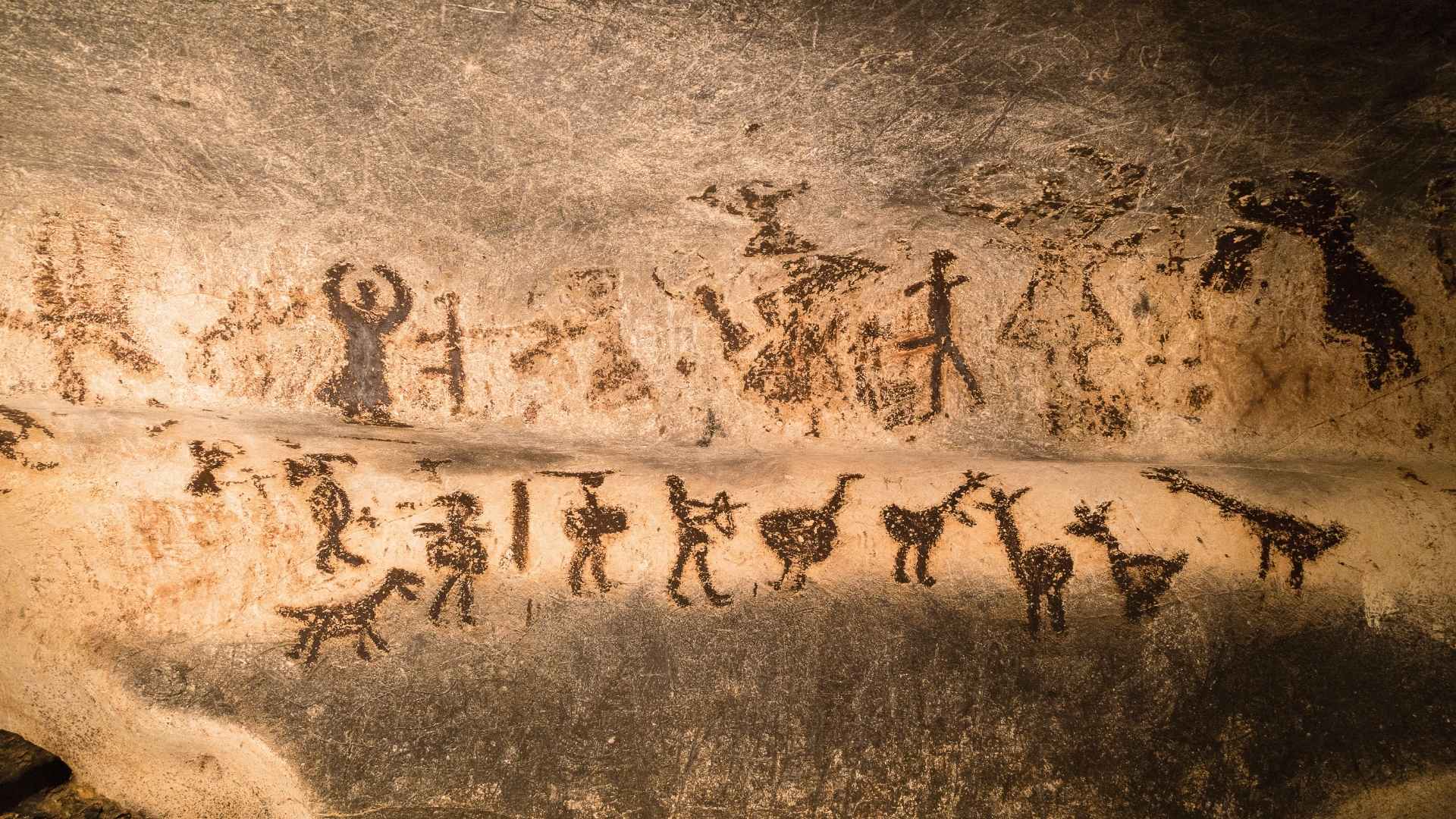
Long before we had smartphones or cloud storage, humans found a way to back up their data. They used cave walls. Tens of thousands of years ago, early humans began painting in caves. These charcoal and ochre drawings were not just random doodles. They were actually the very first hard drives. They were attempts to record crucial information outside of the human brain.
The Original Survival Guides
Life back then was tough, and survival depended on knowledge. Cave paintings often showed large animals, hunting strategies, and seasonal animal migrations. By painting these images, elders could teach younger generations how to hunt safely and identify dangerous beasts. It was vital survival data disguised as a visual story.
Human memory is fragile, but a stone wall lasts. This art acted as a shared memory bank for the tribe. It ensured that important knowledge did not perish when a hunter died. But humans did not just record facts. Many drawings feature abstract symbols and strange figures that are half-human, half-animal. These drawings show that early humans were already exploring spirituality and trying to explain the mysteries of nature.
Your Brain on Stories
Advertisement
Today, science shows that our brains are physically wired for stories. When you listen to a dry list of facts, only the language processing parts of your brain light up. But when someone tells you a story, your entire brain gets involved. If a story describes a chase scene, your motor cortex fires up as if you are running.
Neuroscientists have found that stories trigger real chemical changes in our bodies. A tense story releases cortisol, which helps us focus. A moving story releases oxytocin, the chemical that makes us feel empathy and connection. And a good ending releases dopamine, which makes us happy and helps us remember the message.
Shaping the Future
We have come a long way from campfires and stone walls. Today, we use movies, books, and digital media to share our ideas. But while our tools have changed, our purpose remains exactly the same. Stories are the social glue that binds our cultures together. They help us share values, pass down knowledge, and understand people who live thousands of miles away.
More importantly, storytelling lets us imagine things that do not exist yet. Every piece of modern technology started as a story someone told about the future. By looking back at where storytelling started, we can see exactly how humans use creativity to build a better world.
 Read Exclusive Stories
 Bookmark & Save Articles For Later