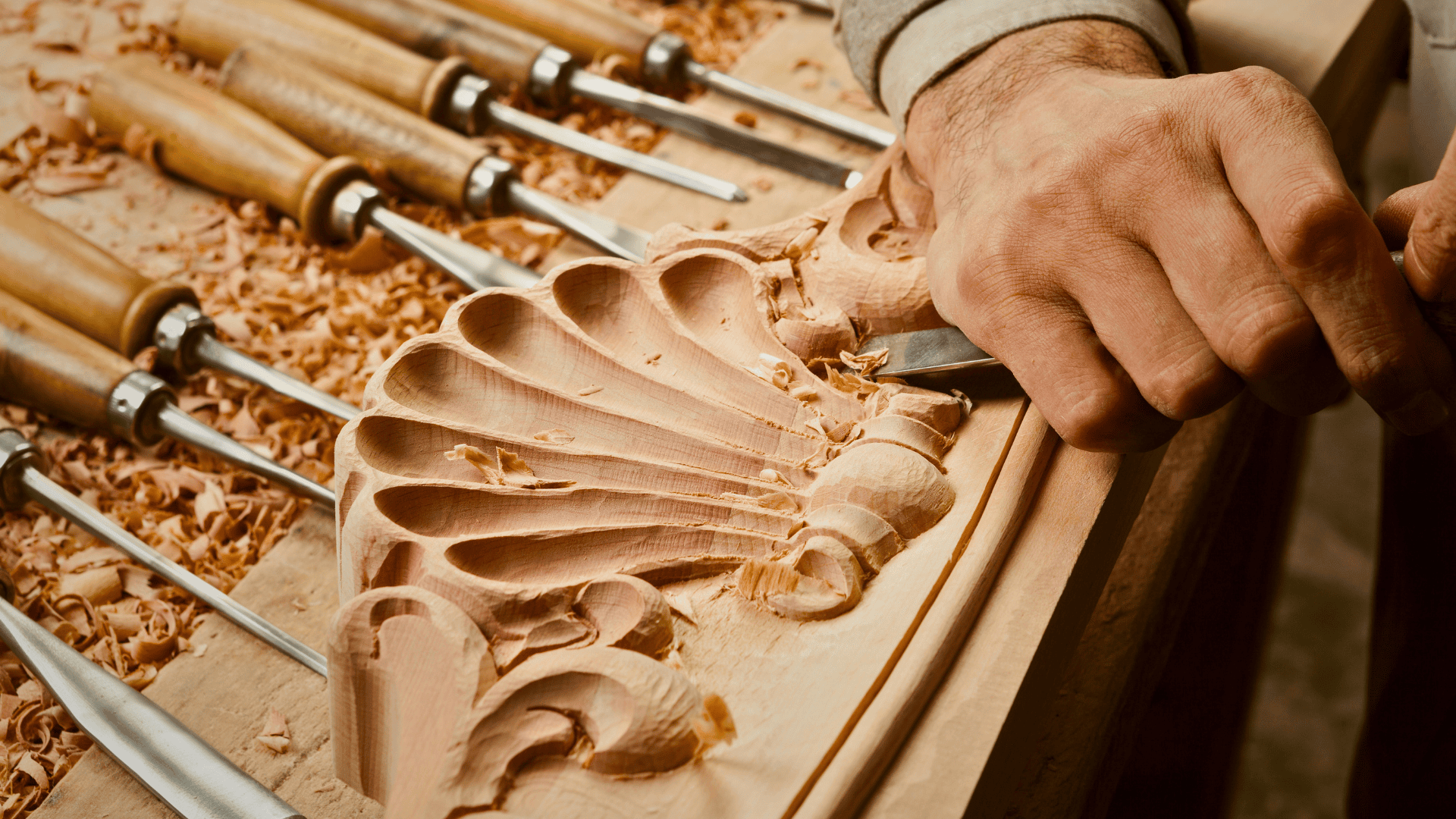
Wood carving is one of the oldest ways humans have made things. Long before we had power tools or computers, someone picked up a sharp rock, found a piece of wood, and started shaping it. Whether it was for a religious statue, a bowl to eat from, or a decorative handle for a tool, carving was a basic necessity for survival and expression.
For thousands of years, this craft stayed mostly the same. You needed a sharp blade, a mallet, and a lot of patience. You had to learn how the grain of the wood worked. If you cut against the grain, the wood would split or chip. It took years to get a feel for the material. You learned by watching a master or by messing up hundreds of times.
But now, things are shifting. Wood carving is evolving as old-school skills meet high-tech tools.
Today, you can find woodworkers who use AI to help them design pieces before they ever touch a chisel. Programs can analyze a piece of lumber and suggest the best ways to cut it to minimize waste. This can support sustainability, since it may mean fewer wood pieces end up in the garbage.
Advertisement
Is this taking away from the craft? Perhaps. There is something special about the imperfections in hand-carved work, those tiny marks that show a person held the knife. You do not get that soul from a machine. But at the same time, this technology allows more people to create complex art. Someone might have the vision for a beautiful table but lack the thirty years of training to carve the legs by hand. Now, they can use digital tools to bring that idea to life.
 Read Exclusive Stories
 Bookmark & Save Articles For Later