When you think of coding computers, you likely think of someone staring at a screen filled with text. However, you most likely do not think of a wooden loom filled with yarn. Yet the screen before you exists thanks to the efforts of old-school textile weavers.
The First Code Was Woven
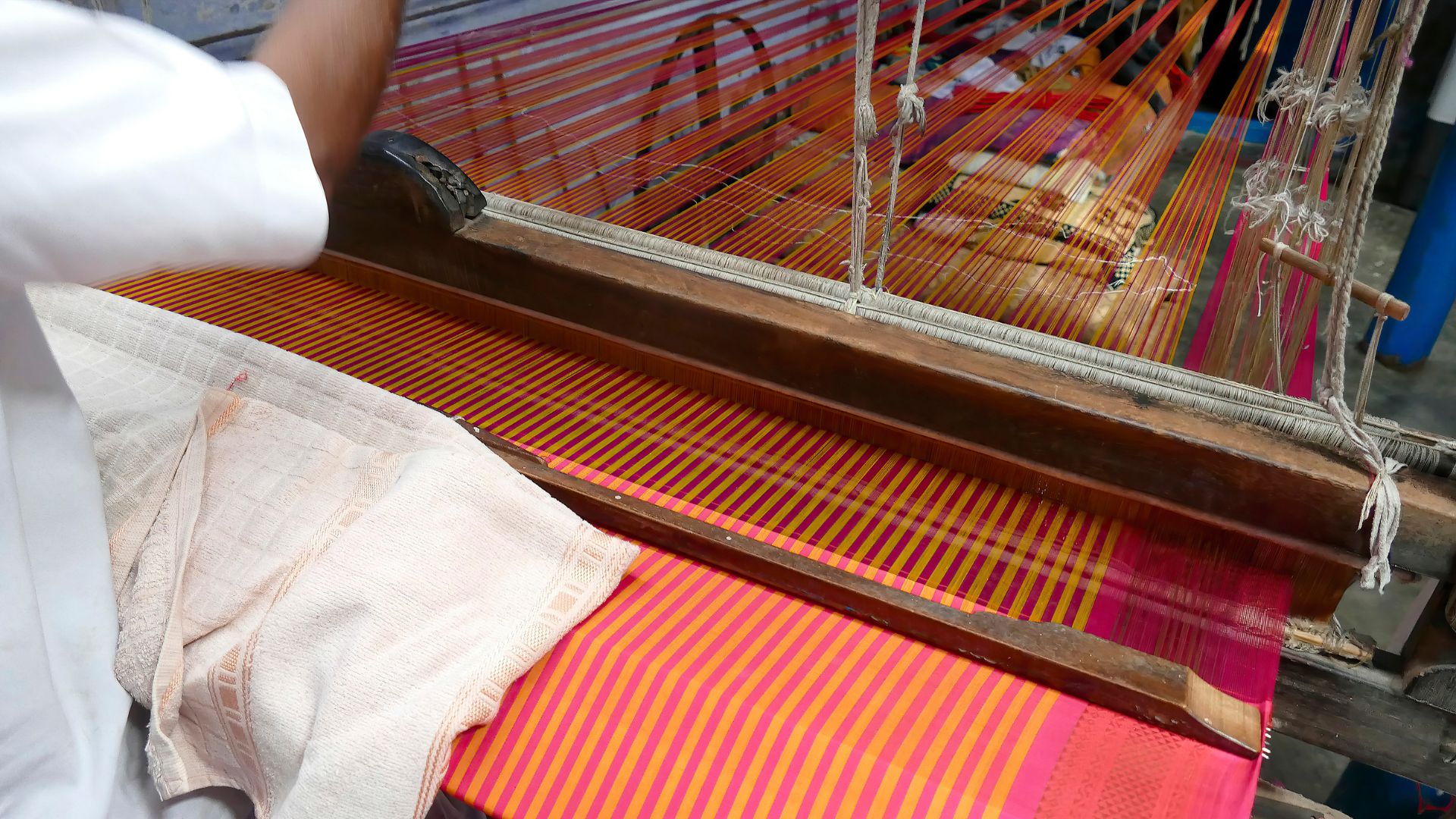
Weaving textiles has always been a slow process. To create complex designs on textiles, individuals had to lift individual threads over and over again to create the design. However, this process was slow. People needed an easy way to speed up the production of intricately designed textiles.
In 1804, a French textile merchant named Joseph Marie Jacquard invented the Jacquard loom to speed up the textile process.
Punch Cards And Patterns
The Jacquard loom employed a new idea that would drastically change the textile world. Cards made of stiff paper with holes punched in them would determine which threads to lift to create the textile design.
Advertisement
If there were a hole in the paper card, a metal hook would pass through it and lift the textile thread. If there were no hole, the thread would not be lifted. The system used only binary code: there was either a hole or there was no hole in the cards.
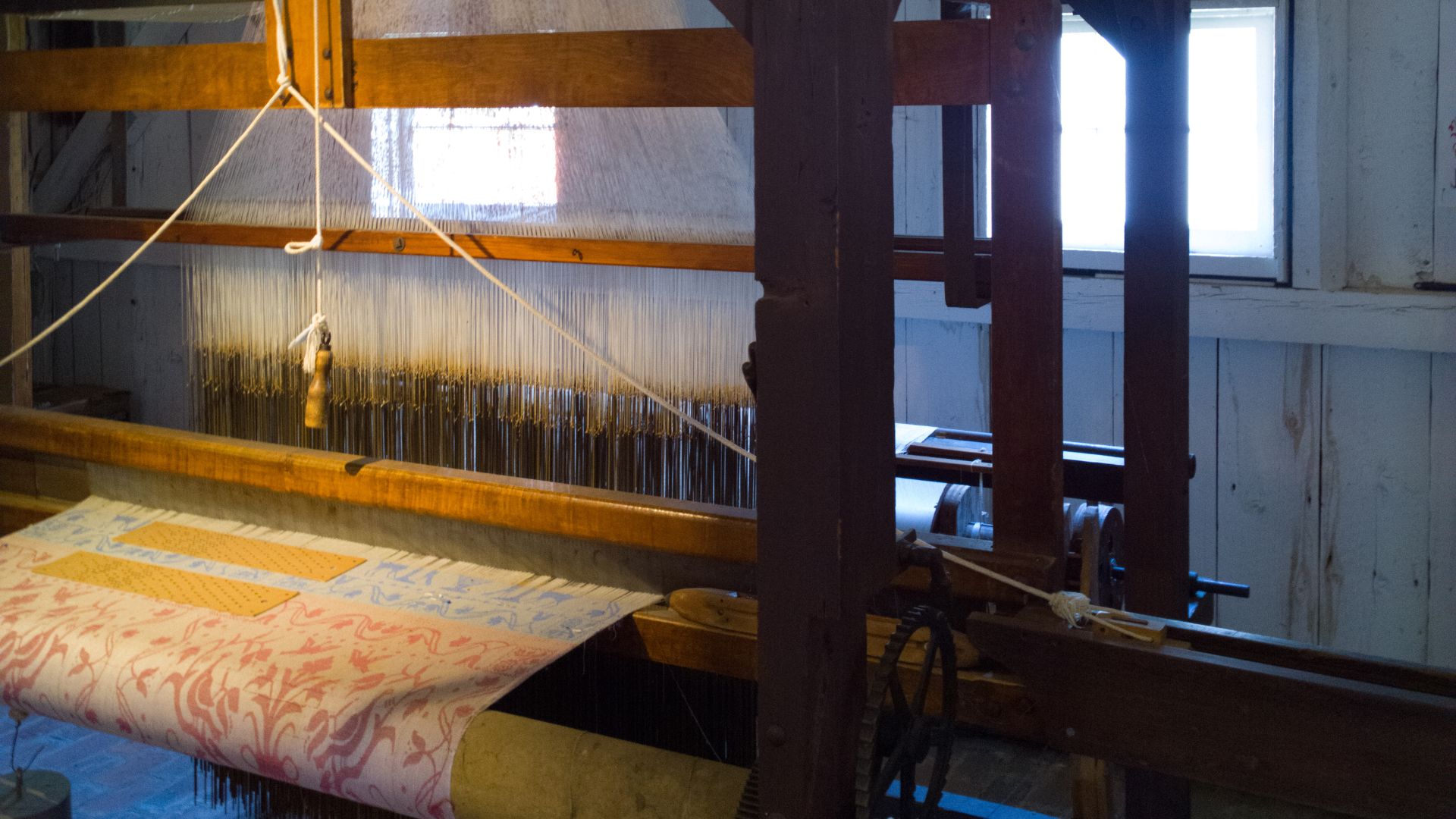
By making a series of these punched paper cards, textile artisans were able to automatically create tapestries that contained intricate designs.
From Thread To Silicon
How did wooden looms lead to the creation of the computer? The answer lies in the efforts of inventors like Charles Babbage and Ada Lovelace.
Babbage wanted to create a calculating machine. He noticed the similarities between the Jacquard loom and the use of punched cards to program the calculating machine. Ada Lovelace took this even further. She envisioned a machine that could read the holes in the cards to calculate mathematical problems. For this reason, she is credited with inventing the first computer algorithm.
From weaving threads to writing software, the two processes serve similar functions. The next time you use your smartphone, take a moment to think about how the technology originated in a textile shop.
 Read Exclusive Stories
 Bookmark & Save Articles For Later