
Many people dream of living on the water, but the practical challenges can be tough. You have to think about stability, moisture, and how to handle repairs if something goes wrong. Most of the time, fixing a houseboat means towing it to a dry dock or using a huge crane to lift it out of the water.
But what do you do if neither option is possible?
This was the challenge for the TiggColl team. They were building a prototype modular home at Hampton Hall Farm Moorings on the Grand Union Canal. The location is difficult because two low bridges, one upstream and one downstream, block access. You can’t tow a large boat out, and there isn’t space for a crane on the bank.
The designers had to come up with a creative solution. They said, “We designed this floating home as a prototype for living in difficult-to-reach and confined canal, river, or lake locations.”
A Smarter Way to Float
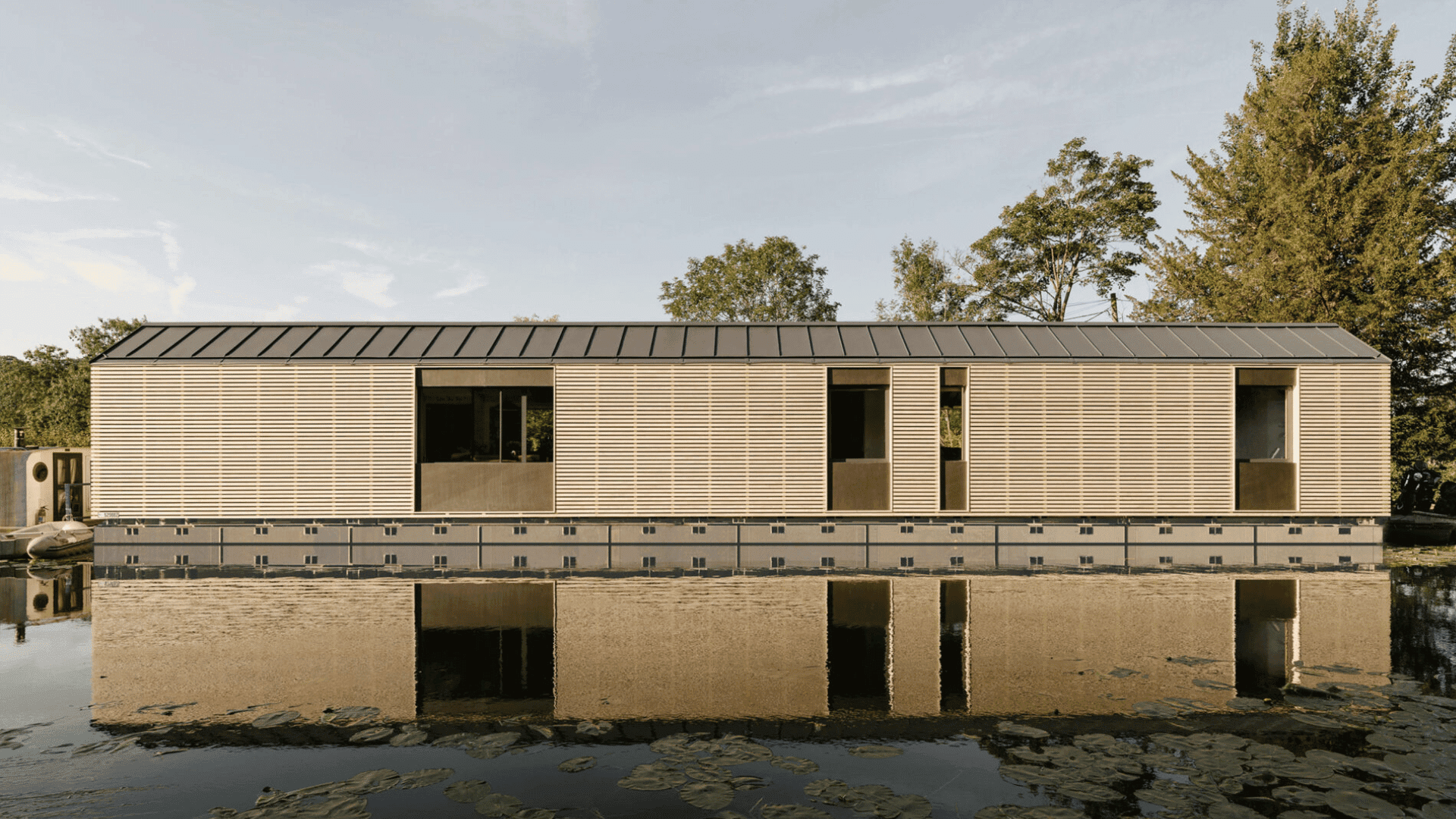
To solve the access problems, the design team worked with marine engineers to rethink the floating foundation. Instead of building one large hull, they created a system of ten separate, interlocking steel hulls. A steel gantry holds them all together.
This design focuses on easy maintenance. Since moving the house to a repair shop wasn’t possible, they made it so repairs can happen on-site. If a section needs work, they can detach that hull, float it away from the frame, and lift it onto the canal bank.
This approach turns a difficult problem into something manageable. As the team explained, “Traditional methods of maintenance are not feasible here due to the absence of a dry dock or quayside, making it impossible to remove the houseboat for maintenance by crane.”
Building for the Environment
The engineering is impressive, but the house also needed to look good and handle the wet environment. The outside is covered in horizontal Accoya timber slats. Engineers chose this wood because it weathers naturally. Over time, the house will blend in with the riverbank instead of standing out.
Inside, the design makes the most of the space. It feels modern and comfortable, with large windows that let in lots of natural light. You can see the water and landscape, but the layout still gives you privacy.
“It showcases how modern technology and creative thinking can overcome natural constraints,” the engineers said. “Providing a sustainable and enjoyable living environment even in the most challenging locations.”