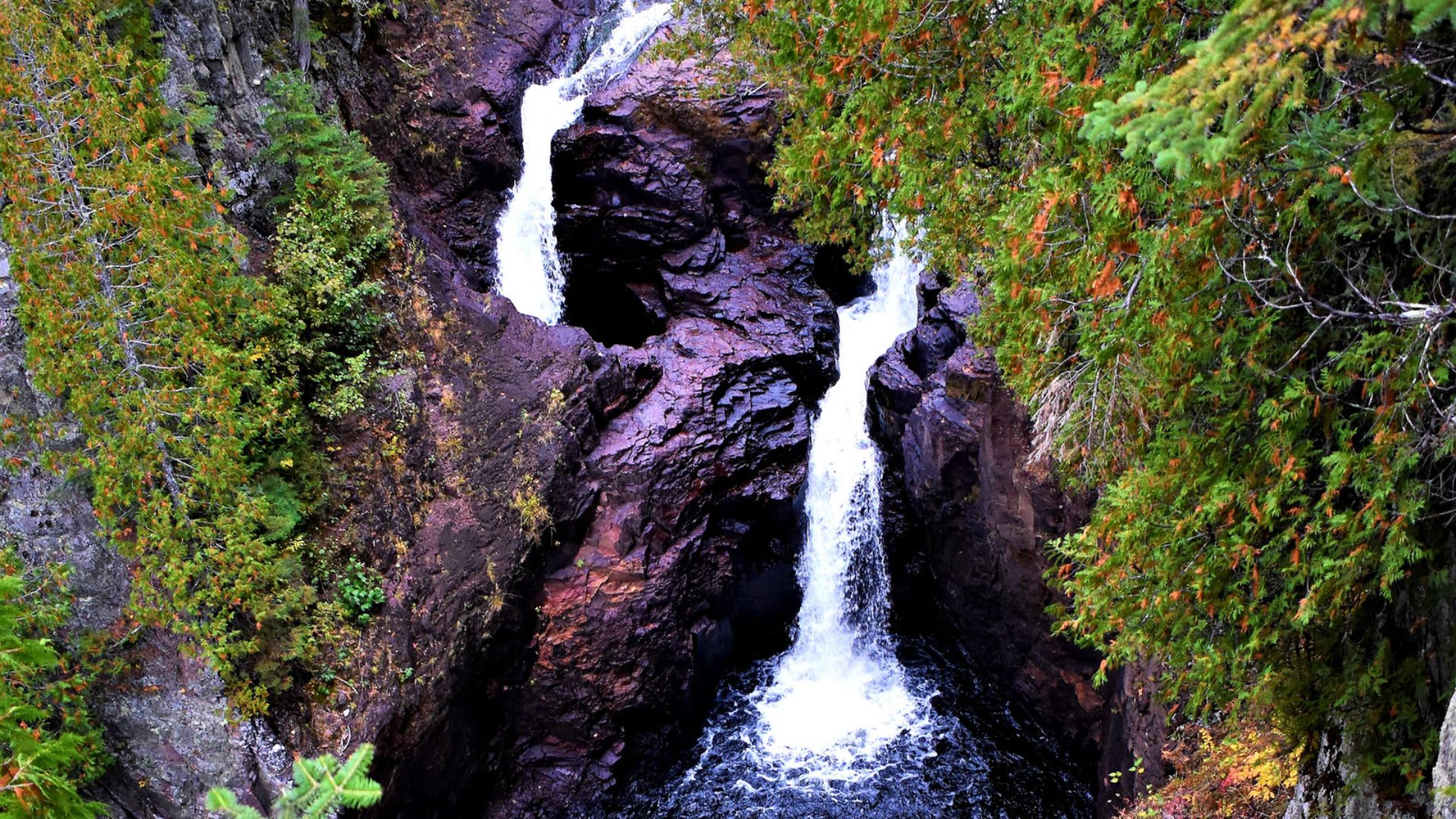
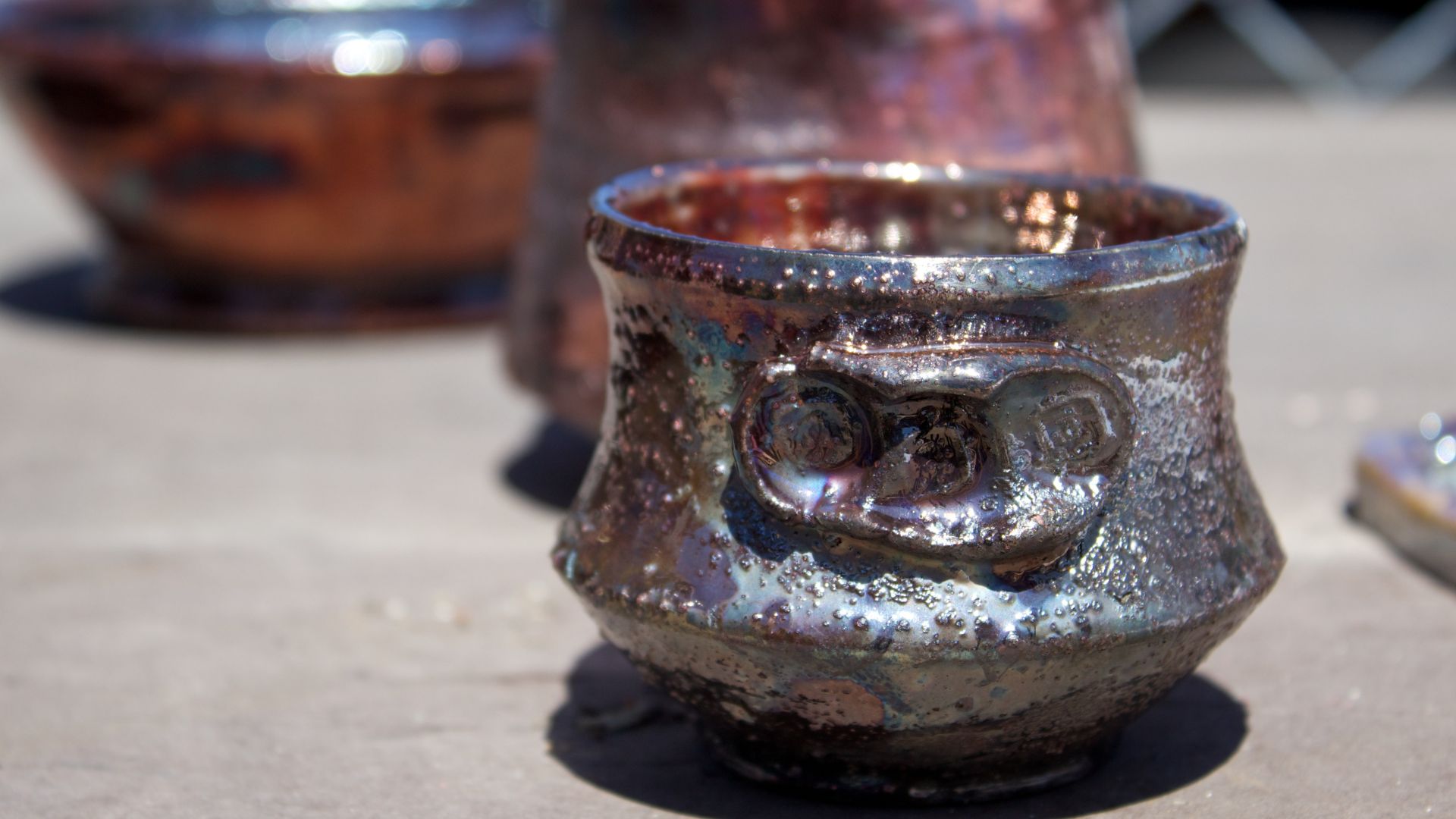
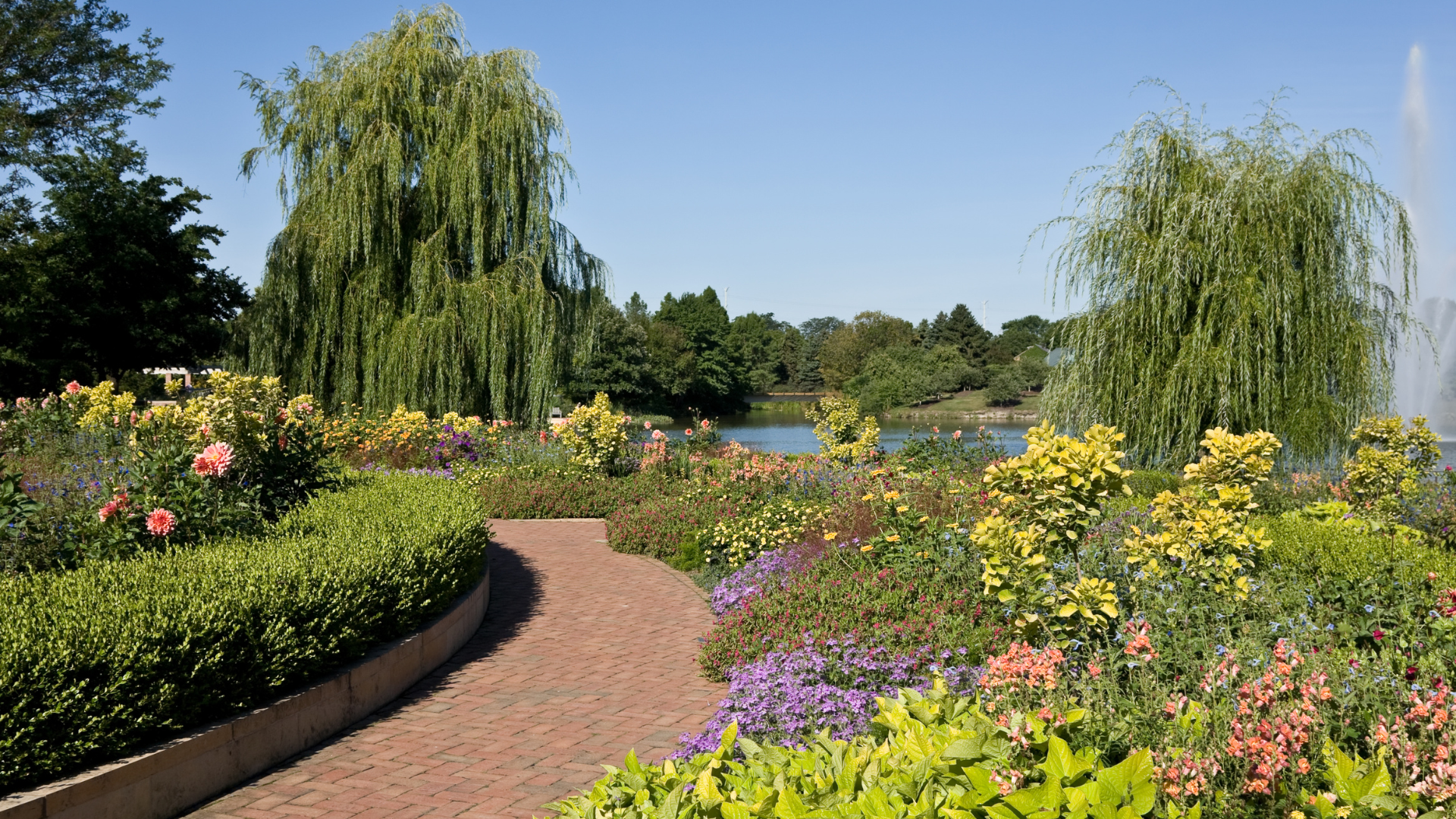
Nature photographer Christina Selby has spent a lifetime with nature as her muse. From documenting wildflower-covered mountains to the mudflats of the Texas Gulf Coast, Selby invites us to rediscover nature not just as a subject, but as a shared experience worth protecting. In this exclusive interview with Tomorrow’s World Today, she shares how her love of nature began, what guides her artistic style, and how she uses her work to encourage others to be a ‘voice for nature’.
Tomorrow’s World Today (TWT): Tell us about yourself and what inspired you to begin your work in nature photography.
Christina Selby (CS): I grew up in the Midwest, and I now live in the Southwest. I would say a lot of it was influenced by how I grew up. My family went camping a lot. My dad has a love of geology, that’s what he studied. He would always be telling us about the rocks and the mountains and what we were seeing outside. So I think that was really my first spark. I’m a quieter person, so I always felt well being out in nature and just the meadows of the Midwest at sunset with all the wild flowers and the fireflies. It’s a very magical place. And that connection has just continued throughout my life.
On my dad’s side, I have a lot of artists in the family. My grandmother was a painter, and my uncle was a sculptor. So that influence was also there. And on my mom’s side, they’re farmers in Northern Wisconsin. I feel like the love of the land and the art came together maybe a little bit later in life because my early career was focused more on science, environmental education. But in the last 20 or so years, I’ve been exploring the artistic side with photography and other work that I do.
TWT: How would you describe your style as a photographer?
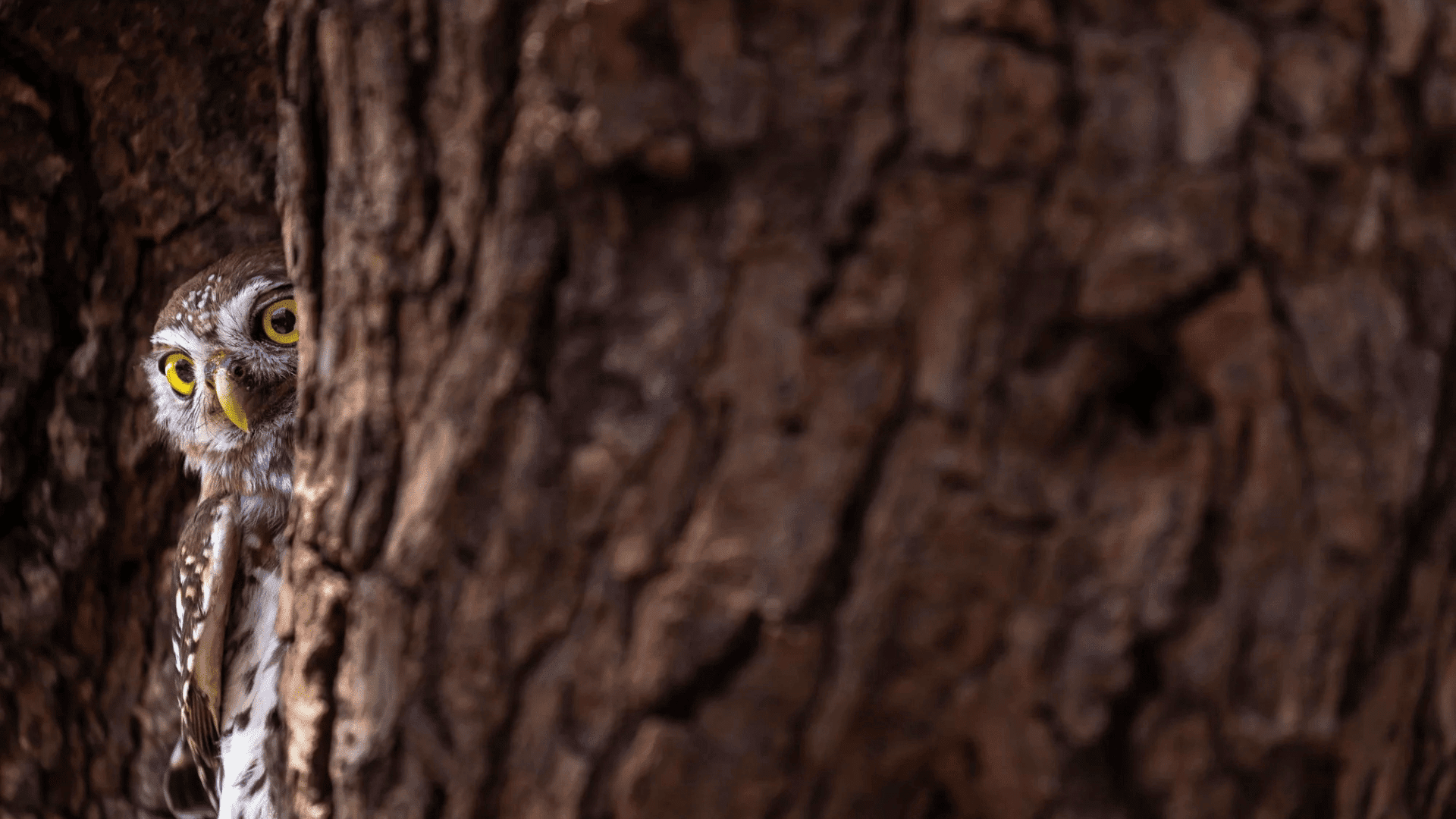
CS: I think one way to look at my style is somewhere between photojournalist and fine art photographer. Nature is my muse, and I try to capture nature in a way that’s realistic to what I see and experience when I’m out there. I don’t do a lot of editing. When I bring my photos back to my computer, I try to keep them very natural.
I also see my work at the nexus of ecology and science. My experience of the Earth as a living, breathing entity, and all things in it are conscious. Then the art, that’s where my work comes together as a photographer. I think that’s what I see in my work. I’m trying to bridge the human community with wild ecosystems and bring us closer together, and have people move from seeing nature just as a resource to this living community of which we’re a part.
TWT: What is it specifically about the natural world that inspires your work?
CS: I think I’m always drawn to beauty first. I can’t resist a wildflower field in full bloom in the mountains here. And then there’s the element of mystery, not knowing exactly what I’m seeing and discovering what things are and what role they play in the ecology. I studied ecology, so I’m really interested in the relationship between things and their environment and how things interact.
I see part of nature as very fragile, but also very resilient. Nature really inspires me to slow down, to pay attention, to connect. Ever since I was young, I’ve had this desire to protect what people often don’t see, or they undervalue, or what’s been disappearing through my lifetime. I think that’s really where the inspiration comes from, that beauty and then also that need to keep this here.
TWT: You’ve photographed nature in a wide variety of locations, from the Rocky Mountains to Brazil. What is the most rewarding aspect of shooting in such different environments?
CS: I love to just experience a new place with that ‘beginner’s mind’, as some writer that I talked to called it. When you first encounter a place, there’s a lot of awe and wonder, like, ‘Oh, my God, this place is amazing.’ Not to sound too cheesy, but there’s a process of falling in love that I go through with each new place. I feel really honored and privileged to be able to go around the world and experience these things. I try to spend enough time there so I’m understanding the essence of that place and seeing the creatures that live there and how it changes through the day or, if I’m lucky, through the seasons. Looking for how that place is different, but then also seeing the patterns of how things are the same in nature across the world and how that’s a little bit comforting. It’s a special thing about nature, being able to go to these different places and share my experience of them through my camera is really rewarding.
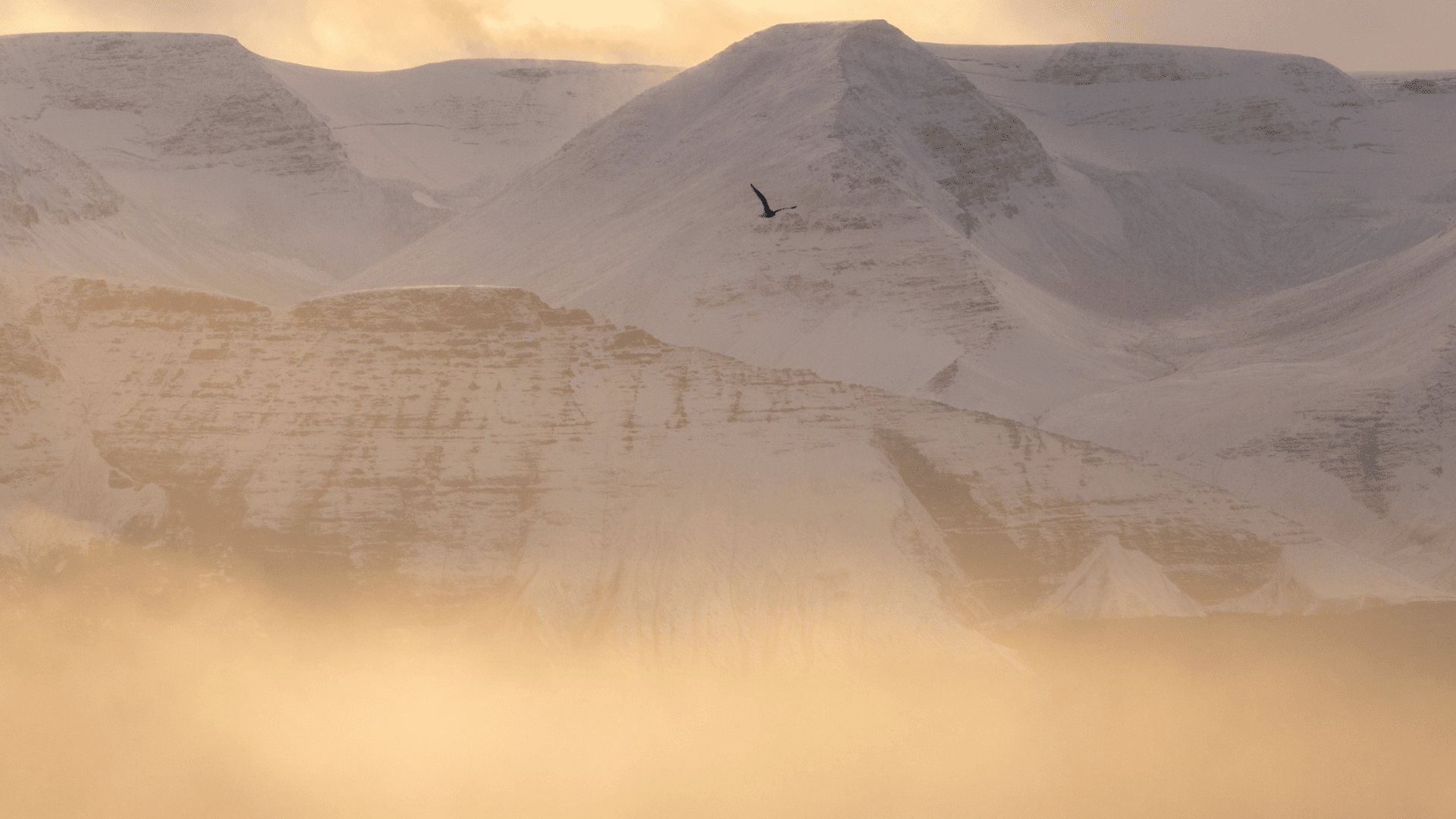
I just went to Iceland in October, and Iceland is at the top of the list for a lot of nature photographers. It’s really incredibly stunning and beautiful and wonderful. There’s a little bit of attitude amongst some people, like, ‘Well, everybody’s gone there and photographed it, and it’s done.’ But I love to go just camera in hand and wander around the more remote areas of countries and see what I see and what I experience and take that in. It’s both to share it, but also just my own experience of a place gives me a lot.
TWT: A significant portion of your nature photography emphasizes conservation, and you’ve worked on several conservation projects. Why is conservation important to you?
CS: As a nature photographer, I’m going out and trying to have a minimal impact on the places I’m at. I want those things that I admire and fall in love with to continue to be there. It’s just an ethic that I was always brought up with. I know the world isn’t all like that, but it’s a natural thing for me. There is a process of grief these days with people who experience nature and see things being destroyed or disappearing, which can be really emotional and challenging. I want to do something about that.
So supporting conservation through my work, through my images, introducing people to something they haven’t seen or thought about before, and then leading them on a path where they might take action or be a voice for nature – it’s a natural progression of my work for me.
TWT: Tell us about a few of your favorite photos you’ve captured. Why are they your favorites?
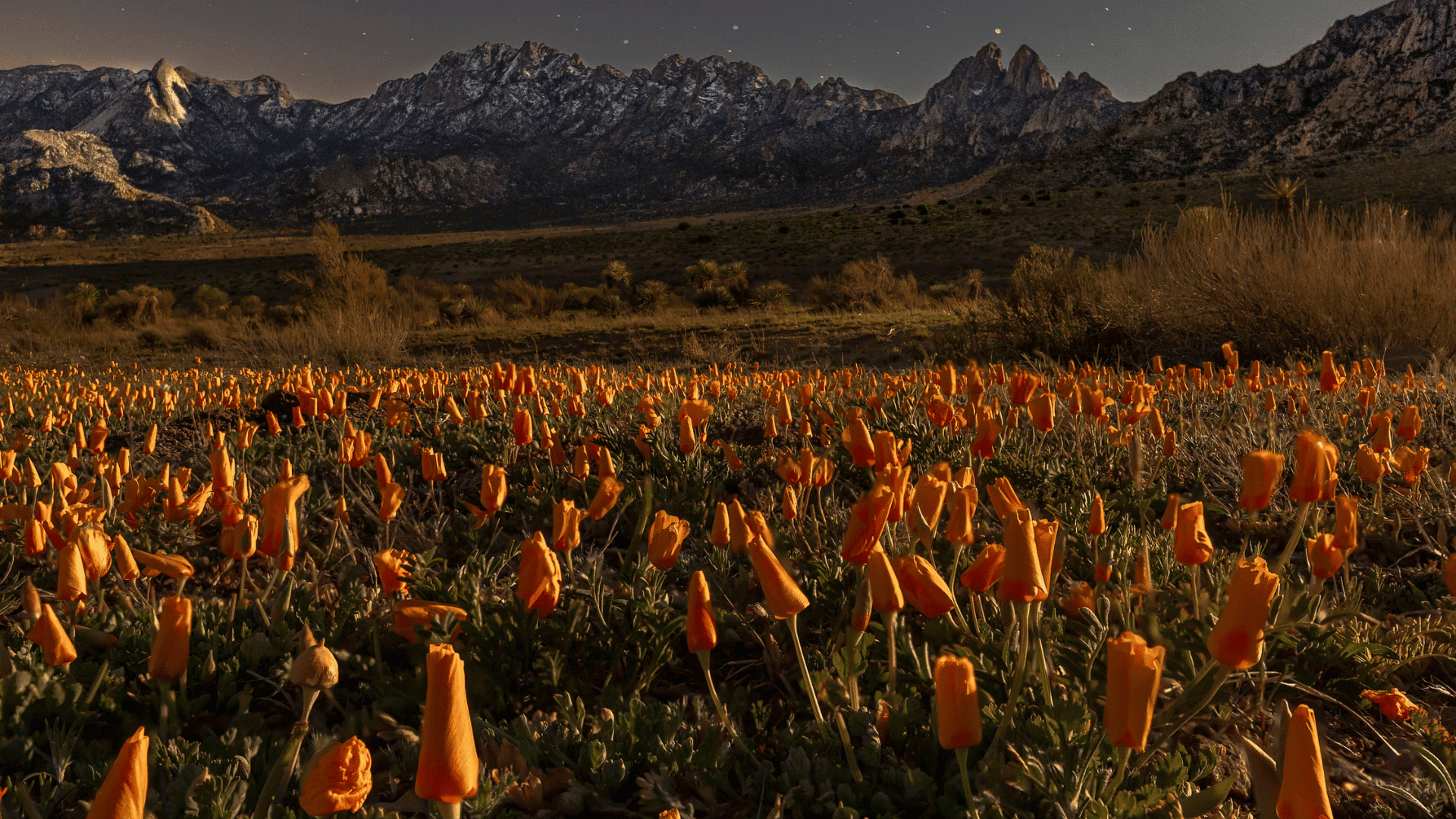
CS: I have a couple of favorites that are my favorites because they were technically challenging, or took some real thinking through, and some gear wrangling to get the photo. But most of my [photos] that have stayed my favorites over the years are because of what was going on behind the scenes in that photo. For example, I traveled with my family to Southern New Mexico, to this place called the Oregon Mountains. My son really wanted to go out with me to get this photo that I was thinking of. The mountains were covered in poppies that time of year, and the moon was full one night. We woke up at 4:30 in the morning, and the moon was setting behind the mountains, and the poppies were still closed. My son was there, and we heard a cow calling in the distance, and it freaked him out. He was standing behind me with a rock to guard things while I was working. It was just that experience of him and I being out together and showing him how these things worked. He’s interested in photography as well.
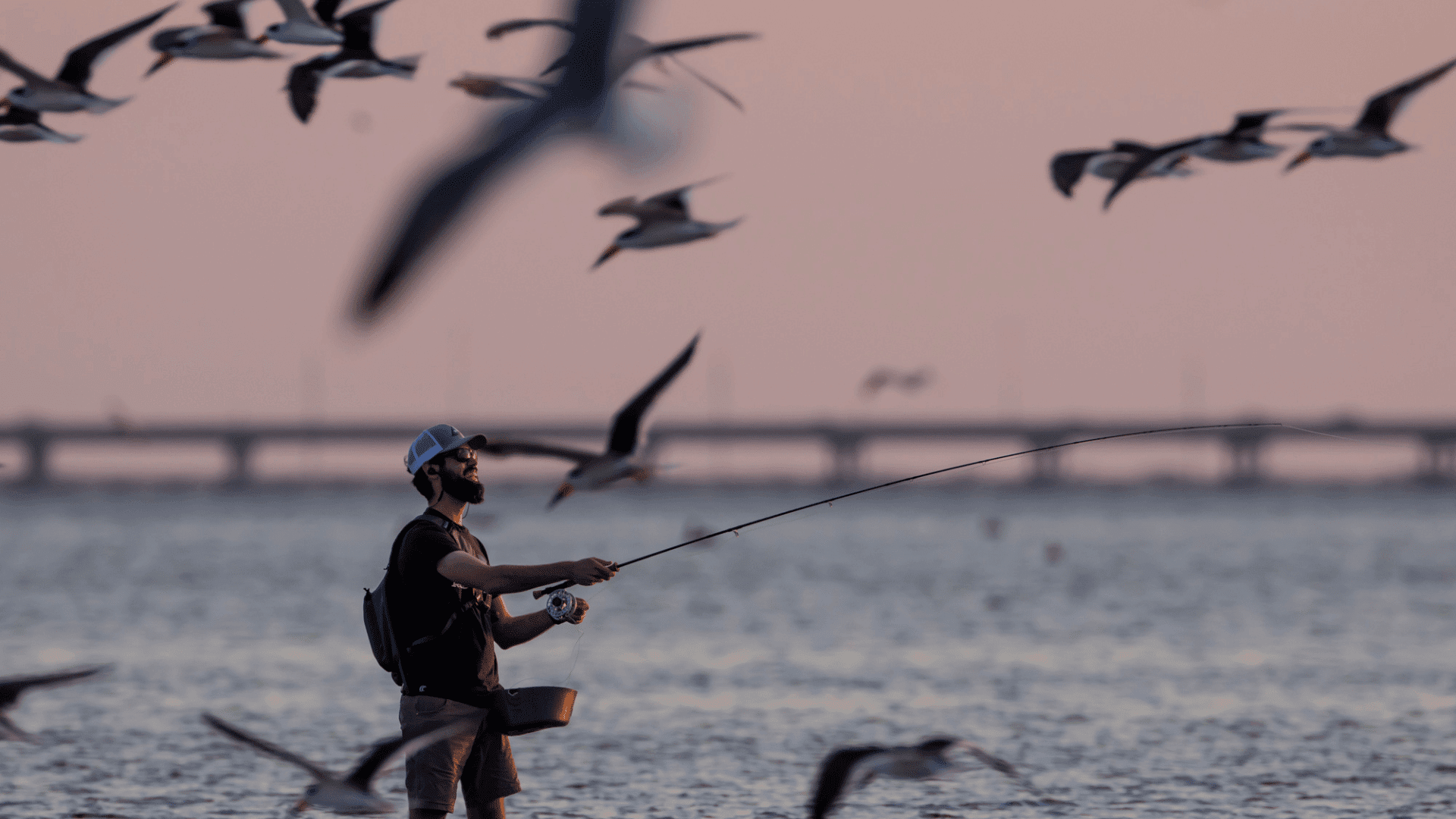
Then another one I can think of is a photograph of this fisherman in these mud flats on the Texas Gulf Coast, where we like to go. There are these turns and these gulls in big flocks there that come and roost in the water at night. And at one point, they all lifted off around this fisherman at the same time. And he was just laughing and having this amazing, happy smile on his face. That image where you can see the happiness and the joy and the wonder that being in nature and having those experiences can bring to people, that’s another one that’s continued to be one of my favorite photos.
For more information about Christina Selby and her projects, follow her on Instagram and on christinamselby.com.
 Read Exclusive Stories
 Bookmark & Save Articles For Later