Our nose tends to come in handy when checking for spoiled or rotten food, such as giving a gallon of milk the “sniff test.” Most of the time, our nose is pretty accurate, but it does miss things that are pretty much undetectable. Millions of Americans annually get sick from foodborne germs in spoiled or undercooked food.
UC Berkeley built a more accurate sniffer, which is basically just an “electronic nose” that “smells” spoiled food better than our own nose can. In addition to rotten food, it can detect common food allergens like tree nuts.
An Electronic Nose with “Sniffing” Sensors
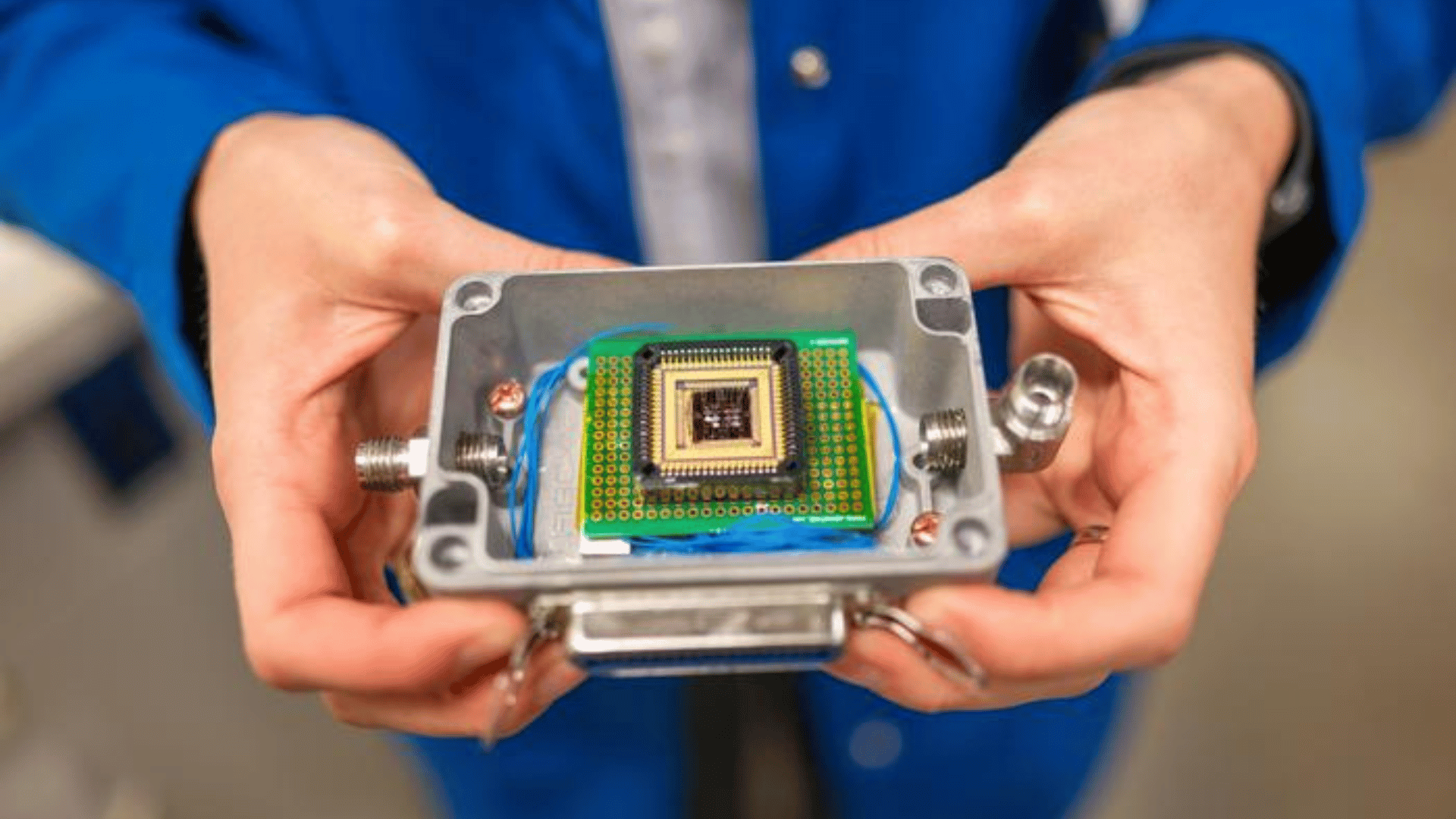
The artificial nose uses a tiny chip with 16 gas sensors that individually reacts to different gas molecules and translates chemical reactions into electrical signals.
“You can think of it like a set of digital taste buds, where each sensor on this chip responds uniquely to the various gas molecules presented to it,” said study lead author Carla Bassil, a Ph.D. student at Berkeley.
Bassil used machine learning to train the device to recognize seven foods, including bananas, strawberries, and peanuts. She also trained it on raw chicken, milk, and eggs at room temperature for up to 48 hours. The incredibly sensitive nose caught 0.05 grams of a walnut.
Advertisement
“The idea is that we can use the relative selectivity of the gas sensors, paired with the pattern recognition abilities of machine learning, to sort out which gas fingerprint is associated with each food,” Bassil said. “The result is a sensor chip that is far more sensitive and far more objective than any human nose can be.”
Future Fridges
Scientists have tried making electronic noses since the 1980s, but putting a lot of sensors on one chip is challenging. Bassil solved this by using microscopic carbon nanotubes. These devices work at room temperature, which allowed her to use a simple manufacturing process called drop casting.
“The truly scalable aspect of my electronic nose is that we can use all these different types of sensing materials while depositing them all in a single step,” Bassil said.
There are still some limitations to the technology that researchers still need to work on. For example, Bassil hasn’t tested the electronic nose in messy, real-world environments yet, like finding nuts inside a cake or spoiled food mixed with fresh food in a fridge.
Bassil already made a portable version that connects to an iPhone app. Eventually, this tech could end up inside your kitchen appliances.
“I think ‘smart’ fridges — which come with sensors that you can control on your phone — would be a great application for this kind of technology,” Bassil said. “How great would it be if your fridge could tell you, ‘Hey, your broccoli’s going to go bad soon, so you should probably eat that’? Or, ‘Your chicken is on its last day’?”
 Read Exclusive Stories
 Bookmark & Save Articles For Later