The view of a distant Earth disappearing behind a huge moon is a view few humans have ever witnessed in person, but Reid Wiseman, who commanded the Artemis II mission, posted a video of the view on X.
Earthset From Artemis II Mission
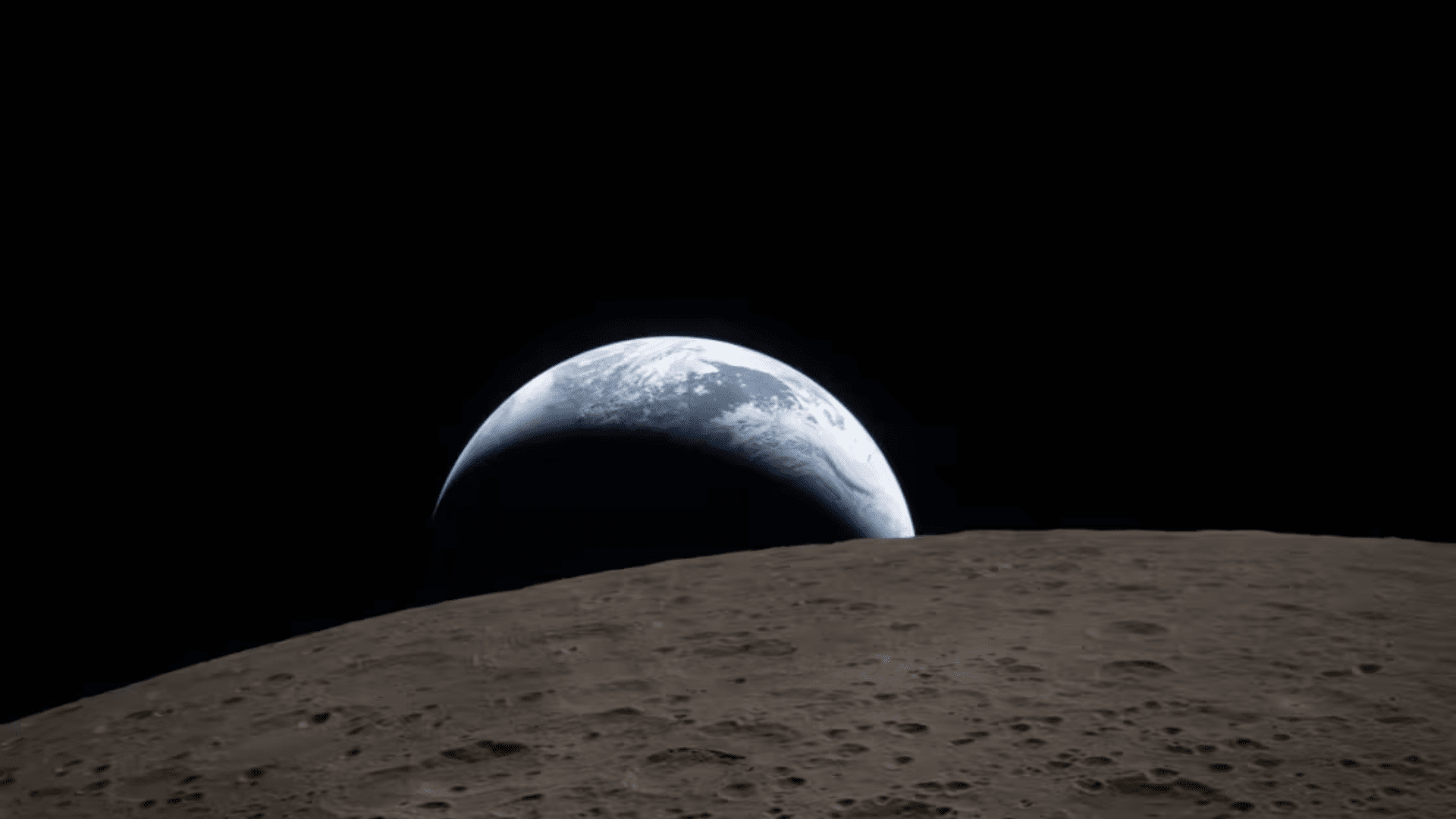
“Like watching sunset at the beach from the most foreign seat in the cosmos,” Wiseman wrote about the video, which he filmed out the window of the Orion spacecraft. He described the experience as “only one chance in this lifetime.”
After launching toward the moon on April 1, the astronauts spent 10 days circling the moon before returning to Earth on April 10. Over the course of their journey, the Artemis II astronauts became the first people to see the far side of the moon with their own eyes.
Wiseman said he “couldn’t resist a cell phone video of Earthset” while traveling around the moon on April 6.
“I could barely see the Moon through the docking hatch window,” Wiseman wrote, “but the iPhone was the perfect size to catch the view…this is uncropped, uncut with 8x zoom which is quite comparable to the view of the human eye.”
Advertisement
As Wisemanj was capturing video, other crew members, NASA astronauts Christina Koch and Victor Glover, and Canadian astronaut Jeremy Hansen, were also snapping photos and recording observations of the moon’s craters and topography.
Only one chance in this lifetime…
Like watching sunset at the beach from the most foreign seat in the cosmos, I couldn’t resist a cell phone video of Earthset. You can hear the shutter on the Nikon as @Astro_Christina is hammering away on 3-shot brackets and capturing those… pic.twitter.com/8aWnaFJ69c
— Reid Wiseman (@astro_reid) April 19, 2026
“You can hear the shutter on the Nikon as @Astro_Christina is hammering away on 3-shot brackets and capturing those exceptional Earthset photos through the 400mm lens,” Wiseman wrote on X, referring to Koch.
The Earthset video emulates the style of a photo taken during the Apollo 8 mission in 1968. Wiseman’s new video was taken using his personal iPhone, with an amateur feel that makes the moment feel more real and personal.
Astronauts spent a total of approximately seven hours capturing photos and observations during the mission. Many more images are expected to be released to the public within the coming weeks and months.
 Read Exclusive Stories
 Bookmark & Save Articles For Later