
A six-planet parade will be visible in the night sky on February 28, 2026, featuring Mercury, Venus, Jupiter, Saturn, Uranus, and Neptune. But when and how can stargazers view the phenomenon?
The planets will begin to become more visible from mid-February onwards. Though many of the planets can be viewed up to two weeks before February 28, Venus and Mercury will be best seen towards the end of the month.
Four of the planets in the parade will set in the west just after the Sun. One planet among those, Neptune, will only be visible through a telescope.
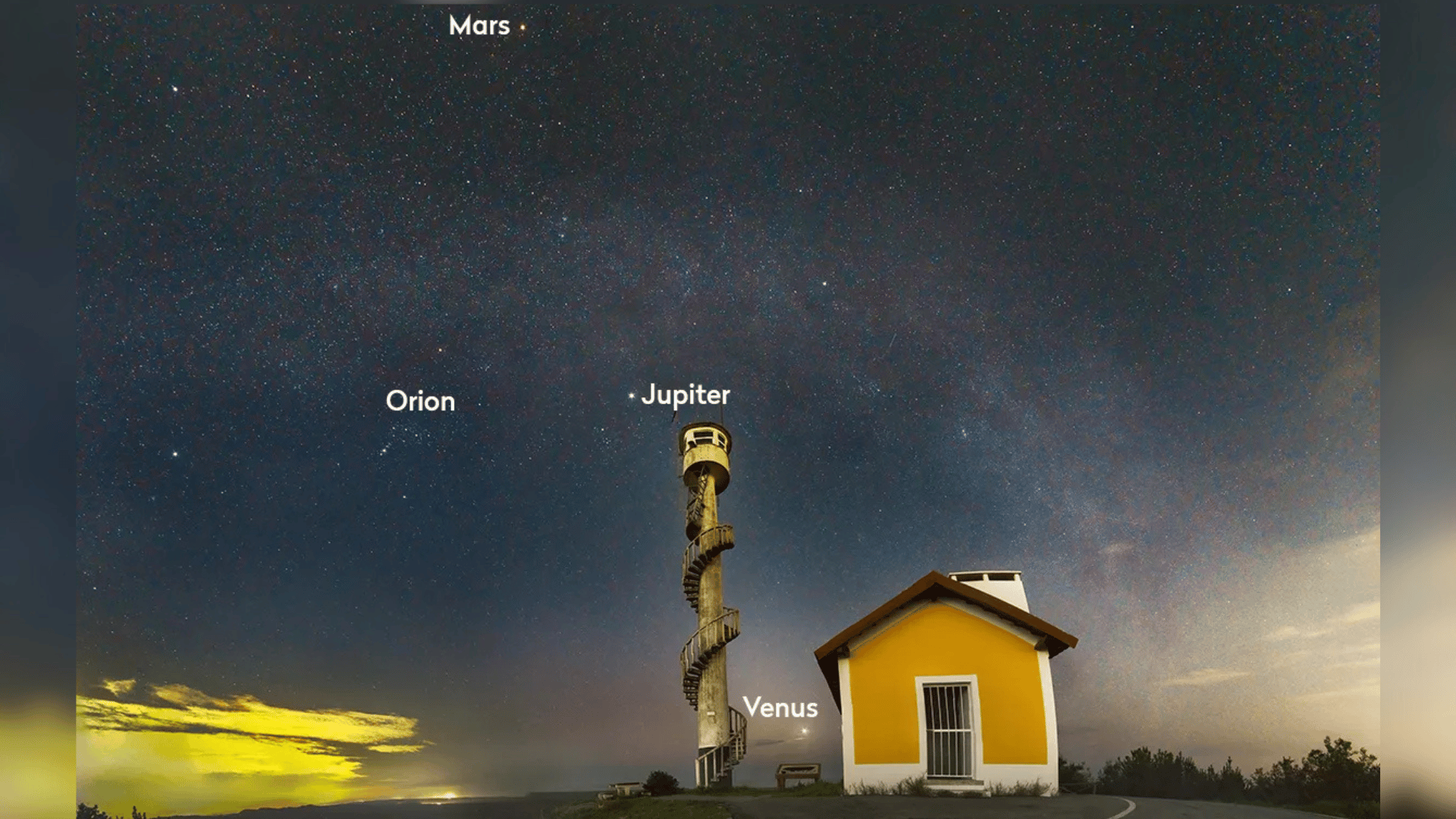
Planet Parade Breakdown
- Mercury: By February 19, Mercury reaches its furthest position from the Sun, known as ‘greatest eastern elongation’. That means that, by February 28, Mercury is setting much longer after sunset than it did at the start of the month. It will have dimmed considerably, making it difficult to see.
- Venus: Venus won’t be as dim as Mercury, and it will be at a higher altitude, setting later after the Sun. That will make Venus easier to see than Mercury during the planet parade. By February 28, Venus and Mercury will be close together in the sky, making Venus a good jumping-off point for locating its dimmer neighbor.
- Jupiter: Though Jupiter will be past its January peak, it’s still the best planet to see in the night sky and the easiest to see in the planet parade. By sunset on February 28, it’s high in the eastern sky, higher than the Moon and close to stars Castor and Pollux in Gemini.
- Saturn: This planet is better seen at the start of February, as it’ll be setting in the west close to sunset by the end of the month. It will be located just above Venus and Mercury in the evening twilight.
- Uranus: In February 2026, Uranus is located beneath the Pleiades star cluster in Taurus. This planet’s high altitude could make it one of the easier planets to spot.
- Neptune: By February 28, Neptune will be low on the western horizon by sunset, close to Saturn. Because you’ll need a telescope to see it, extreme caution is required.
How to See the Planet Parade
Experts recommend finding a flat, clear western horizon for the best possible view of the parade. The planets will mostly be clustered around the western horizon at sunset, and there won’t be much time to spot Mercury and Venus before they disappear below the horizon. This means that extreme care must be taken by those hoping to view the planet parade so as not to accidentally glimpse the setting sun through their naked eye, telescope, or binoculars.
This should give you a good view of Venus, Mercury, and Saturn. Uranus will be higher in the western sky, Jupiter will be high in the southeast, and viewing Neptune would require a telescope.