For decades, astronomers have been looking into the void between the stars, dreaming that something enormous, unseen, and cosmic must be out there holding it all together. Yesterday, they found it.
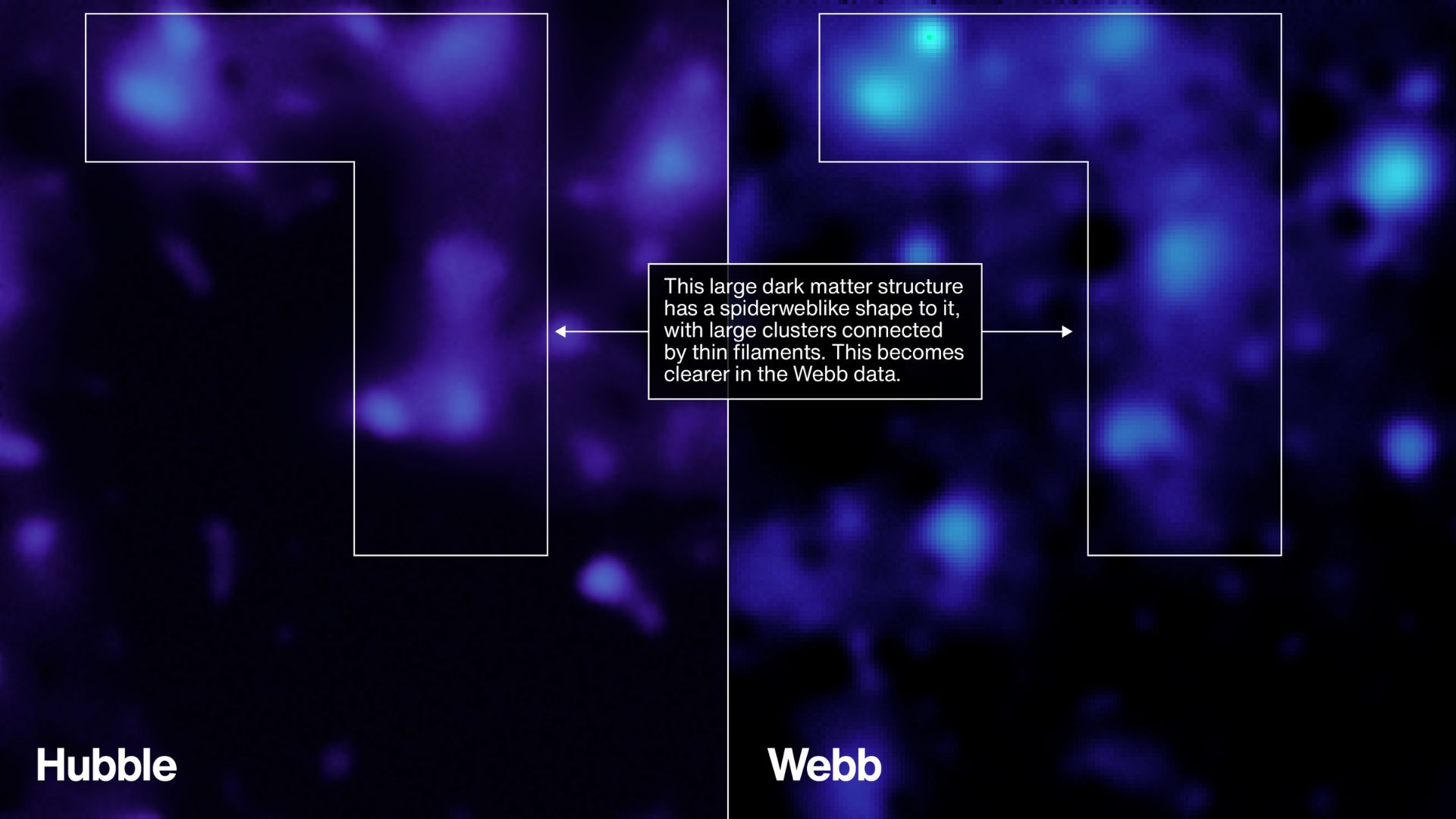
In a revolutionary paper released on Jan. 26 in Nature Astronomy, a global collaboration of researchers using the James Webb Space Telescope (JWST) reported the sharpest map of dark matter ever created. The map, part of the COSMOS-Web survey, shows the universe’s “invisible scaffolding” in the constellation Sextans over an area roughly 2.5 times the size of the full moon.
Unlike dark matter maps created by ground-based and Hubble telescopes, which only show a fuzzy image of these gravitational megastructures, the WEBB data reveals the cosmic web in jaw-dropping high resolution. Webb’s Cosmic Web team is now observing the intricate, filamentary structures of dark matter connecting galaxies like pearls on a string over a scale of millions of light-years.
Advertisement
“Previously, we were looking at a blurry picture of dark matter,” said Dr. Diana Scognamiglio of NASA’s Jet Propulsion Laboratory, the study’s lead author. “Now we’re seeing the invisible scaffolding of the universe in stunning detail.”
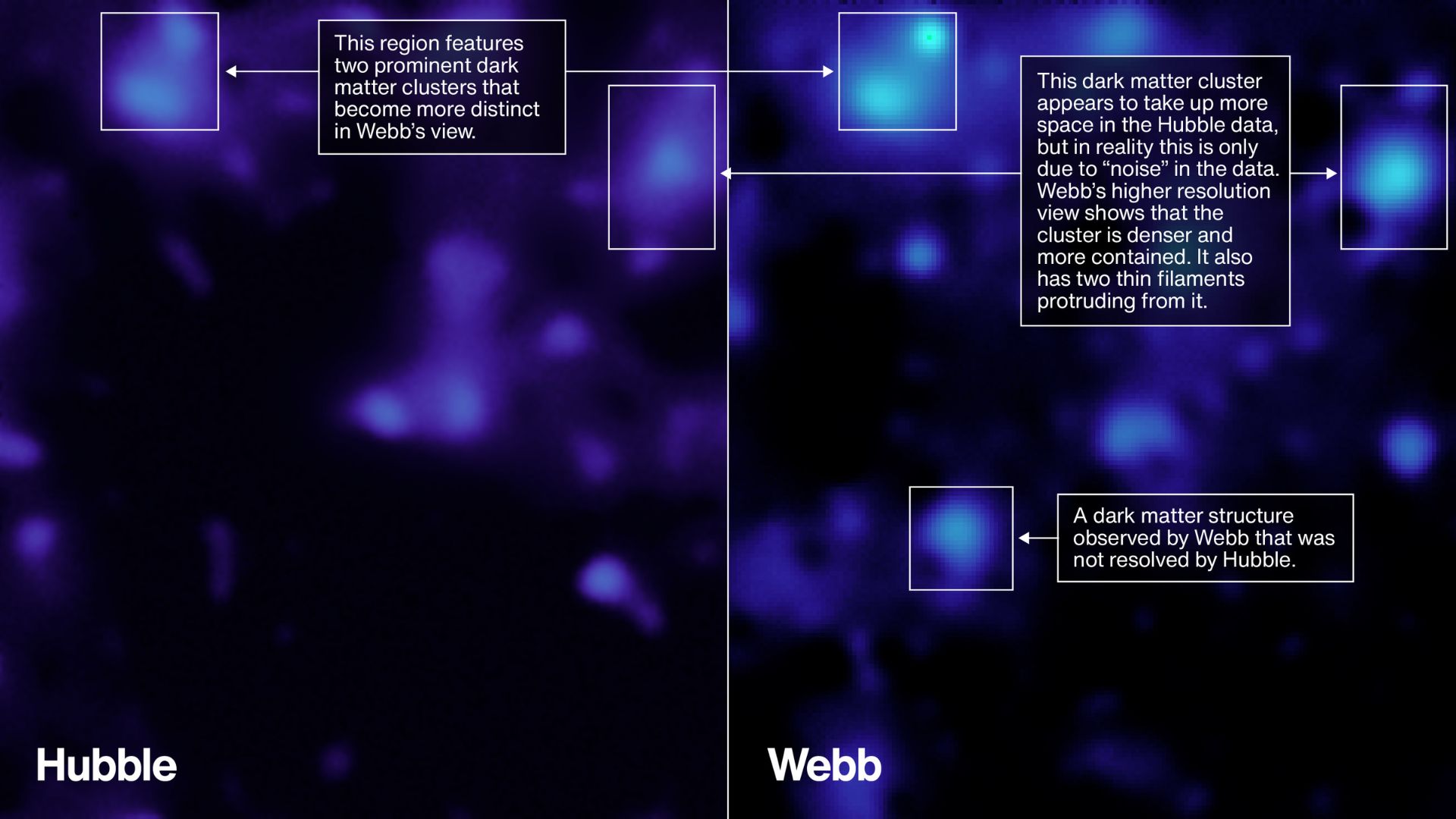
This new observation validates a key theory that dark matter is not just the filling in our universe but its true design. The map shows how this elusive substance clumped together in the early universe, creating gravitational wells that allowed normal matter to gather, setting off the chain reaction that led to the birth of stars and galaxies. Without it, there would be no universe, and possibly no life.