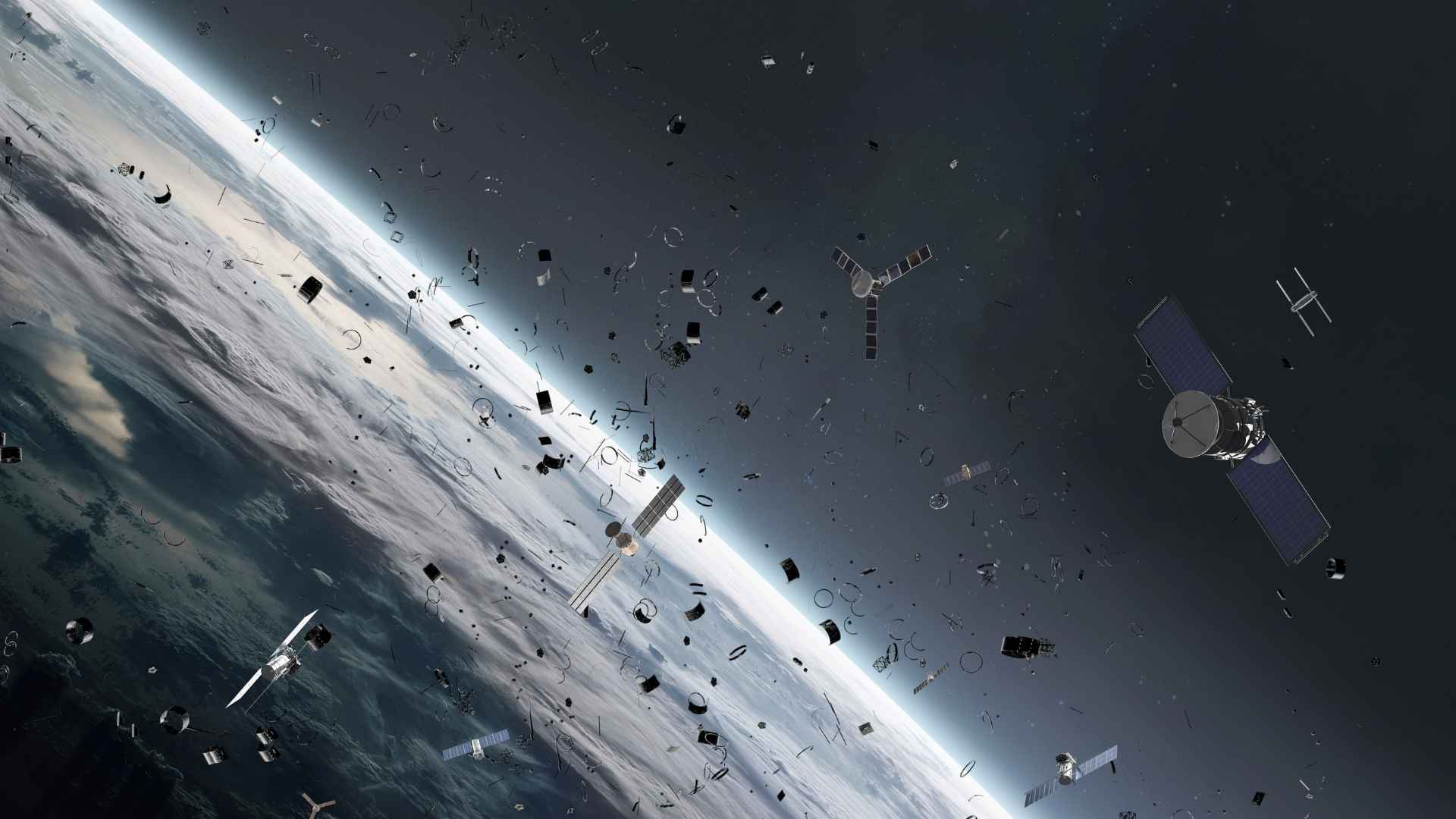
Space is becoming a crowded place. Currently, there are nearly 130 million pieces of space junk orbiting Earth. These pieces of space junk pose a threat to the data relay and communication satellites we rely on every day. However, a new study from India reveals that the Sun is doing much of the heavy lifting in cleaning up our orbital debris.
For the last few years, scientists have known that the Sun enters an 11-year cycle of activity. During these periods of solar maximum, the Sun emits a great deal of energy that heats the upper layers of the Earth’s atmosphere. This expansion of the atmosphere presents additional drag upon the items in orbit. These items slowly lose altitude and fall towards Earth, where they burn up in the atmosphere.
The 67% Threshold
The Space Physics Laboratory in India released a study that confirms the findings of others in the field. For 36 years, the researchers studied 17 pieces of space junk. The result of their study is that when solar activity reaches 67% of the Sun’s maximum, the rate at which space junk falls towards Earth increases significantly.
Advertisement
For the first time, scientists have been able to give a specific percentage of solar activity that indicates the natural “janitor” of space is on the clock.
A Challenge for Satellites
While this is excellent news for addressing the space junk problem, it creates a problem for active satellites. Because the atmosphere is thickening, the active satellites must burn more fuel to maintain their orbits. If they do not, they will fall towards Earth along with the space junk.
By understanding the Sun’s natural cycles, satellite producers can better engineer and build satellites that can withstand these specific periods of solar activity. In many ways, this is another example of how the more we understand the natural world, the better we can navigate our high-tech world.
 Read Exclusive Stories
 Bookmark & Save Articles For Later