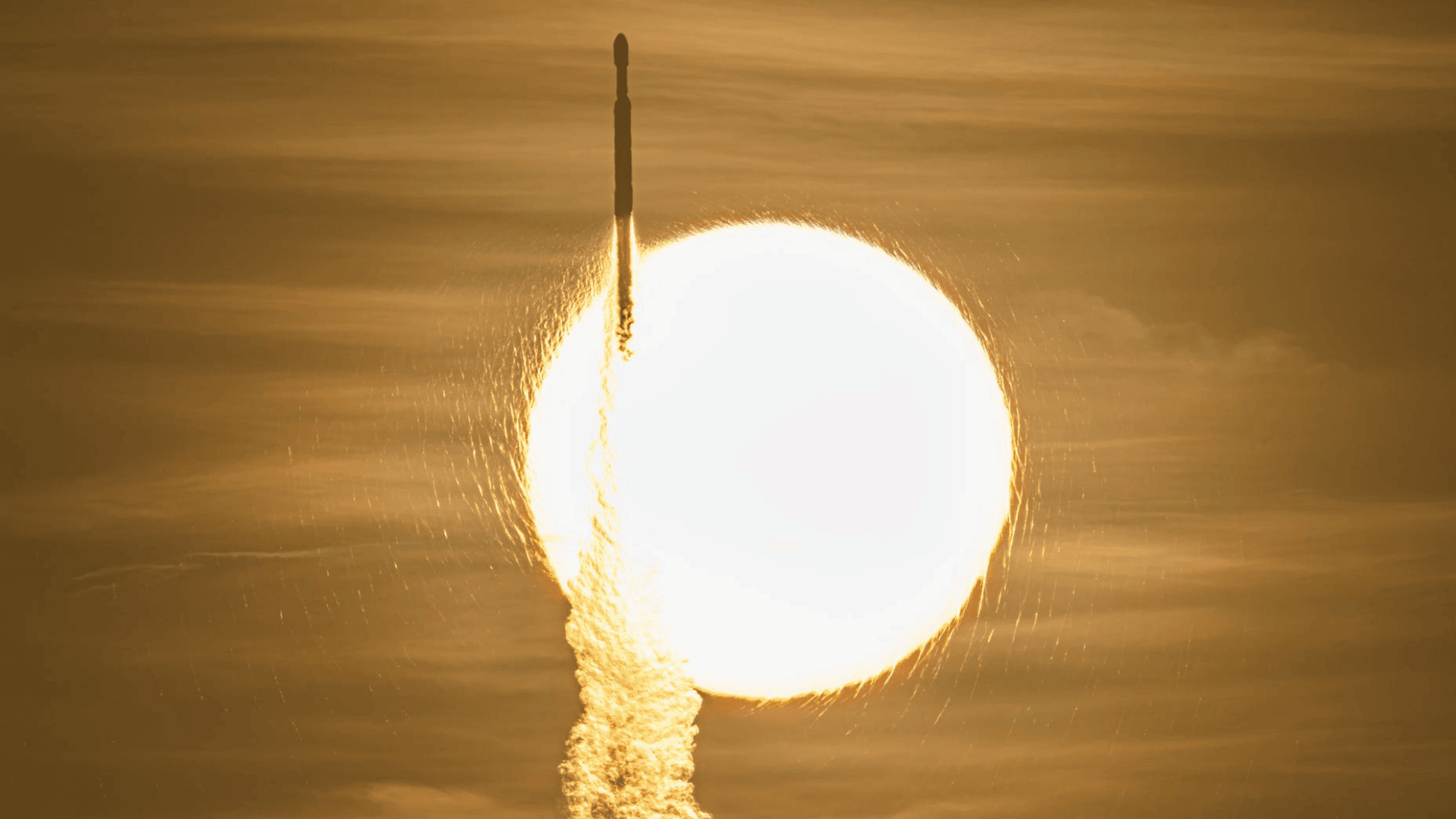
NASA’s Nancy Grace Roman Space Telescope is officially on its way into deep space. The observatory launched at 7:26 a.m. EDT Sunday aboard a SpaceX Falcon Heavy rocket from Kennedy Space Center in Florida. It is now on a three-month, million-mile journey to its final orbit around the second Sun-Earth Lagrange point.
“Roman is exactly the kind of success story we want to see across NASA,” said NASA Administrator Jared Isaacman. “Delivered ahead of schedule and on budget, this mission reflects more than a decade of dedication from the NASA workforce and our industry partners. Now, Roman will give us a new atlas of the universe, push the boundaries of discovery, and demonstrate what is possible when America’s space program pairs bold ambition with disciplined execution.”
Speeding Up Cosmic Discovery
Roman pairs wide-field views with crisp infrared vision to scan the sky a thousand times faster than the Hubble Space Telescope. The main camera packs 300 megapixels across 18 detectors, each about the size of a saltine cracker.
That hardware means Roman will stream back 1.4 terabytes of data every single day, the highest data rate of any NASA astrophysics mission so far. To manage that flood of information, scientists will use machine learning, artificial intelligence, and citizen volunteers to flag key findings.
Advertisement
“Roman will be a discovery machine that will bring us closer than ever before to answering humanity’s most profound questions about our cosmic history,” said Nicky Fox, associate administrator for the Science Mission Directorate at NASA Headquarters in Washington. “With its large field of view and fast survey speeds, Roman will usher us into a new era of discovery and make the invisible visible, setting the foundation for humanity’s search for life beyond our solar system.”
Finding New Worlds
Roman also carries a Coronagraph Instrument designed to snapshot Jupiter-like planets outside our solar system, testing hardware for future life-hunting space missions.
The solar panels opened smoothly after launch, and the team expects to release Roman’s first images by early 2027.
“We’ve never been able to view the universe with eyes like Roman’s before,” said Julie McEnery, Roman’s senior project scientist at NASA Goddard. “There’s no telling what more we’ll know and have seen by this time next year.”
 Read Exclusive Stories
 Bookmark & Save Articles For Later