Robots aren’t necessarily known for their dexterity or artistic abilities. Most of the time, robots are deployed for heavy lifting, not playing a piano. Standard robotic motors are often too bulky for nimble tasks.
A team of Penn Engineers developed a way around that. The team created artificial muscles called CoilLCE, inspired by the small muscles in human hands and eyes.
Professors Shu Yang and Cynthia Sung, along with students Ziyun Zhang and Xuelin Wu, combined heat-reactive materials called liquid crystal elastomers (LCEs) with graphene. Mixing these materials creates fibers that are soft, light, and tough enough to pull against one another.
“Soft robotic muscles need to be both strong and flexible to mimic human movements, but these properties are rarely found in the same material,” explained Yang. “In my lab, we’ve worked with LCEs as actuators, so they were a good material to start with, but they weren’t the only one we needed.”
Built-in Sensors
Fine motor skills not only require flexibility; they also require muscles that know when to stop. Traditionally, LCEs shrink when heated or relax as they cool, making it hard to maintain a steady pose.
To fix this, the researchers tucked an ultrathin copper coil inside each fiber, which heats the material, causing it to contract, while also tracking the electrical resistance to sense how far it has moved.
“We used the resistance of the embedded copper coil as a feedback signal and adjusted the heating power in real time to keep the resistance near a target value,” said Wu. “Because the coil served as both a heater and a sensor, we did not need a separate sensor for feedback.”
Expressive Robots
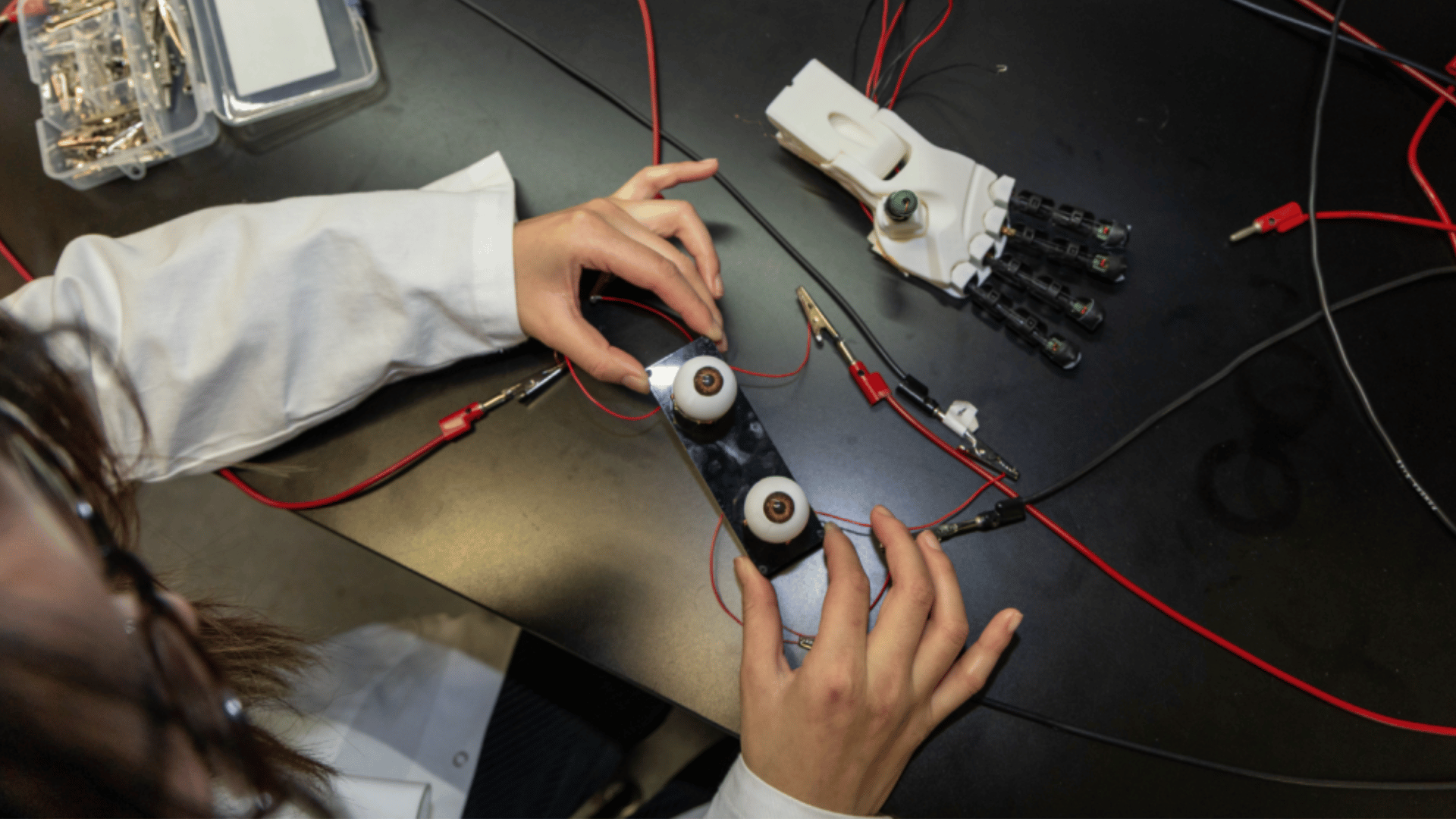
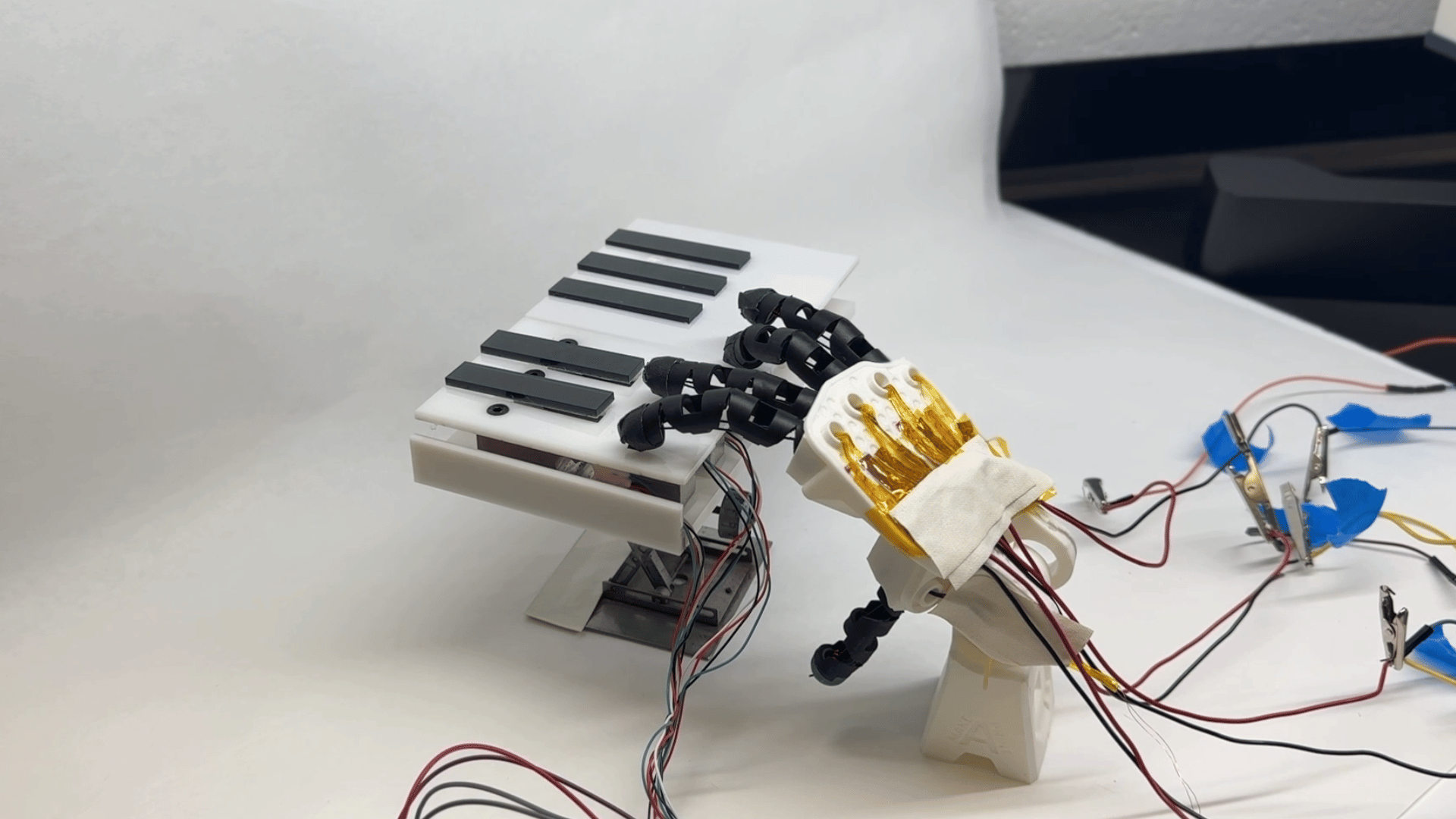
In lab tests, the fibers worked in opposing pairs, just like real muscles in which one contracts while the other stretches. This setup powered a robotic finger to play piano notes and an artificial eye that smoothly shifted its gaze.
Next, the team wants to combine more of these fibers into larger systems, eventually pairing them with AI and computer vision.
“We’ve shown that these materials can be controlled to produce precise movements and work together in coordinated ways,” Zhang added. “The next challenge is to bring more of these muscles together into integrated systems, where they can perform increasingly complex movements. I’m excited about the possibility of using this approach to create robots that move with the same subtlety and expressiveness we see in human faces.”
Advertisement
 Read Exclusive Stories
 Bookmark & Save Articles For Later