The Federal Drug Administration (FDA) recently approved Johnson & Johnson’s new robotic system, OTTAVA. According to scientists, it’s the first robotic system built directly into the operating table.
The FDA approved it for general surgeries like gastric bypass, removing the appendix, and hernia repairs. J&J is rolling it out to a few U.S. hospitals first, while also testing it for other procedures.
“We are pioneering a new category of surgical robotics with OTTAVA,” said Tim Schmid, Executive Vice President, Worldwide Chairman, MedTech, Johnson & Johnson. “This is the start of the next era in surgery as we deliver not just a new surgical robotics system, but a catalyst for fundamentally better surgical care that is informed by technology, guided by clinical insight, and delivered with care by Johnson & Johnson.”
The OR Gets a Robotic Update
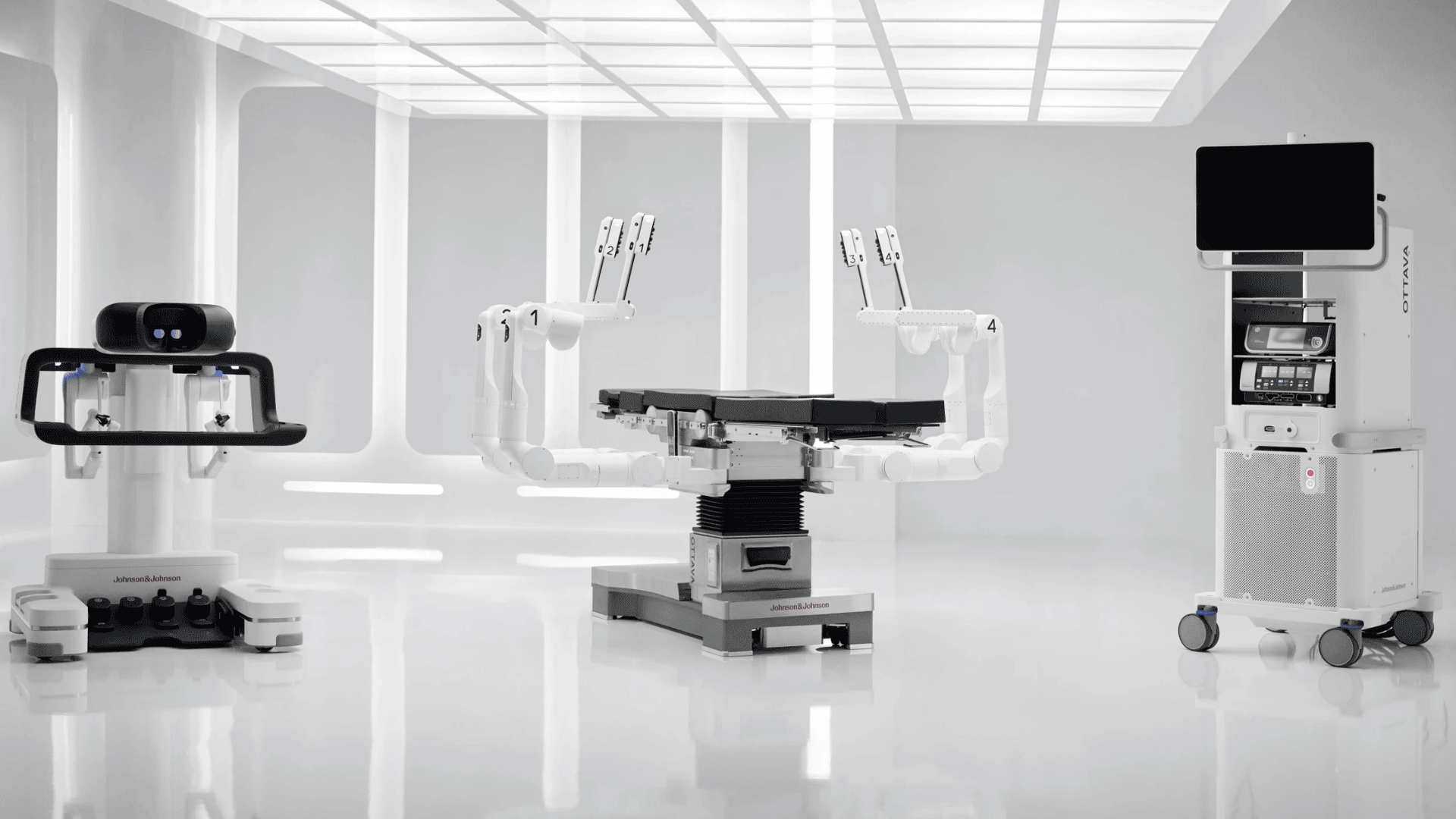
Operating rooms get crowded, but OTTAVA helps manage this by putting its four robotic arms right into the bed. It takes up 30 to 50 percent less space than older cart systems, giving doctors and nurses more room to move and talk.
Advertisement
The bed and arms move together in sync to help surgeons reach different spots without stopping to adjust. The tools are updated too, like a needle driver that stops accidental suture cuts.
“Surgical robotics will play an increasingly important role in surgical care, but it’s clear that what defined the last 25 years of surgery will not define the next 25,” said Hani Abouhalka, Company Group Chair, Surgery, MedTech, Johnson & Johnson. “By opening up the way we think about architecture, data, and the very workflows of surgery itself, we have designed OTTAVA to deliver clinical and economic benefits and support surgeons and hospitals as the future of surgery unfolds.”
Connecting Tools with Data
OTTAVA also connects to a digital system called Polyphonic to share data and video. J&J is pairing this with training programs to help doctors learn the system.
“Variability of surgical outcomes remains a challenge in healthcare,” said Peter Schulam, M.D., Ph.D., Chief Scientific Officer, MedTech, Johnson & Johnson. “While surgical robotics has helped augment surgical skill, the next generation of care must also integrate data and insights across the surgical ecosystem to support surgeon judgement and help improve patient outcomes. OTTAVA was designed with that connectivity in mind.”
 Read Exclusive Stories
 Bookmark & Save Articles For Later