There was nothing spooky about Friday the 13th for SpaceX. The company successfully launched Starship from Starbase, Texas, for its 15th test flight. Even more exciting, the spacecraft returned to where it started less than a day later when it was caught midair for the first time by Mechzilla.
The trip began with the Super Heavy booster lighting all 33 of its Raptor engines to push the rocket toward space. After separating from the booster in a hot-staging maneuver, Starship fired up its own six Raptor engines and kept climbing.
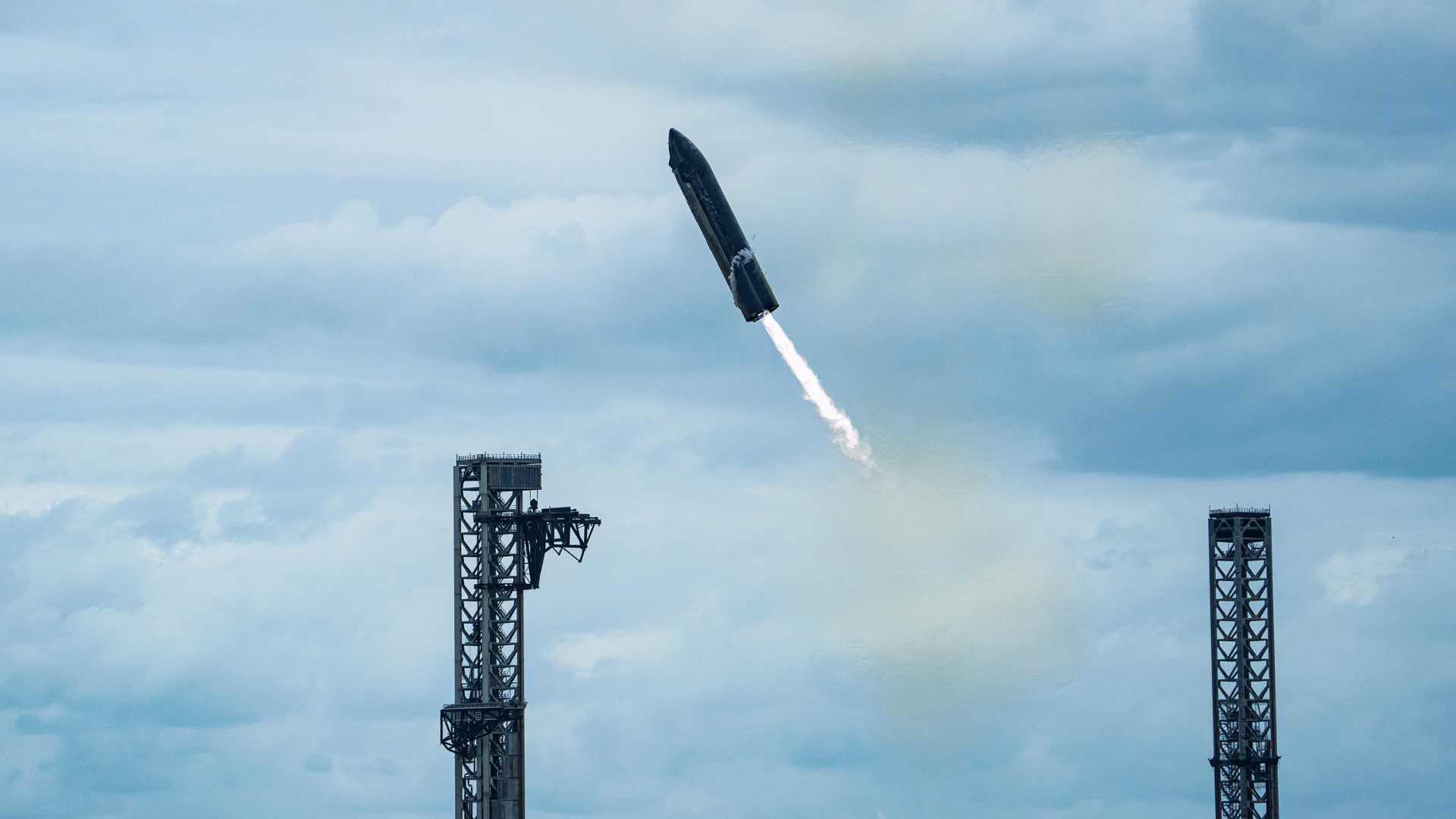
Starship’s return did not go as planned, as it flipped around and relit 32 of its 33 engines to come back, but the burn ended early due to low fuel mass. An investigation is ongoing to determine why this happened.
Fortunately, the booster’s guidance system identified the issue, triggered an automated abort, and directed it away from land. After the issue was resolved, Starship hovered over the Gulf of Mexico for a landing burn before its flight termination system kicked in. When Starship returned, SpaceX’s rocket-catching tower Mechzilla grabbed the spacecraft midair, a first for the tower.
SpaceX’s founder, Elon Musk, and his team inspected the ship following its return. Two hours later, Musk posted on X, formerly Twitter, with an update.
“Overall, it looks great. The engines look great too. Ship 42 could probably be reflown with a few weeks of refurbishment,” Musk posted. “However, many small fixes are needed to achieve immediate reusability (like an airplane), which requires zero expected refurbishment, apart from scheduled maintenance.”
Advertisement
Orbit, Satellites, and a Soft Landing
Mechazilla catches Starship! Congratulations to the entire SpaceX team on this incredible achievement! https://t.co/YJzmGUZb2B
— SpaceX (@SpaceX) November 14, 2026
While the booster splashed down, Starship kept going. It burned a single Raptor engine to settle into orbit and got straight to work. The spacecraft deployed 26 Starlink V3 satellites. Ground teams made contact with all of them shortly after, and those satellites are already raising their orbits to join the rest of the Starlink network.
Starship then spent more than 20 hours coasting around Earth while the SpaceX flight control team monitored its systems. Once the checks were done, it was time to come home.
Here is how the return went:
Starship fired one sea-level Raptor engine to drop out of orbit and re-enter Earth’s atmosphere. It guided itself back toward the east coast of Texas and flew a final swoosh maneuver over the Gulf. Just 22.5 hours after lifting off, Starship broke through the clouds right above Starbase. Three Raptor engines fired up to flip the spacecraft upright and slow its descent. Then, Mechzilla’s giant mechanical arms closed around the rocket, catching Starship out of the air for the very first time.
 Read Exclusive Stories
 Bookmark & Save Articles For Later