Self-driving cars and advanced robots rely on cameras and AI to see the world, but they struggle when the lighting changes quickly. A team of Penn State researchers believe they have a solution that mimics the human eye to quickly adapt from bright and dark light.
They redesigned an electrical component called a photomemristor, which is a device that can sense light and turn it into data. Traditional versions only work well in steady light, which creates a problem when driving on a road with unpredictable lighting changes.
“Self-driving cars are exposed to a mixture of light levels in use — imagine the contrast of the dark sky with the bright headlights of other cars when driving at night,” explained Larry Cheng, a Penn State associate professor and co-author of the study. “It can be difficult for an artificial optical system to distinguish details, like the glow of a red light, in these mixed lightning conditions.”
Adapting to Light Changes
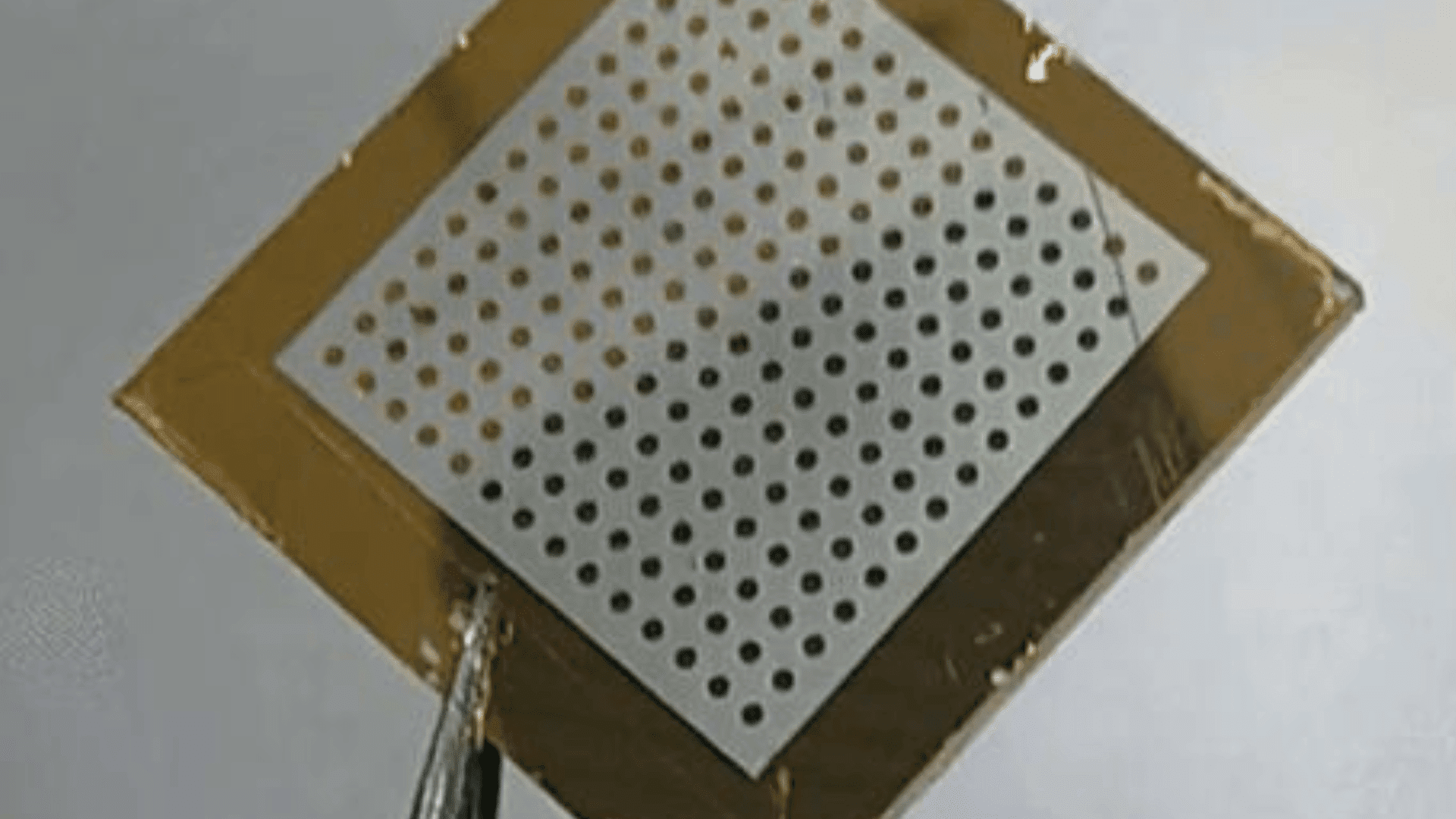
The human eye uses special cells to see in the dark and handle bright glare. The team made their device out of a stretchy plastic gel and a titanium compound in order to mimic this. The titanium captures light and turns it into a current. That current changes how much water the plastic absorbs from the air.
The material pulls in water when it is dark and dries out when it is bright, allowing the device to automatically adjust its own sensitivity.
Advertisement
“This key design difference allows us to dynamically adapt to changing light conditions, compared to traditional systems that are usually developed for one static scenario,” Cheng said. “By mimicking the way the eye works, we can create photomemristors that work much more reliably for applications in mixed lighting environments.”
Testing the Artificial Eye
The team built a small grid of these devices and connected them to an AI network. To test it, they shined an LED light in the shape of the letter “F” against a changing background. After seven training rounds, the system quickly identified the letter with over 95% accuracy in mixed light.
“Our eyes are more adaptive to differing lighting conditions, but that adjustment can take 20 to 30 minutes to fully complete,” Cheng said. “These photomemristors can adapt to lighting conditions much faster than the human eye, while still capturing detailed information about the external environment.”
Next, the team wants to combine visual and touch sensors into one system to save power, with hopes that this will lead to safer robots and better assistant technology.
“In the far future, we could see this technology being applied to help visually impaired persons see with the help of artificial optics,” Cheng said. “It could also play a major role in human-robot interaction and collaboration, allowing systems like factory robots to better operate in dark or rapidly changing environments.”
 Read Exclusive Stories
 Bookmark & Save Articles For Later