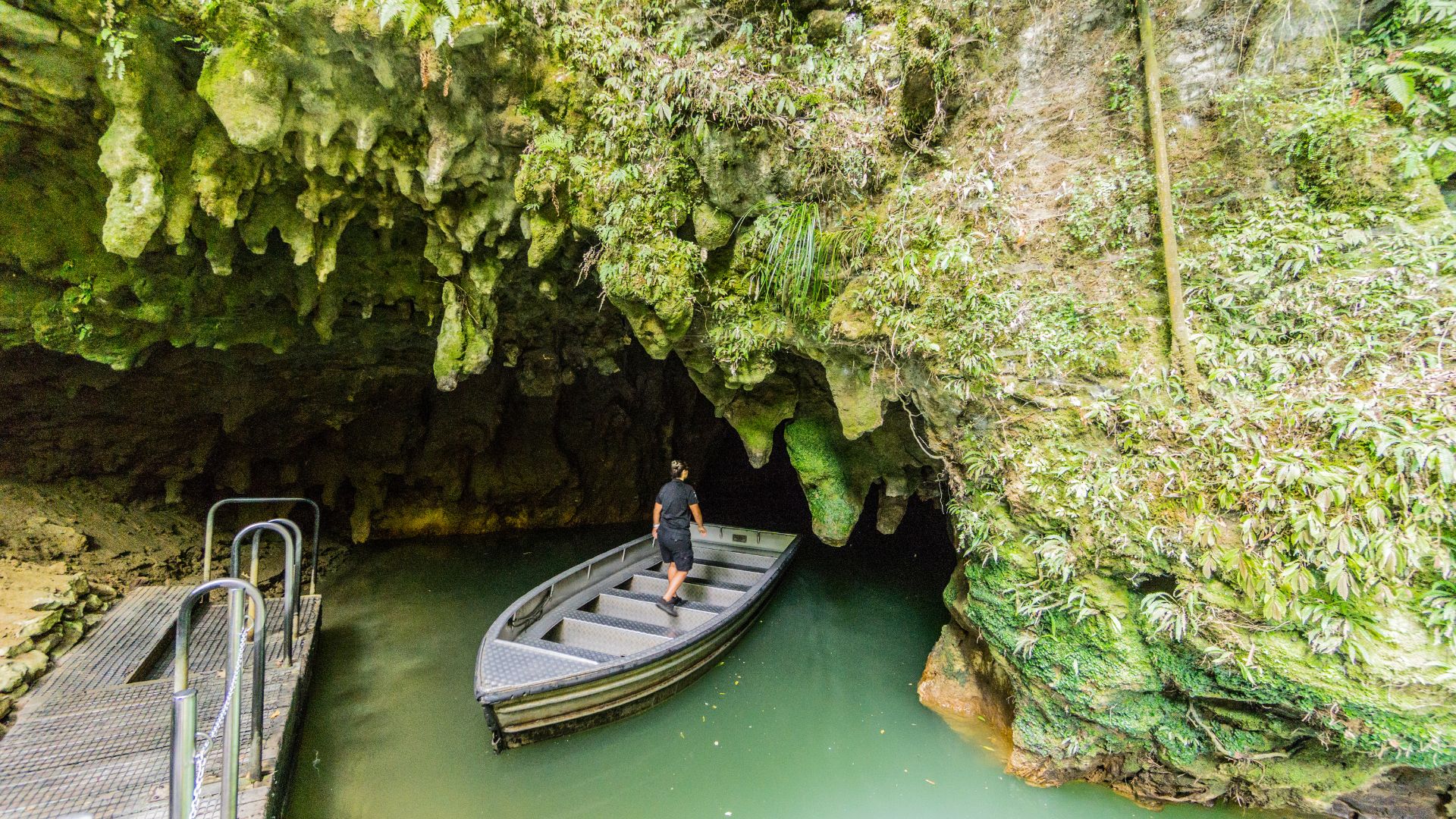
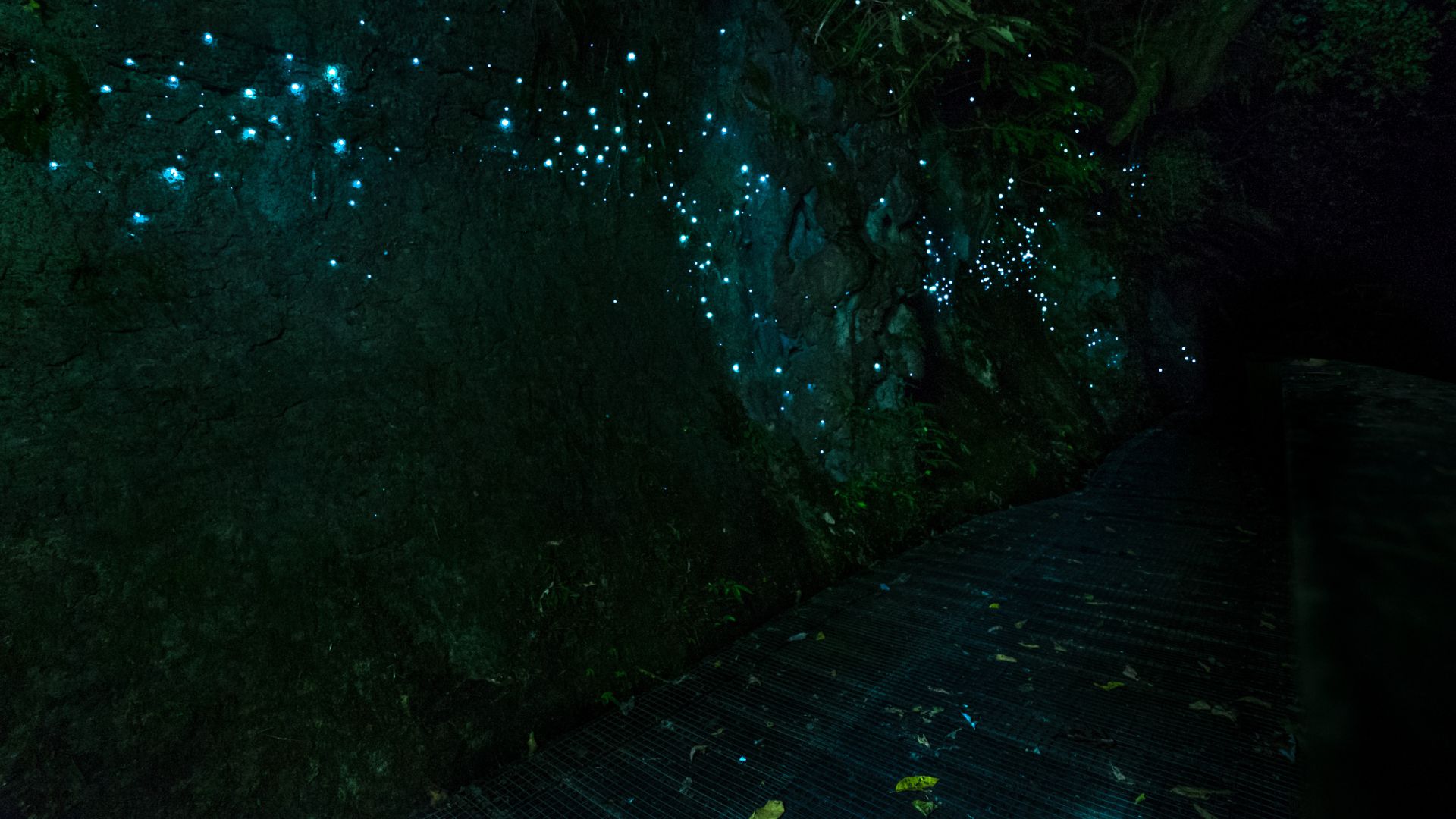
If you walk into the Waitomo Caves in New Zealand, you might think you are looking into the night sky. The cave ceiling is covered in thousands of bright blue dots. But what you are seeing is not stars, nor is it magic. It is a huge group of hungry bugs.
These bright blue bugs are called fungus gnats. Most people just call them glowworms. They live in the caves and stick to the ceiling. The blue glow radiating from them is actually part of a trap to catch the next meal these bugs need.
Glowing Bugs In The Dark
Caves are naturally dark. Any bug that lives in them has to be creative to survive. Glowworms spend most of their lives as larvae, which look like small worms. During this life stage, they create sticky strings that hang from the cave ceilings. Once these sticky strings are created, the glowworms make light with their bodies. This bright blue light attracts other insects to the caves. These other bugs are attracted to the glow and end up stuck on the strings created by glowworms.
A Chemical Trick For Dinner
Advertisement
The ability to create light without heat is bizarre. But for glowworms, it comes down to chemistry.
Glowworms have an organ near their tail. Within this organ, they produce a chemical that reacts with the oxygen in the air to create light. This process is known as bioluminescence. This same process can be seen in fireflies and deep-sea fish.
Ancient Animals In An Old Rock Form
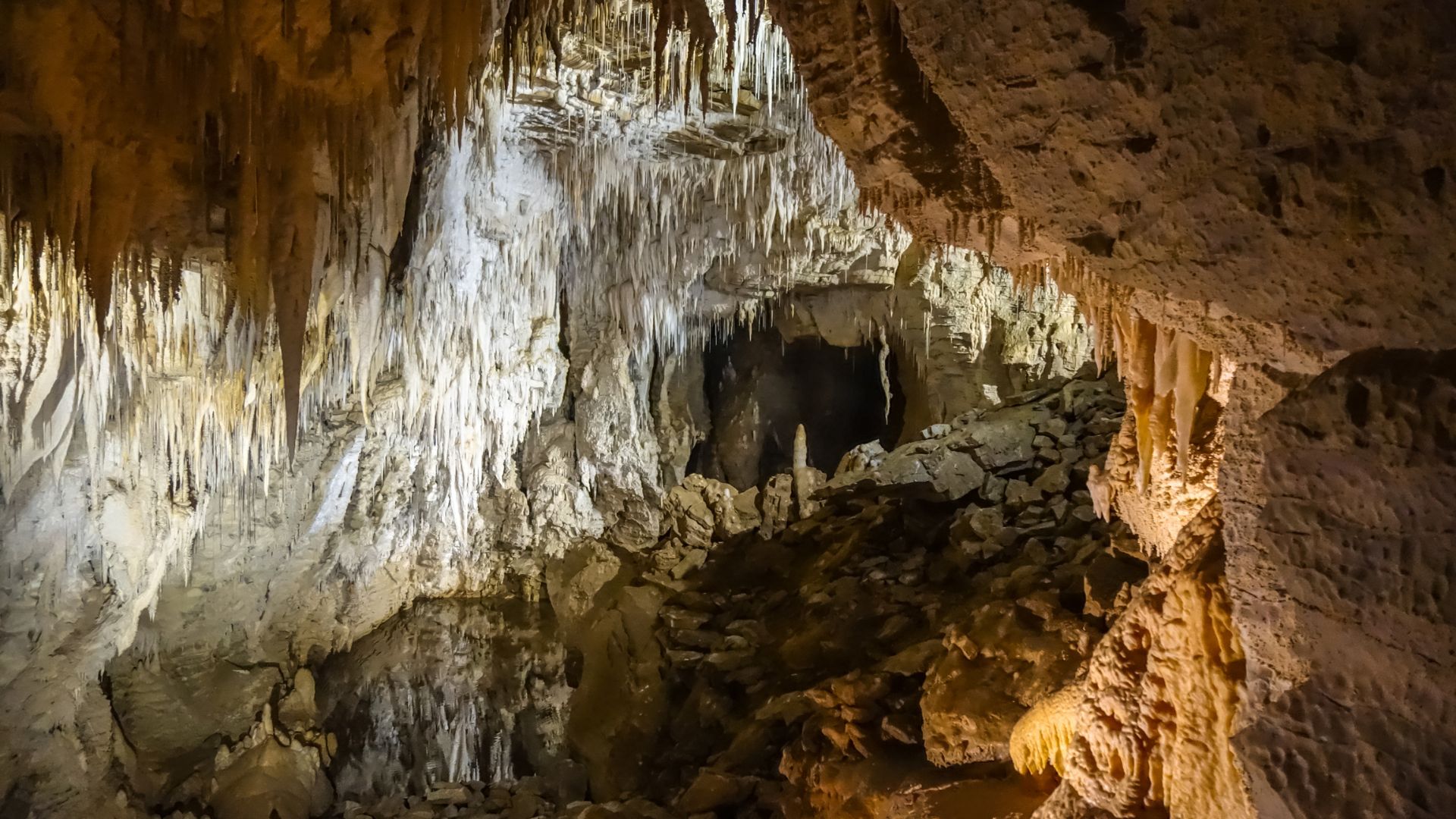
The glowworms are the stars of the show. But the caves are filled with other life. The caves are made of limestone. But millions of years ago, they were all underwater. All the remains of sea creatures accumulated on the sea floor. Over time, those remains became solid rock. When the ocean waters receded, rainwater began to erode the limestone, creating the caves we see today.
Aside from glowworms, there are other cave dwellers, such as cave crickets that can reach 100 times the weight of an average cricket.
You do not need complicated technology to create something amazing. A hungry bug and a bit of chemistry will do the trick to create one of the most photogenic caves in the world.
 Read Exclusive Stories
 Bookmark & Save Articles For Later