Our hearts beat about 100,000 times every day. Most of the time, we don’t even think about it. But for millions of people, that steady rhythm occasionally turns into what doctors call a “mosh pit.”
This condition is known as atrial fibrillation, or AFib. AFib is an electrical disorder in which the upper chambers of the heart stop marching in an orderly line and start moving erratically. When that happens, the heart can’t pump blood as it should.
Dr. Jonathan Piccini, a clinical cardiac electrophysiologist and Professor of Medicine at Duke University Medical Center and DCRI, and the Director of the Cardiac Electrophysiology section at the Duke Heart Center, explains that AFib is incredibly common—about one in four Americans will develop it in their lifetime. It causes symptoms such as a racing heart, fatigue, and lightheadedness. More importantly, it significantly increases the risk of stroke.
Moving Away From “The Big Cut”
Advertisement
In the past, fixing a heart rhythm disorder usually meant major surgery. Eventually, doctors moved toward a minimally invasive method called ablation. They’d thread a tiny tube, or catheter, through a vein to access the heart. Once there, they used extreme heat or cold to destroy the tiny bits of tissue that were causing the heart to “short circuit.”
While this worked, it had downsides. Using heat or cold can sometimes unintentionally damage healthy tissue or nearby organs.
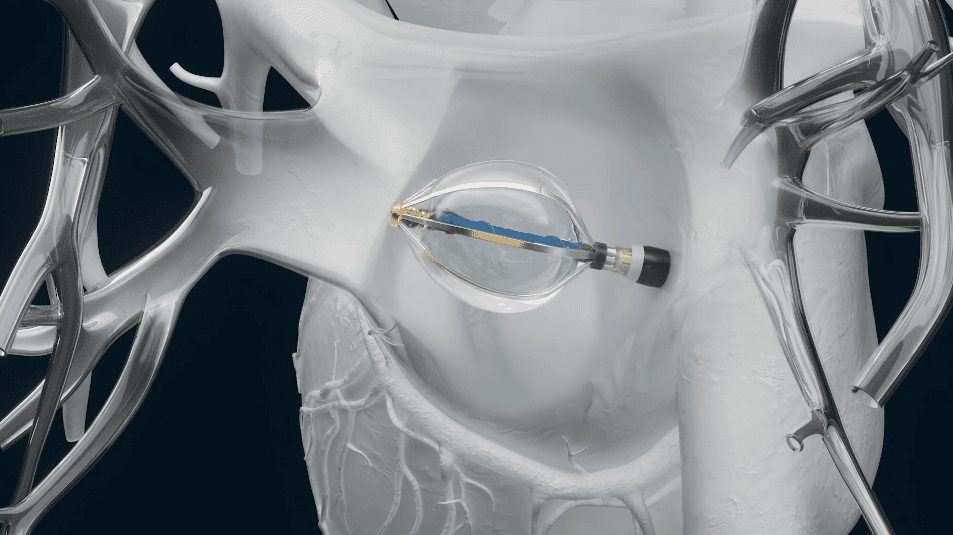
This is where Abbott’s new technology, the Volt™ Pulsed Field Ablation (PFA) System, comes in. Instead of burning or freezing the heart cells triggering a person’s AFib, Volt™ uses ultra-rapid electrical pulses to target the cells causing the AFib. These pulses are so fast and specific that they can clear out the problematic tissue without hurting the healthy parts of the heart.
Dr. Christopher Piorkowski, Divisional Vice President and Chief Medical Officer of Electrophysiology at Abbott, notes that the Volt™ PFA System was built from the ground up to be different. It features a unique balloon-in-basket design with eight flat “splines” that direct energy exactly where it needs to go.
Dr. Devi Nair, the Director of the Cardiac Electrophysiology Division at St. Bernard’s Heart & Vascular Center, Jonesboro, Arkansas, has already used Volt™ in real-world cases. She points out that the procedure is much faster than old-school methods. Because it’s faster, and patients spend less time under anesthesia. Most people are back to their regular lives within just a few days.
But the real goal is to stop being reactive. Right now, many people wait until their AFib is a major problem before getting help. With safer and more efficient tools like Volt™, doctors hope to treat the condition earlier, preventing long-term damage before it starts.
This new technology marks a big shift in how we think about heart health. We’ve gone from major surgery to using precise electrical pulses to “jail away” the triggers of AFib, making heart care simpler and safer for everyone.
The season premiere, titled “Beat By Beat,” features the global healthcare company, Abbott. George and Greg look at the Volt™ Pulsed Field Ablation (PFA) System, which is a new, innovative technology to treat atrial fibrillation (AFib). The new season kicks off on the Science Channel on Saturday, April 18th at 10 am ET. It will also air on the Discovery Channel on Sunday, April 19th at 7 am across all time zones.
 Read Exclusive Stories
 Bookmark & Save Articles For Later