When we think of national parks, we often picture static landscapes. Mountains, canyons, and valleys take millions of years to form, and we try our best to freeze them in time. But Plitvice Lakes National Park in Croatia is different. It is a living, moving landscape that actively constructs its own dams, waterfalls, and barriers every single day through a unique chemical reaction.
The park is famous for its 16 bright turquoise lakes. What makes them special is that they are stacked like steps. Water cascades from one pool down into the next, separated by natural barriers made of a pale, porous rock called tufa.
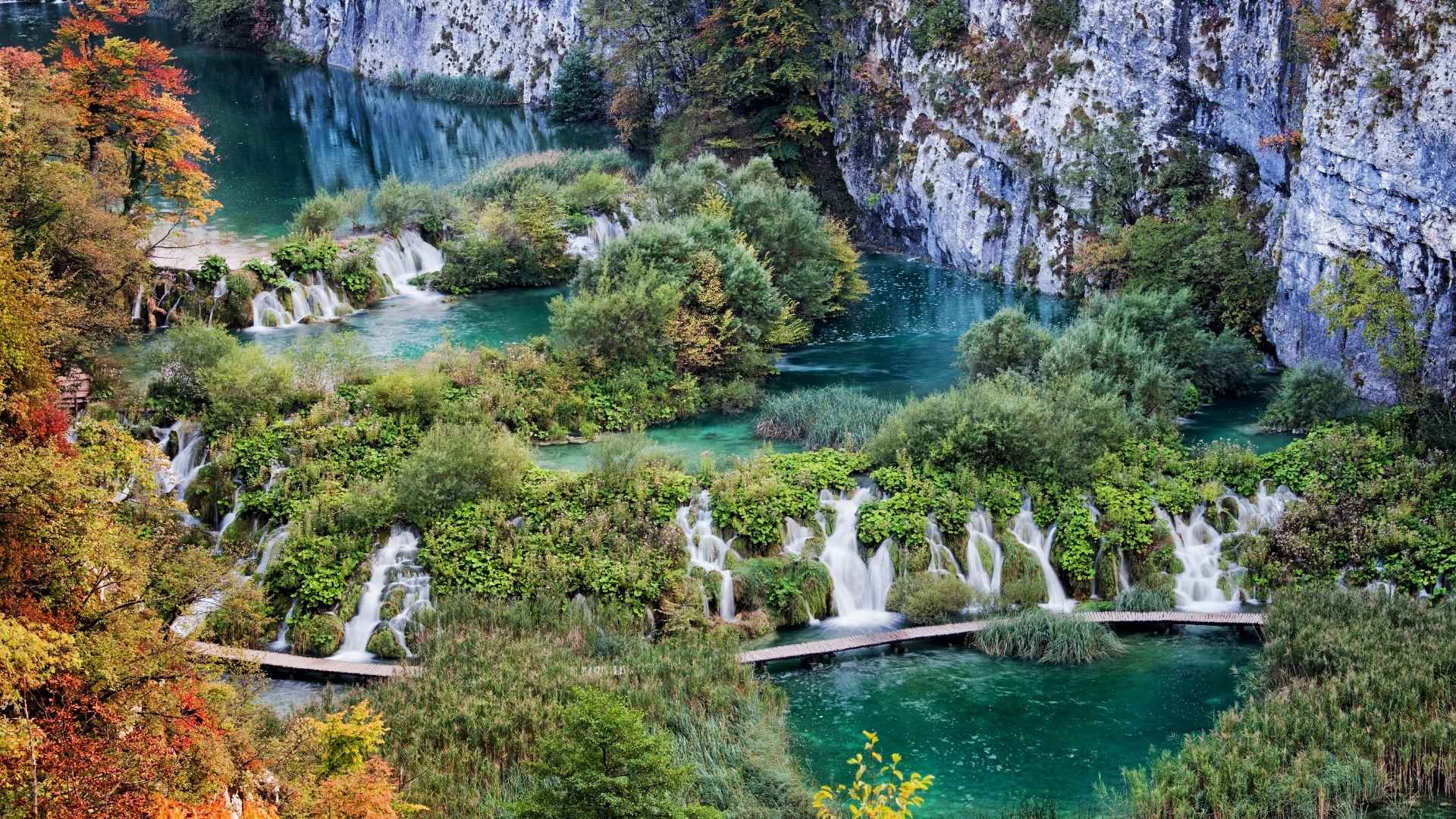
How Plants and Water Turn to Stone
Here is how the chemistry works. The water flowing through Plitvice runs over limestone hills underground, picking up massive amounts of dissolved calcium carbonate. When that mineral-heavy water emerges into the open air, it splashes over mosses, algae, and colonies of bacteria growing on the riverbed.
These tiny plants and microbes act like natural magnets. They trap the dissolved minerals on their sticky surfaces. As the calcium carbonate builds up, it calcifies, turning the soft moss into solid stone. This process creates a living crust that grows by about 1 centimeter each year.
As the stone barriers get higher, they create natural dams that hold back the water, forming brand-new lakes. Eventually, the water finds a weak spot, spills over the top, and starts a new waterfall. It is a constant loop of natural engineering.
Advertisement
Growing Eco-Friendly Concrete
Material scientists are studying these self-growing tufa dams to solve a major problem with human infrastructure. Traditional concrete is terrible for the environment, accounting for roughly 8% of global carbon dioxide emissions. Plus, when concrete structures like bridges or sea walls crack, they require expensive, difficult repairs.
By figuring out exactly how Plitvice’s microbes turn dissolved minerals into tough, underwater stone barriers, engineers are trying to develop “bio-concrete.” This experimental material uses embedded bacteria to extract minerals from seawater or rainwater. If a crack forms, the water triggers the bacteria to secrete calcium carbonate, automatically plugging the hole and repairing the structure from the inside out.
The Fragile Side of Living Rock
But mimicking this process is not easy. Tufa formation is incredibly fragile. The chemical reaction requires a precise balance of water temperature, flow rate, and water purity. If the water becomes even slightly contaminated with organic waste or fertilizers, the specialized moss and bacteria die off, and the self-healing stone stops growing completely.
Plitvice Lakes National Park shows us that nature does not always need heavy machinery or high energy to build massive structures. By looking at how a tiny patch of moss can build a giant lake dam, we can learn to design buildings and infrastructure that grow, adapt, and heal alongside the planet.
 Read Exclusive Stories
 Bookmark & Save Articles For Later