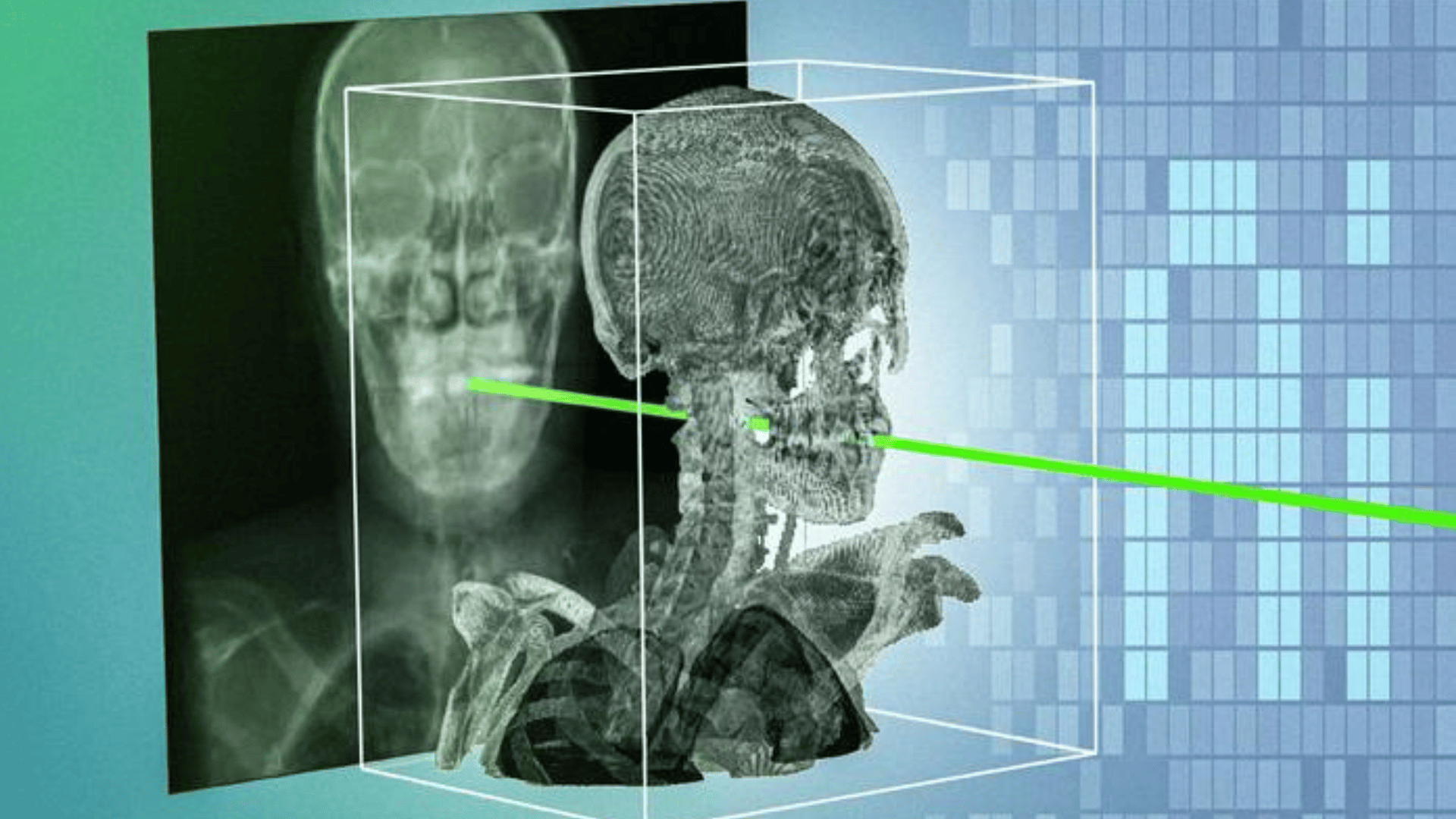
Abbott, a global healthcare company, is helping rewire the future of cardiac care for the approximately 12 million people in the United States over the age of 65 suffering from Atrial Fibrillation (AFib), a common heart rhythm abnormality. In addition to impacting quality of life, AFib also increases the risk of stroke and could shorten life expectancy.
In an upcoming episode of Tomorrow’s World Today, host Greg Costantino sits down with Dr. Christopher Piorkowski, chief medical officer of Abbott’s electrophysiology business, to explore an innovative medical engineering: Pulsed Field Ablation (PFA) and the revolutionary Volt™ PFA System.
Understanding Ablation: The “Cancer Treatment” for the Heart
Tomorrow’s World Today (TWT): Let’s talk about ablation and how that works as a therapy for atrial fibrillation.
Dr. Christopher Piorkowski (CP): In principle, ablation means destroying electrically unhealthy tissue. There is a close analogy to cancer treatment; just as physicians destroy cancer tissue, cardiac electrophysiologists try to eliminate the unhealthy tissue that causes the heart to beat out of rhythm. By creating a lesion, or a tiny scar, we can block those “errant” electrical signals.
TWT: This used to be a very invasive process, didn’t it?
CP: Correct. We are standing on the shoulders of surgeons. It started as open-heart surgery, then transitioned into minimally invasive catheter therapies. For decades, radiofrequency (heat) was the main energy source. But right now, we are in a moment of big transition to a new energy source: Pulsed Field Ablation.
The Volt PFA System Difference: Purposeful Design
While PFA is the “new kid on the block,” Abbott’s Volt PFA System is turning heads because of its unique, ground-up design. Volt was engineered specifically to ensure the quality of the lesions while complemented with patient safety.
Advertisement
TWT: There are other pulsed field ablation systems out there. What makes Volt so unique?
CP: It was designed purposefully from the ground up to improve lesion quality. It features eight flat splines that direct energy precisely into the tissue. We also included a balloon that acts as an insulator; it pushes the energy into the tissue to create deep lesions while protecting red blood cells from the energy field.
Hands-On Innovation
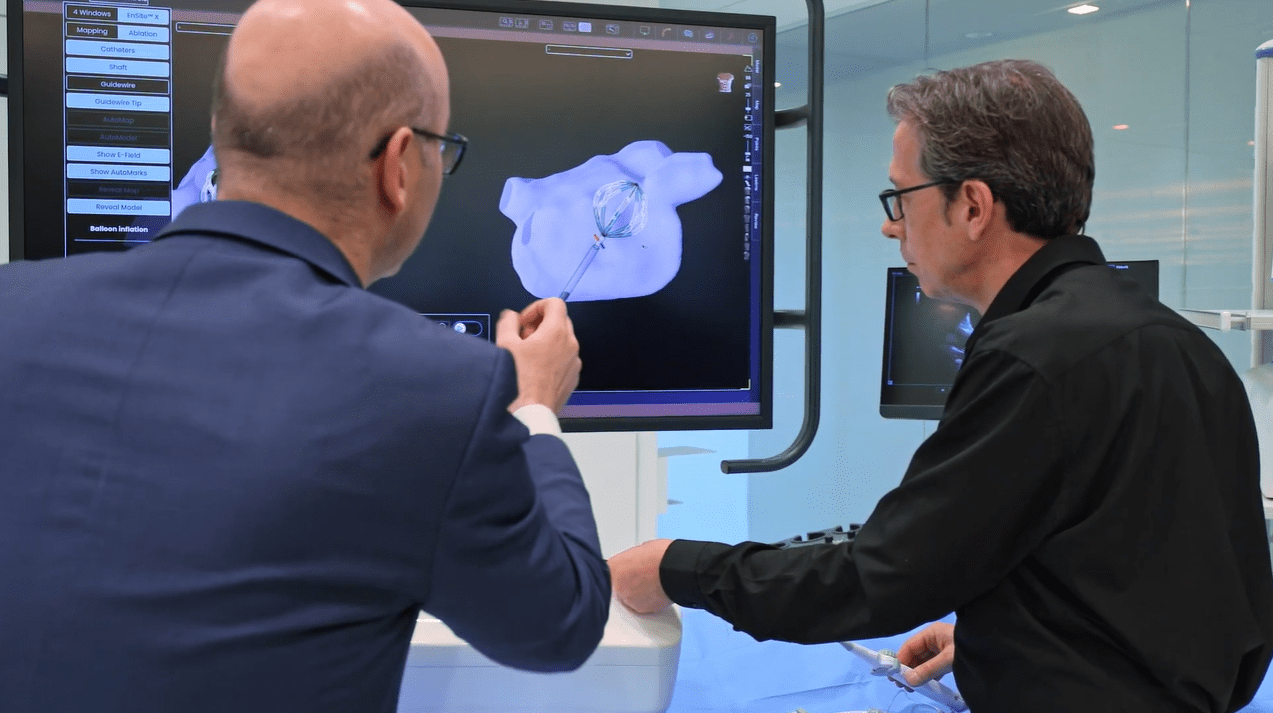
In a simulated Electrophysiology (EP) lab, Greg got a firsthand look at how intuitive the Volt PFA is. Dr. Piorkowski guided Greg through a simulated procedure, showing how the catheter is advanced into the pulmonary vein—the area where AFib-triggering impulses usually originate.
TWT: The mapping is really incredible. So, this is where the doctor is able to see exactly what’s happening?
CP: We spent so much effort to make this accurate. Every flash you see is energy being applied. After the application, you see a continuous ring of little scars around the pulmonary vein.
TWT: So basically, all of those little scars are going to keep those errant electrical impulses from even leaving the vein?
CP: Exactly. You “jail” them away inside the pulmonary vein.
This “revolution, not evolution” in cardiac care is more than just a tech update—it’s an efficient, safe, and precise way to help millions of AFib patients reclaim their lives.
Don’t miss the full story on the next episode of Tomorrow’s World Today, which airs on Saturday, April 18th at 10am/ET on the Science Channel and again the next day at 7am on the Discovery Channel!
 Read Exclusive Stories
 Bookmark & Save Articles For Later