The U.S. Department of Energy gave Xcimer Energy the green light on the company’s early design and roadmap for its planned fleet of fusion power plants called “Athena.”
One Step Closer to Commercial Fusion
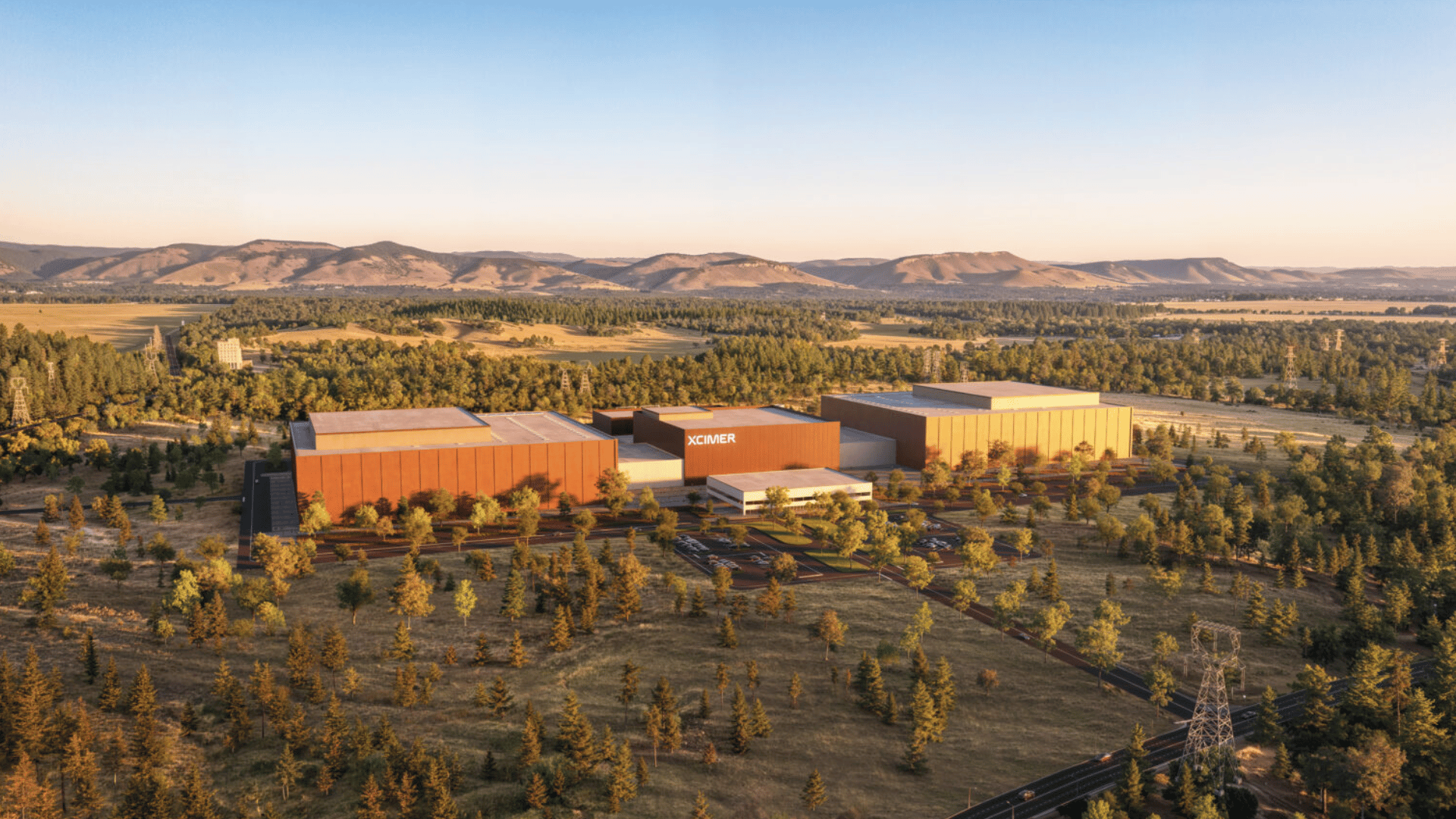
This is a pretty significant step for Xcimer, showing that the company is making progress in the global race to build a commercial fusion plant.
“The question facing laser fusion is no longer whether the physics works. The question is how fast we can industrialize it,” Conner Galloway, CEO, Chief Science Officer, and co-founder of Xcimer Energy, said. “DOE’s acceptance of Athena reflects both the strength of our technical approach and our ability to execute against an ambitious commercialization roadmap.”
Advertisement
Testing the Tech
Last week, Xcimer turned on “Phoenix” at their 74,000-square-foot facility in Denver. Phoenix is a prototype and the largest privately owned laser system in the world. It uses a krypton fluoride laser to compress energy into the tiny nanosecond bursts that fusion needs. Systems operating under these extreme conditions also depend on high-power laser optics designed to minimize absorption and withstand intense laser energy without degrading.
The problem with building fusion plants is that the reactions can quickly destroy the equipment. Susana Reyes, the Vice President for Chamber and Plant Design at Xcimer Energy, has a plan to fix that.
“A commercially attractive power plant looks very different from a scientific breakthrough facility,” Reyes said. “We are designing Athena to run continuously at a repetition rate of up to 1 Hz, and the use of a liquid wall chamber maximizes availability by protecting the solid structures from the fusion reaction emissions over the entire plant lifetime.”
Reyes added: “One reason other fusion chamber designs face a durability problem is that they put solid material where the fusion neutrons go. We don’t. The molten salt curtain absorbs and moderates the flux, breeds fuel, and carries the heat — and it flows, so it renews itself continuously. We designed Athena around that property from day one, and it shapes everything: the materials choices, the thermal management, the maintenance philosophy, the economics. And Xcimer’s laser architecture uniquely enables this design.”
 Read Exclusive Stories
 Bookmark & Save Articles For Later