Companies are pushing to make nuclear reactors compact and portable, some even capable of being transported in the back of a pickup truck. Deployable Energy recently did that when the company drove its Unity microreactor test rig across the country to the Idaho National Laboratory. This project is a step closer to deployment following its recent regulatory approval.
The U.S. Department of Energy (DOE) approved the company’s Preliminary Documented Safety Analysis (PDSA). This document proves the reactor’s design meets strict government safety and hazard rules. Typically, these approvals are dragged out, but not for Deployable Energy’s microreactor unit. Instead of a roughly year-long approval timeline, Deployable Energy was approved in 106 days.
“The PDSA approval is an important step in bringing a new reactor to life,” said Bobby Gallagher, Chief Executive Officer of Deployable Energy. “Completing this review in 106 days since program kickoff demonstrates both the strength of our safety approach and the urgency with which our team is executing toward demonstration.”
What the Future Holds For the Microreactor
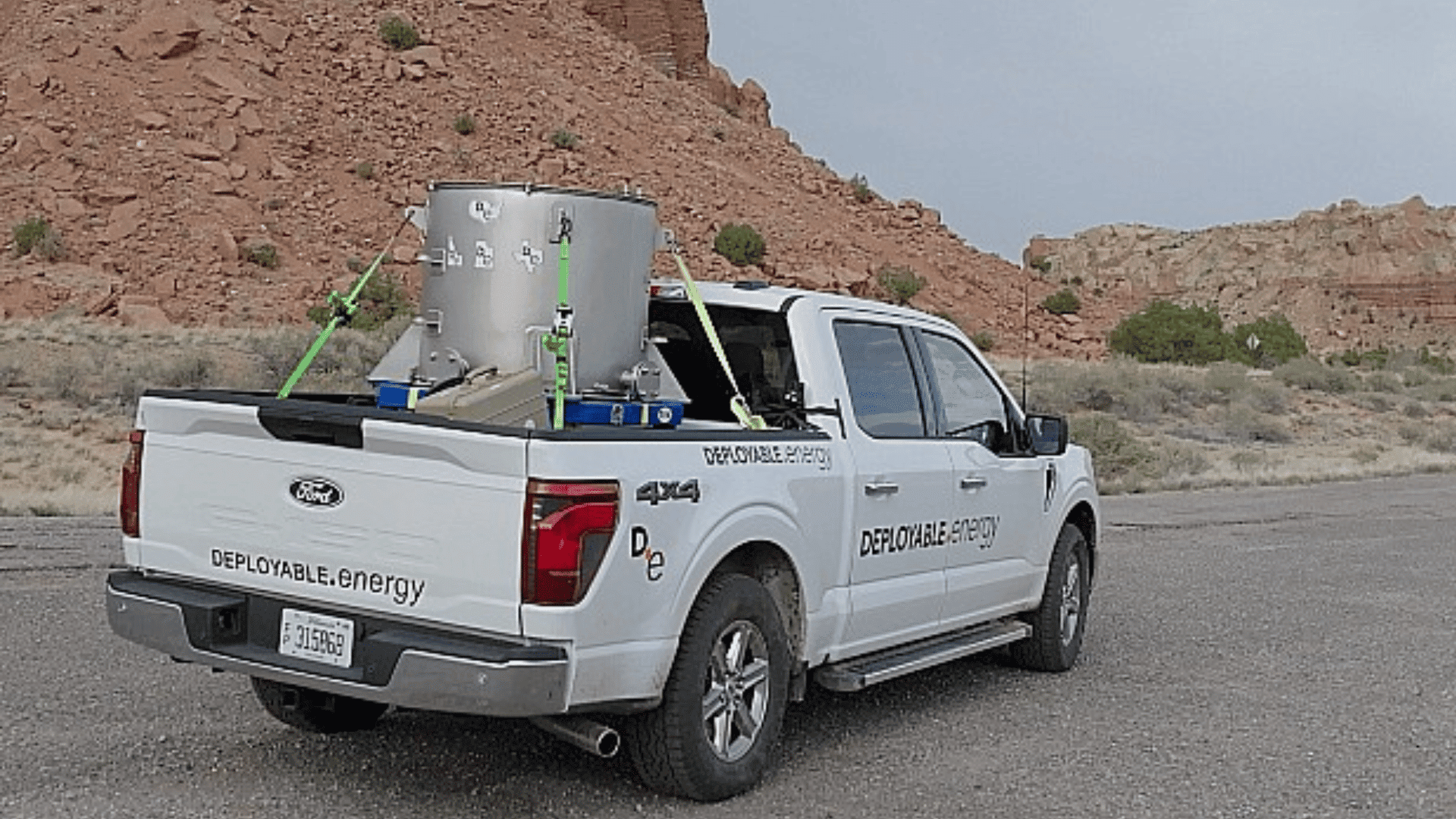
With the safety approval in the rearview mirror, the team can start final preparations for its first big test under DOE oversight. Additionally, the fuel needed for this initial test is already manufactured. The plan is to put everything together and hit “initial criticality,” the point where the reactor becomes self-sustaining, later this summer.
The Unity microreactor is built in a factory and designed for places that lack reliable power. For example, the company hopes to eventually see it used in remote areas, factories, defense sites, and maritime shipping.
To help push the project forward, Deployable Energy was also chosen for the DOE’s Nuclear Energy Launch Pad program. This program connects the company with experts and infrastructure at the National Reactor Innovation Center. Still, plenty of testing and final commissioning remain for the company. However, the team states that they are moving fast to see if their micro power plant works as intended.
 Read Exclusive Stories
 Bookmark & Save Articles For Later