Stellaria and the CEA just signed a Letter of Intent to study a new project at the CEA’s Cadarache site. The plan is to establish an “ALPHA” INB. This facility will house a test model, a fast-spectrum liquid-fuel (molten salt) demonstration reactor, and a salt fabrication facility.
The CEA is a public research organization that plays a key role in supporting French industrial research and the France 2030 laureate projects. The Cadarache center in Saint-Paul-Lez-Durance is dedicated to research platforms for low-carbon energy, making it a natural fit for this innovation.
This move sets the stage for a critical experiment called Alvin in 2030. Alvin’s main goal is to validate modeling and calculations for neutronics and thermohydraulics. However, they still need a working prototype to test the reactor’s capabilities further. So, by 2032, Stellaria plans to modify the building used for Alvin to operate MegAlvin. This prototype reactor will be built by updating some systems and replacing the vessel with a larger one.
Experimental to Commercial Reactor
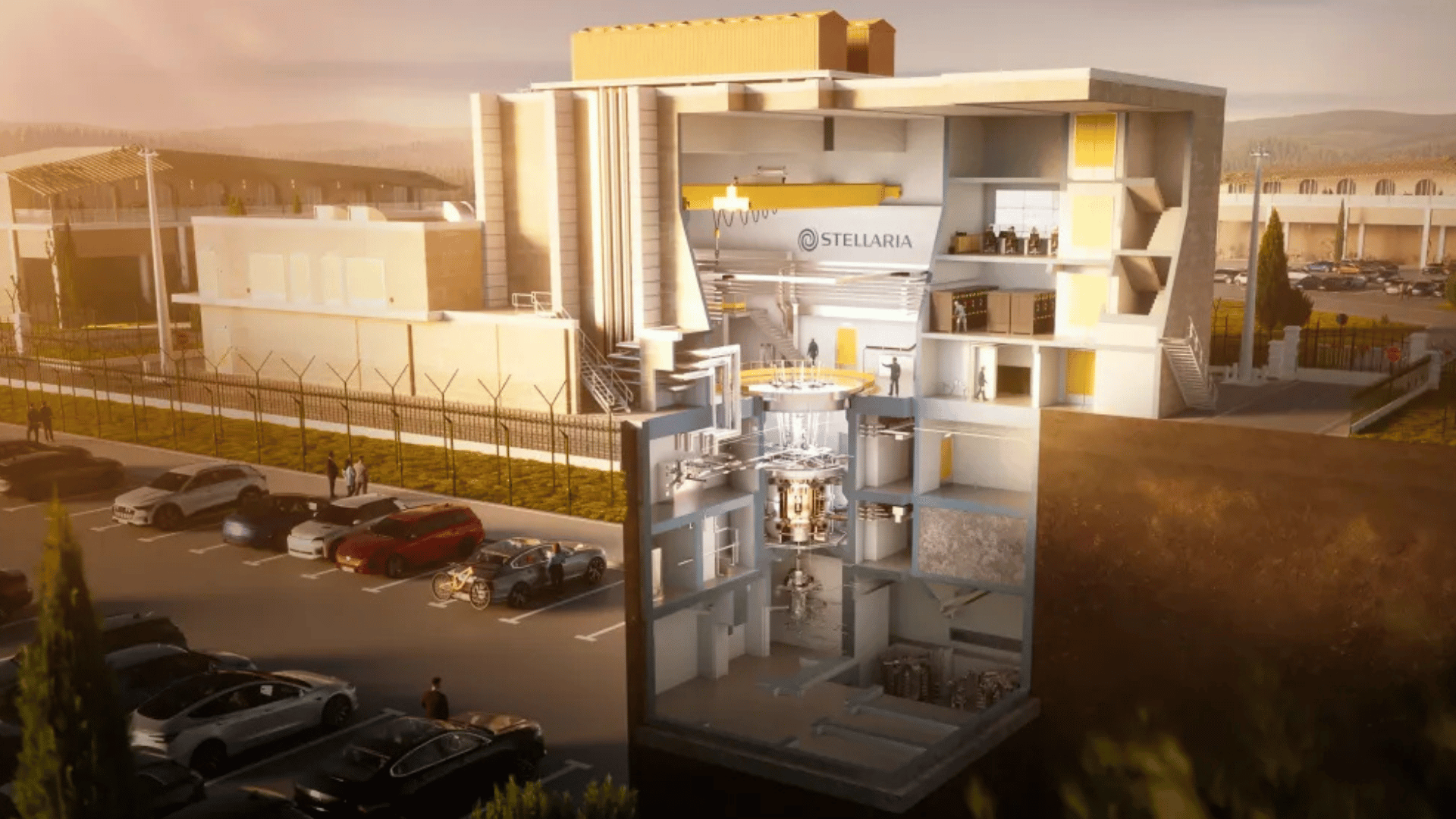
MegAlvin will run endurance and qualification tests on the fuel and structural materials specific to molten salt reactors. Additionally, it will gather operational data on corrosion management and fission gas handling. This facility offers long-duration irradiation under fast neutrons. That capability is unique in Europe and will be available to other startups and national programs.
Stellaria is already reaching major milestones. They finalized the design study for Alvin and submitted their construction authorization request to the ASNR in late 2025. On top of this, they closed a €23 million funding round. This money complements €10 million in non-dilutive funding from the France 2030 plan’s call for “Innovative Reactors”.
Stellaria already signed a commercial contract with its first customer, Equinix. This pre-order lets Equinix data centers use the energy autonomy of a nuclear reactor with renewable fuel. This can help you see how the company plans to support sustainable, low-carbon artificial intelligence capabilities by 2035 when their commercial reactor, the Stellarium, goes online.
 Read Exclusive Stories
 Bookmark & Save Articles For Later