This summer, the University of Utah’s 50-year-old TRIGA nuclear reactor will produce electricity for the very first time. And that’s why it matters. The reactor will use this new power to run a mini AI data center.
Handling the AI Workload
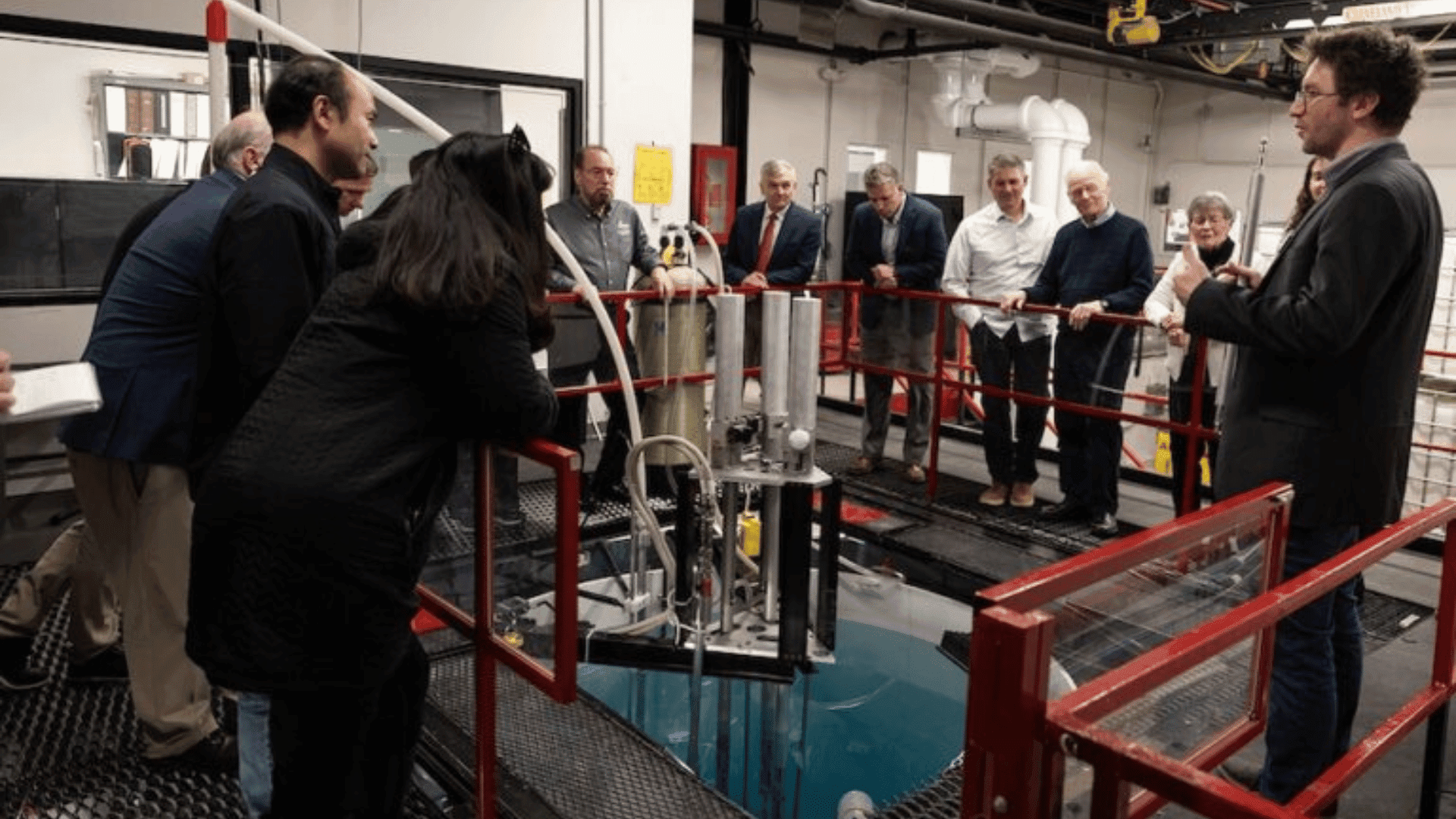
The project brings together Elemental Nuclear Energy Corp. and the University of Utah’s Nuclear Engineering Program. Usually, research reactors just bleed off their heat into cooling systems. Elemental, however, created a small, cold-helium-based power generator that replaces huge steam turbines and fits right in.
The experiment will use about 50 kW of thermal input from the reactor water. It will generate about 2-3 kW of electricity to power a high-performance GPU node handling a live AI workload.
“This project is intended to demonstrate a powerful principle,” said Mike Luther, Founder of Elemental Nuclear. “The energy produced through nuclear fission can ultimately power the computational systems driving artificial intelligence.”
It is a small test, but it gives us a look at how full-scale data centers might use on-site microreactors to feed their massive energy needs.
Advertisement
“This will be, to our knowledge, the first time any university reactor has produced electricity, not just our own,” says reactor manager Dr. Ted Goodell. “It’s a milestone for our students, but it also shows that small, safe reactors could live at data centers, rather than in labs.”
According to David Blythe, Co-Founder and CEO of Elemental Nuclear, “This experiment represents an important step in demonstrating how compact nuclear systems can be paired with advanced power conversion technologies to support emerging energy demands.”
A Global Network of Research Reactors
The test is part of a bigger plan to tap into the worldwide network of TRIGA research reactors. This ecosystem includes more than 1,500 nuclear scientists and engineers, tens of thousands of students, and decades of operational knowledge. Students and faculty from 12 universities will work together on this project.
“This is one of the most extraordinary scientific networks in the world,” Luther says. “It combines operating nuclear infrastructure with a deep bench of talent and institutional knowledge. We believe it represents a powerful platform for accelerating next-generation nuclear technologies.”
Elemental Nuclear wants to build a commercial microreactor by 2030 to 2031. They plan to use these university setups to test ideas quickly instead of waiting decades.
“Our objective is to deliver a commercially viable nuclear microreactor by 2030–2031,” Luther says. “Experiments like this enable us to move quickly, validate real-world systems, and build toward scalable solutions.”
 Read Exclusive Stories
 Bookmark & Save Articles For Later