Colossal Biosciences has announced the latest species they’re bringing back from extinction: an antelope species called the bluebuck that went extinct around 1800.
Colossal’s Plans to De-Extinct the Bluebuck
The firm has been working to deextinct species like the woolly mammoth, moa, dodo, thylacine, and dire wolf. The bluebuck was previously hunted to extinction by European settlers in South Africa.
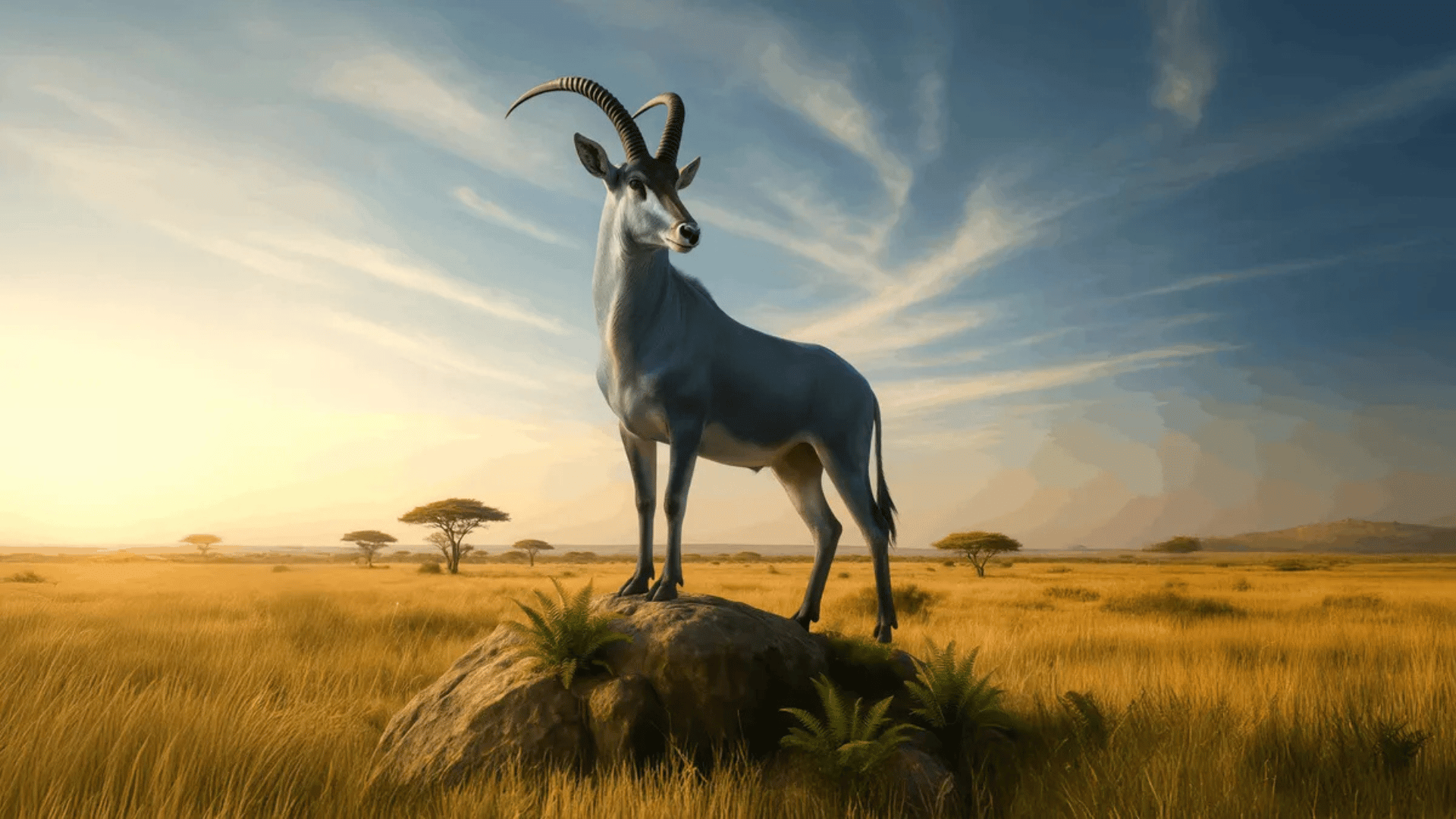
The species is known for its distinctive blue-grey coat, facial markings, and curved horns. Though we don’t have photographs of the creatures, blueblucks are believed to have been approximately 4 feet tall, which is smaller than sable antelope and roan antelope.
It was only formally recognized in 1766 by German zoologist Peter Simon Pallas, a mere 34 years before it went extinct. Through this project, Colossal hopes to eventually provide help to some of the world’s current endangered antelope species, such as the addax, saiga, and dama gazelle.
Advertisement
To achieve their goal of resurrecting the species, the Colossal Biosciences team is collecting egg cells from living roan antelope, which will be combined with genetically edited DNA to give the embryo bluebuck-like traits.
“It’s almost like a microsurgery where you use the ultrasound to guide a needle into the roan’s ovary, exactly into an emerging follicle,” Matt James, Chief Animal Officer at Colossal Biosciences, said to IFLScience. “And then you can flush fluid into it and then suck the fluid out of it. And it comes with the oocytes out of that ovary.”
“So it is a revolutionary technology for things like antelope because it gives us this ability to leverage great reproductive technologies like in vitro fertilization, somatic cell nuclear transfer, in ways that we can help improve things like gene flow between highly fragmented populations.”
Colossal plans to create an animal that could eventually be rewilded into the African bush habitat in which the bluebuck originally resided.
“The plan is definitely to make a living, breathing bluebuck. And the plan is then to take that and put it back into the wild in South Africa,” said James. “So we’re working with amazing people at the Endangered Wildlife Trust as a conservation partner to help us begin to rehabilitate ecosystems and find places for the bluebuck to thrive again.”
 Read Exclusive Stories
 Bookmark & Save Articles For Later