

New research shows that the oldest known sewn clothing in the world may be pieces of animal hide, stitched together by Indigenous people with plant and animal cords left in an Oregon cave around 12,000 years ago, during the last ice age.
World’s Oldest Known Sewn Clothing
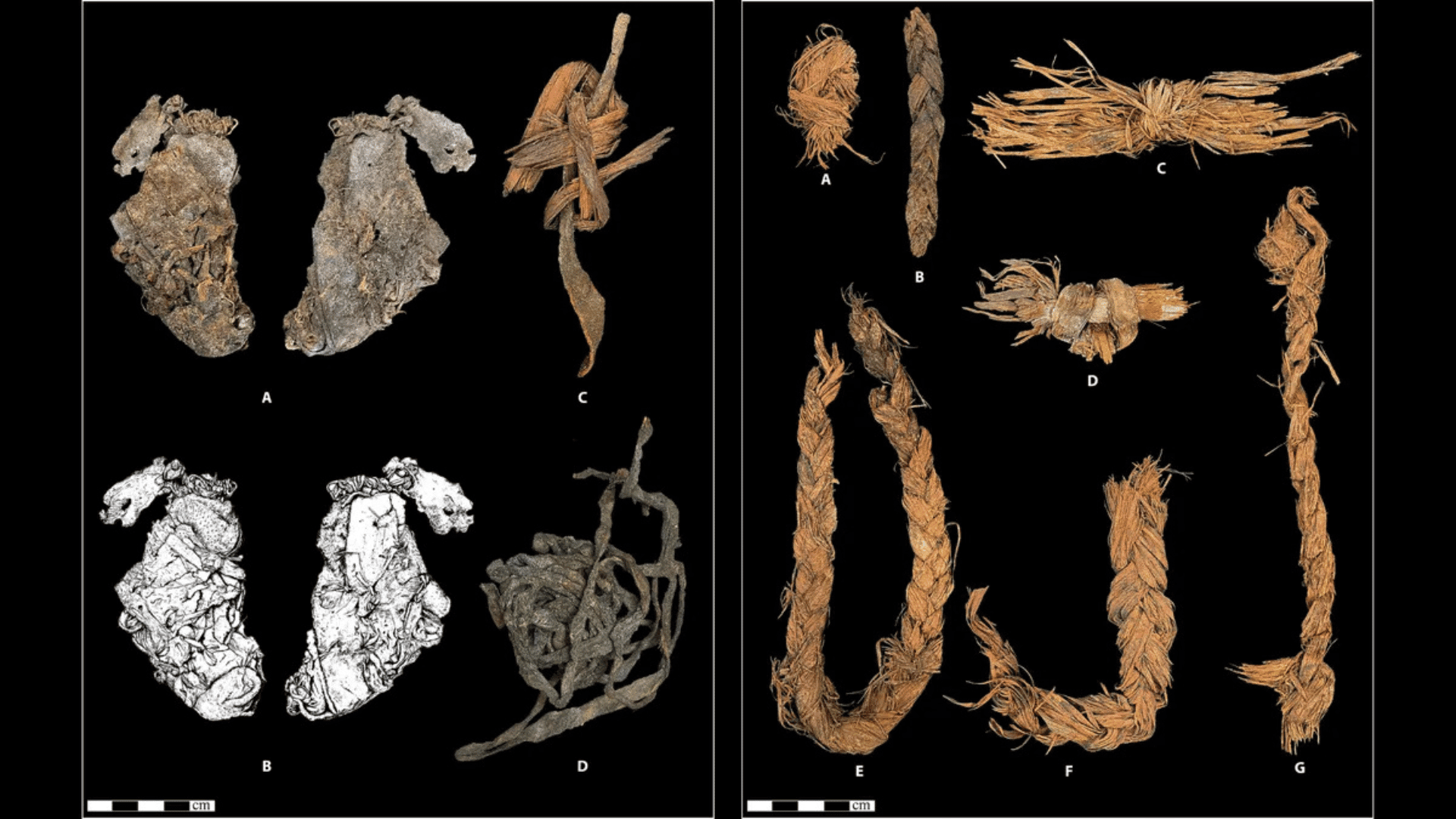
Though the exact use of the item is unknown, the sewn hide is “quite possibly a fragment of clothing or footwear,” which would represent the only known clothing item from the Pleistocene to date. The study, which was published in the journal Science Advances, examines sewn hides that were originally found in 1958 by an amateur archaeologist.
In the paper, which is the first study to date the artifacts, researchers determined that 55 pieces of crafted animal and plant materials stemmed from the Younger Dryas, a period of sudden cooling that occurred from about 12,900 to 11,700 years ago. The discovery provides evidence that Indigenous people in North America had shielded themselves from the cold by sewing pieces of hide together to create tight-fitting clothing that could provide more warmth.
“We already knew they did, we just had to assume and guess what they were like,” study lead author Richard Rosencrance, a doctoral researcher in anthropology at the University of Nevada, Reno, told Live Science. “They were accomplished and serious sewists during the Ice Age.”
Rosencrance and his team used radiocarbon dating to determine the ages of the artifacts. The cords were braided using three strands and were made using sagebrush, dogbane, juniper, and bitterbrush fibers.
The three pieces of animal hide had been processed and dehaired, with cord made from a combination of plant fiber and animal hair sewn into the sides. Because the cords varied from 0.13 to 1 inch (0.33 to 2.5 centimeters) wide, they were probably used for a range of purposes.