Tate Modern’s Turbine Hall will turn into an immersive opera house as it hosts a new exhibition featuring the sets David Hockney designed for productions of works by Mozart, Wagner, and Stravinsky.
Opera Sets Become Art Exhibits
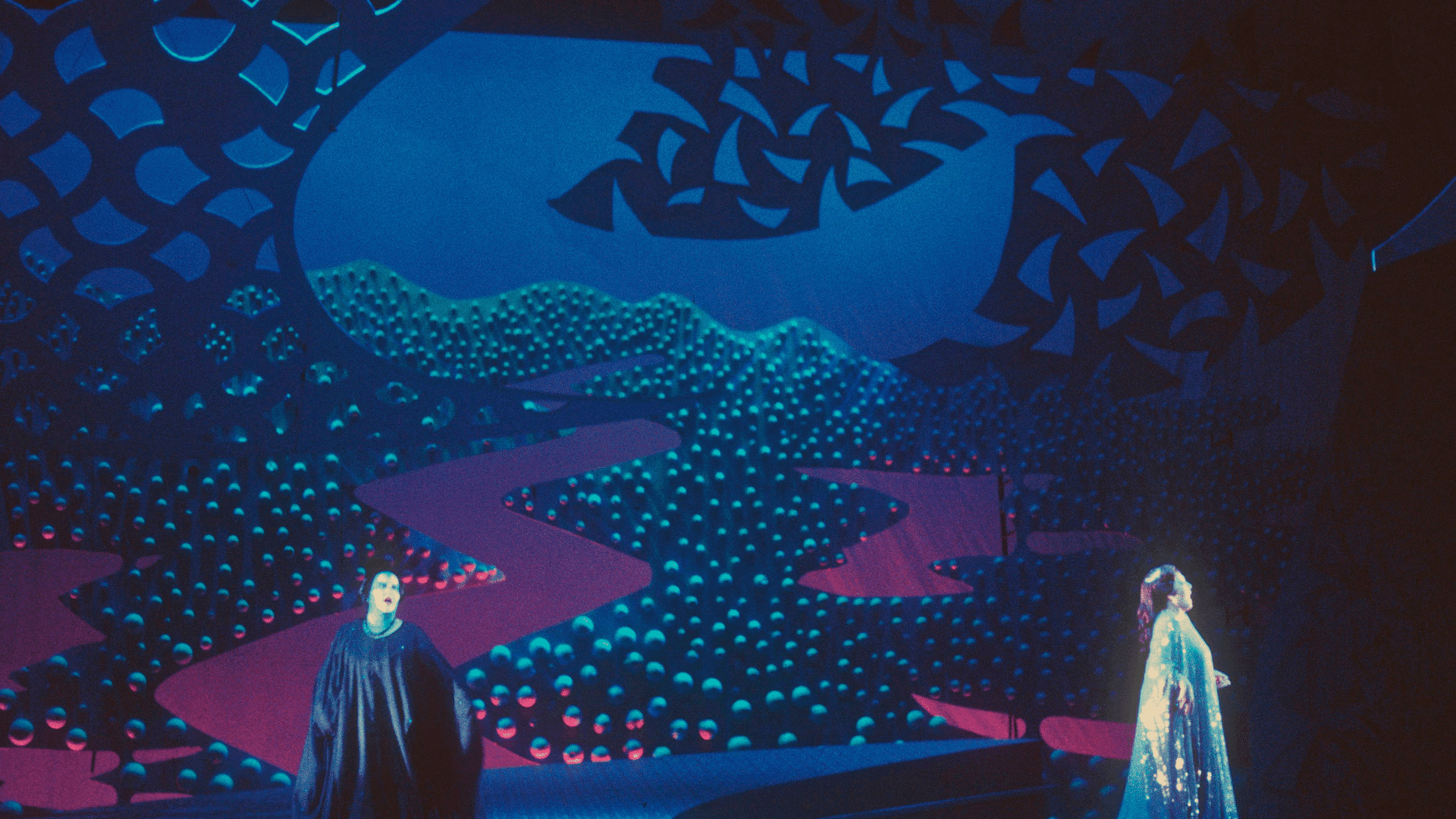
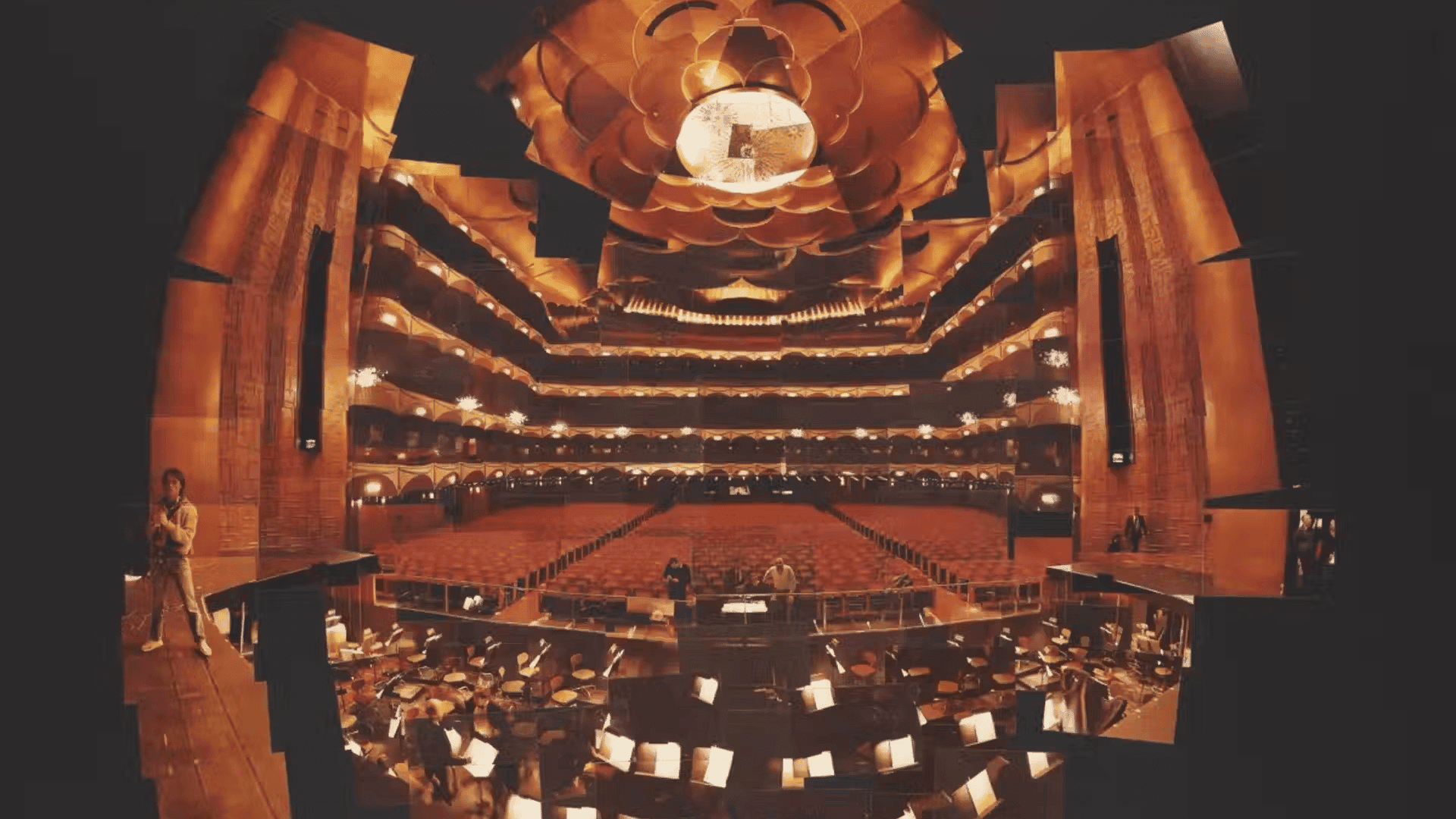
The sets, which date back to the 1970s, will be used as the centerpiece of Tate’s celebration of Hockney’s 90th birthday. Also known for his landscapes and portraits, artist Hockney also worked on many opera sets during his time in London.
Hockney designed 11 opera sets over 17 years, beginning in 1975. After beginning set design work at the Royal Court for a production of Alfred Jarry’s Ubu Roi, Hockney designed for Richard Strauss’s fantasy opera, Die Frau ohne Schatten – The Woman without a Shadow – which featured a pop art aesthetic.
When asked why he had decided to start working on set designs, he stated, “I wanted to design operas because I want to have something to look at,” he said.
Advertisement
Other upcoming programs at Tate include a retrospective of Sonia Boyce and an Edvard Munch show. There’s also a first-ever Monet show at Tate Modern, called Painting Time, which focuses on the artist’s “obsession with capturing the instant,” according to its curator, Catherine Wood.
The exhibition focuses on the period leading up to the artist’s Water Lilies cycle, which began in the 1890s and spanned 30 years until his death, during which he was suffering from cataracts but still painting in his Normandy garden.
“What comes across is how embodied and how immersed he was in cultivating the garden and then capturing it,” Wood said. “Even as he’s going blind, he’s still trying to paint.”
Karin Hindsbo, who will be in charge while the next director is recruited, stated that “the programme reflects a deep appreciation of artists themselves. All these exhibitions showcase the many different ways that artists think and work, and their unique ability to inspire and move us.”