While his contemporaries were busy painting heroic portraits of generals and founding fathers to secure their place in history, Raphaelle Peale was absorbed by the translucent skin of a grape and the way light catches the curve of a ceramic bowl. To the art world of the time, this was a gamble. To Raphaelle, it was a revolution.
Inventing American Still Life
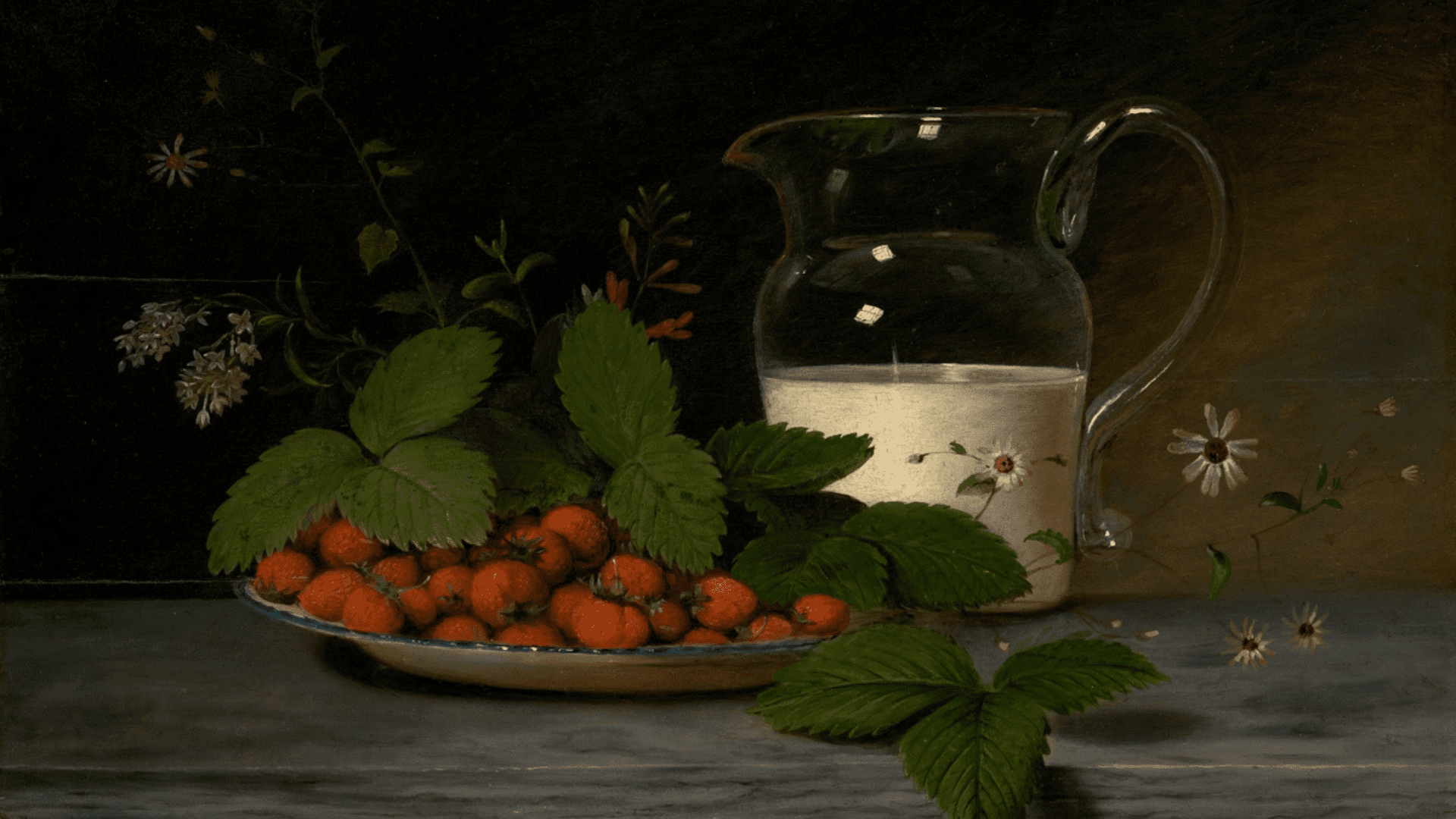
At the turn of the 19th century, American art was stuck in a rigid hierarchy. In an era where “important” art equated to grand historical narratives, Raphaelle Peale focused on everyday objects like those found on a kitchen table. During this period, portraiture was the only way for an artist to make a living, and “Still Life”, the painting of inanimate objects, was dismissed as a mere hobby or a technical exercise for students.
As a member of a family of several important American artists, Raphael struggled to emerge from the shadow of his famous father, Charles Willson Peale, a soldier, scientist, and artist who pressured his sons to pursue “serious” occupations.
Charles was a portraitist of the Revolutionary Founding Fathers, such as President George Washington, and established one of the first museums in America. He taught painting to the young Raphaelle, as well as many of his other children.
Raphaelle’s insistence on painting the humble and quiet parts of life was an act of creative defiance. Instead of merely painting, Raphael studied the mechanics of light and the chemistry of decay. His work is characterized by:
Advertisement
- Atmospheric Realism: He mastered the “trompe l’oeil” (fool the eye) technique, creating textures so realistic that viewers often reached out to touch the “dew” on his fruit.
- Structural Minimalism: Unlike the cluttered European still lifes of the past, Raphaelle’s compositions are architectural—clean, balanced, and intensely focused.
- The “Internal Glow”: He developed a method of layering thin glazes to make his subjects look as though they were illuminated from within.
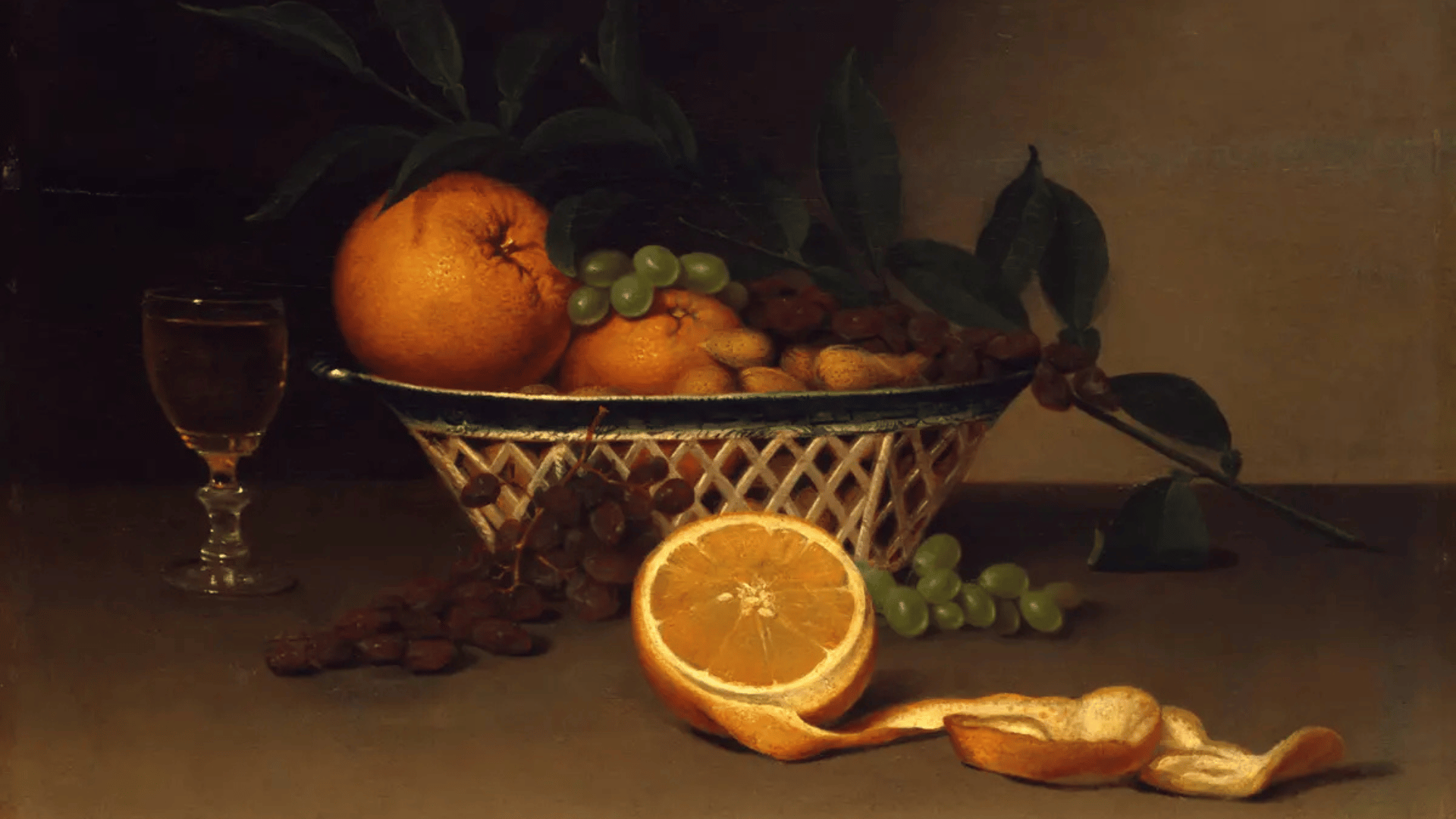
His works are characterized by harmoniously balanced compositions, dramatic lighting, and the sensitive rendering of form, color, and texture. Raphaelle painted as many as 150 still lifes, with an estimated 50 known today.
Unlike in Dutch still lifes, Raphaelle’s painted food is shown in peak condition and does not display decay. One of the main subjects of his works is fruits. Though oranges aren’t native to Philadelphia, his piece titled “Still Life With Oranges” featured the fruit, which were grown in hothouses at the time. This particular piece also showed off Raphaelle’s humor, as the spiraling orange peel is a pun on his last name.
Over time, Raphael became the first professional American artist to dedicate himself primarily to still life, eventually influencing a whole lineage of American realists. Today, Raphaelle’s work is experiencing a renaissance at major institutions such as the National Gallery of Art and the Smithsonian.
Demos of his techniques and retrospectives of the Peale family continue to draw crowds at major museums, proving that his “unimportant” subjects have outlasted many of the grand portraits of his peers.
 Read Exclusive Stories
 Bookmark & Save Articles For Later