A common annoyance with smartwatches or fitness trackers is the battery dying mid-workout. This is because most wearable tech relies on batteries that eventually run out of power.
A research team at Seoul National University, led by Professor Jeonghun Kwak, recently found a way to turn your skin into a power source using a thin, flexible film.
The idea is based on thermoelectric generators that take a difference in temperature, like the heat from your arm versus the cooler air around you, and turn it into electricity. In the past, these had to be thick or shaped like pillars to work. If you made them thin and flat like a piece of tape, the heat would just pass straight through them, leaving no temperature difference to create power.
A Wearable Powered By Body Temperature
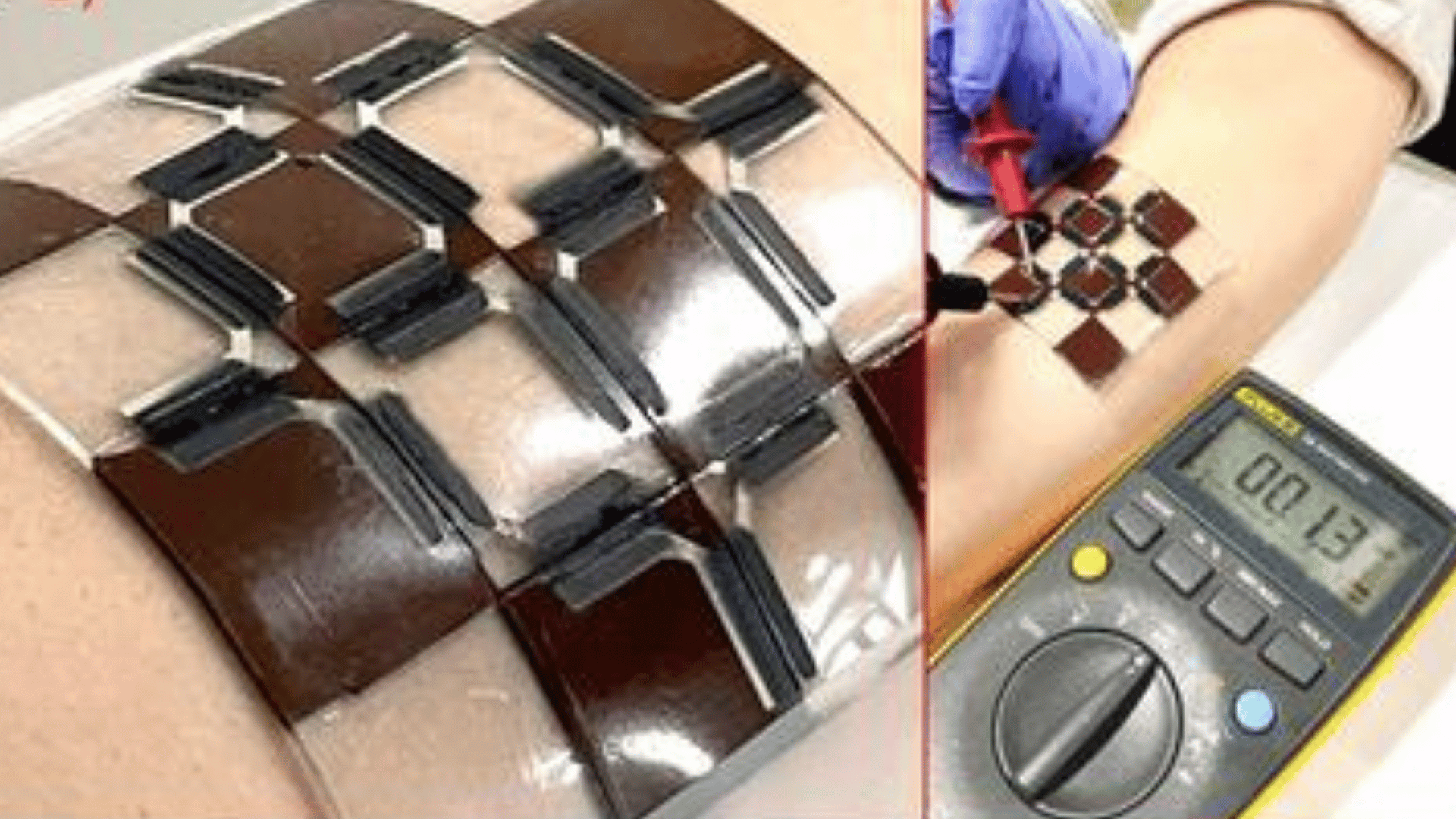
To fix this, the team changed how heat moves through it rather than making the device thicker. They built a special silicone base and tucked tiny copper nanoparticles into specific spots. This created a “dual thermal conductivity” surface, meaning some parts of the material move heat quickly, while others don’t.
Advertisement
When you put this film on your skin, the heat gets pulled sideways toward the copper-filled areas. This creates warm and cool zones on the flat surface itself. Because of this redirection, the device can stay thin and comfortable while still generating a steady stream of energy.
A Modular Device
Since this generator is made using an ink-based printing process, you can design it in different shapes or sizes, almost like building with modular blocks. This makes it a great fit for smart clothing or health sensors that need to sit flat against your body without being noticeable.
“This study addresses the limitations of conventional thin wearable thermoelectric generators through a new structural approach that controls heat flow,” Professor Jeonghun Kwak explained. “Its significance lies particularly in presenting a new thermoelectric platform capable of generating a temperature difference while maintaining a fully planar structure.”
The team is optimistic about where this goes next.
Kwak added, “This technology has strong potential to be used as a power source for a wide range of wearable sensors and electronic devices that can be attached to the skin or clothing.”
 Read Exclusive Stories
 Bookmark & Save Articles For Later