In the United States, we are surprisingly bad at recycling glass. Although glass can be recycled over and over again, around two-thirds of all the glass produced in the United States is sent to landfills. Much of the issue with recycling glass is that it is very heavy to move, and even a small amount of contamination from non-glass items can ruin a batch.
But a startup named Vitriform3D, along with scientists at Oak Ridge National Laboratory (ORNL), has invented a way of creating high-end construction materials from recycled glass.
Printing with glass sand
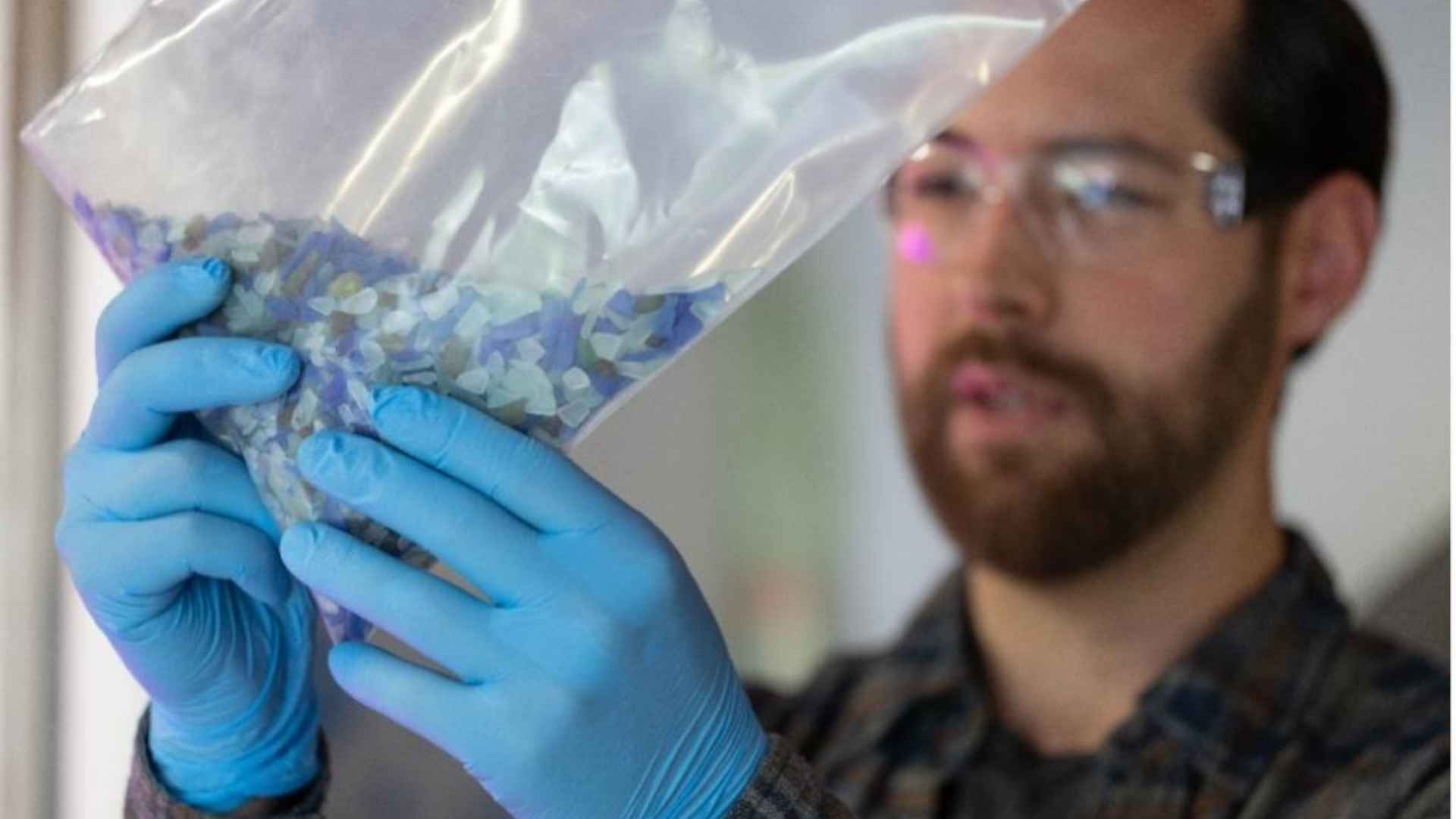
To create these materials, the startup takes used glass bottles and grinds them into sand. Then, they use a technology called binder jetting. In this process, a robotic arm lays down layers of glass sand, and nozzles apply a type of adhesive or glue to those layers of sand.
The startup can even add colored ink to the glue to produce a range of printed materials. These layers of sand and glue build up to create an object. Then, the object is baked in an oven to set the glue. The result is an object made of 95% recycled glass.
From coasters to skyscrapers
Advertisement
The technology has already been used to create items like kitchen tiles and countertops. These items are made from nearly 100% recycled glass from bottles that would have otherwise been buried in the ground.
However, Vitriform3D is looking ahead to another type of construction material: exterior building cladding. Cladding protects buildings from the weather. Glass is naturally fire-resistant and can withstand the extreme hot and cold temperatures to which exterior buildings are exposed.
Micro-factories in the city
Another aspect of this startup’s vision is the concept of “micro-factories.” Since glass is so heavy to transport, these 3D printers will be placed in cities across the United States.
This would allow local glass manufacturing shops to use 3D printers to create building materials from locally sourced recycled glass. This would eliminate the need to transport the bottles to a massive factory, and prove that not all recycled materials need to be melted down to give them a second life.
 Read Exclusive Stories
 Bookmark & Save Articles For Later