Breathing New Life into Iron
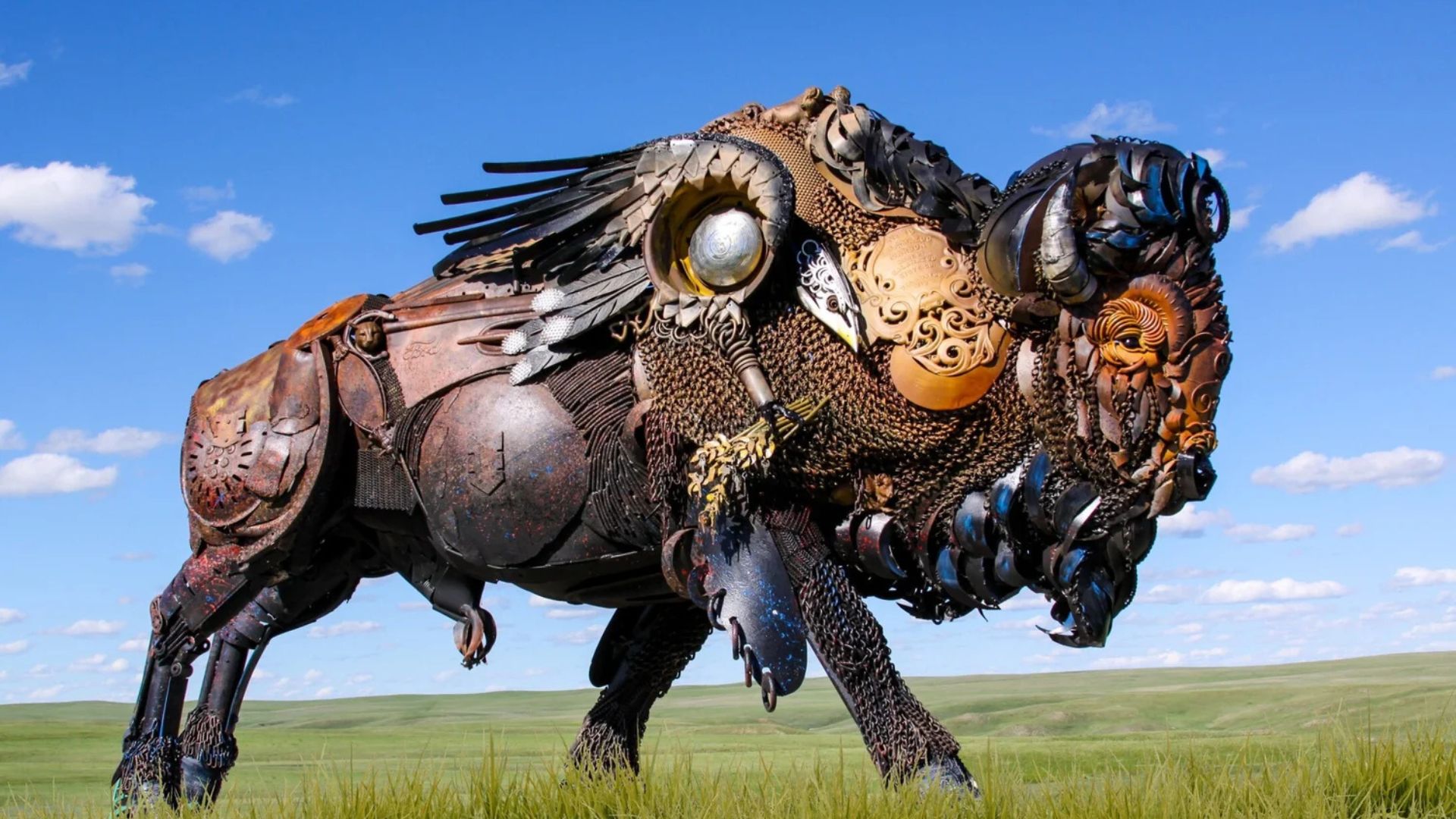
In the wide-open spaces of South Dakota, an artist named John Lopez is using the ancient art of blacksmithing and welding to create something entirely new. This art isn’t just about making tools; it’s about using fire and a heavy hammer to turn cold industrial scrap metal into life-sized “hybrid” sculptures that seem to breathe.
Blacksmithing is often seen as a relic of the past. But John is using those same old-world techniques to create complex, modern art. For the reader, it means that even in a world of plastic and digital screens, we can still create things that are solid, beautiful, and built to last for centuries. For the world, it shows that the “Creation Economy,” the world of making things by hand, is still a powerful way to express our imagination and solve design problems.
From Essential Trade to Lost Art
For most of human history, the blacksmith was the heart of every town. If you needed a plow for your field or a hinge for your door, you went to the forge. It was an essential part of how the world functioned.
But as factories and mass production took over, the need for hand-forged iron nearly vanished. The hum of machines replaced the sound of the hammer on the anvil. Many feared that the deep knowledge of “material science,” understanding exactly how metal behaves under heat, would be lost forever. John Lopez’s work was needed to bridge this gap, turning the pioneers’ survival skills into a form of high-level creative expression.
The Dance of Fire and Force
John’s breakthrough is his unique “hybrid” style. He uses a forge to heat steel until it glows like the sun, allowing him to shape it on an anvil. But he doesn’t stop there. He hunts through “boneyards” of old farm equipment, finding discarded tractor parts, chains, and shovels.
Advertisement
He then uses modern welding and traditional forging to blend these scraps into the anatomy of an animal. It’s a perfect example of Biomimicry, where human creation is inspired by the patterns found in the natural world. Instead of just “making a horse,” he uses the curve of an old plow blade to mimic the muscle of a horse’s shoulder. As John often notes, he is “fusing the past with the present” to tell a story about the American West.
Forging a Sustainable Path
The future of blacksmithing and metal art is surprisingly green. John is a leader in “upcycling,” proving that we don’t always need to mine new ore to create greatness. This fits into the Circular Economy, where we stop throwing things away and start seeing “trash” as the raw material for the next great invention.
As we look ahead, these hands-on skills will continue to inform how we design everything from furniture to architecture. It reminds us that the most “innovative” solution is often one that respects the earth’s materials and the land’s history.
The future is being shaped one hammer blow at a time, proving that the oldest ways of making can still lead us toward the newest horizons.
Watch John Lopez’s artistic process as he transforms discarded iron and ranch equipment into monumental western-inspired sculptures.
 Read Exclusive Stories
 Bookmark & Save Articles For Later