According to a new study, the Curiosity rover found organic molecules that are too common to be explained by any known process other than life. Though an unknown process may still be responsible, this marks the second sample in which ancient life is the most obvious answer.
Second-Best Sign of Life on Mars
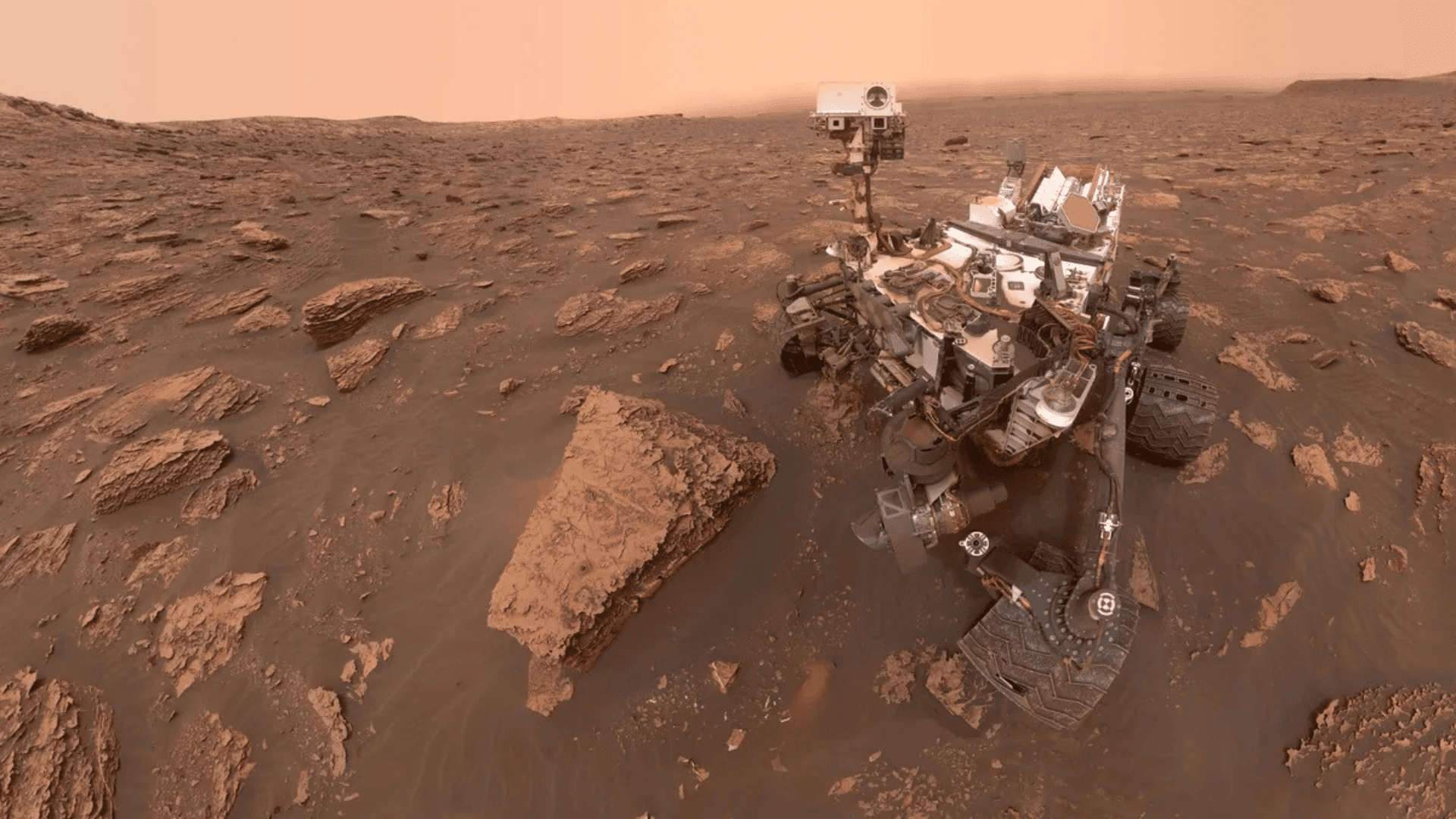
A paper originally announced the discovery of large organic molecules found on Mars in March 2025. Known as long-chain alkanes, these molecules are considered the products of life, but they’re also produced by specific chemical reactions that don’t require biology.
Originally, researchers were excited to discover that the molecules were 3.7 billion years old, which would date them back to a time when Mars may have had water and life. Six months later, Perseverance found a rock whose contents chemists couldn’t explain other than as the remains of ancient living organisms.
Advertisement
Though the Cheyava sample quickly became the “clearest sign of life that we’ve ever found on Mars,” the previous sample may also be equally significant, as, though there are non-biological ways to make such molecules, they probably wouldn’t account for the quantity.
Dr. Alexander Pavlov of NASA’s Goddard Space Flight Center and co-authors started by estimating how many long-chain alkanes the sample once had. Cosmic radiation that it would have encountered at the surface slowly destroys these types of alkanes, so the team considered the loss rate to calculate the abundance when that exposure began.
With long-chain alkanes currently representing 30-50 parts per billion in the sample, researchers conclude they must have been more than 2,000 times as common before the radiation exposure. For context, they estimate the abundance when Earth was in the late Cretaceous would have been around 120-7,700 parts per million (ppm).
“Such a high concentration of large organic molecules in Martian sedimentary rocks cannot be readily explained by the accretion of organics from carbon-rich interplanetary dust particles and meteorites, nor by the deposition of hypothetical haze-derived organics from an ancient Martian atmosphere,” the authors write.
The study is published in Astrobiology.
 Read Exclusive Stories
 Bookmark & Save Articles For Later