
It sounds strange, but we actually know more about the surface of Mars or Venus than we do about the ground beneath Antarctica. That is finally changing.
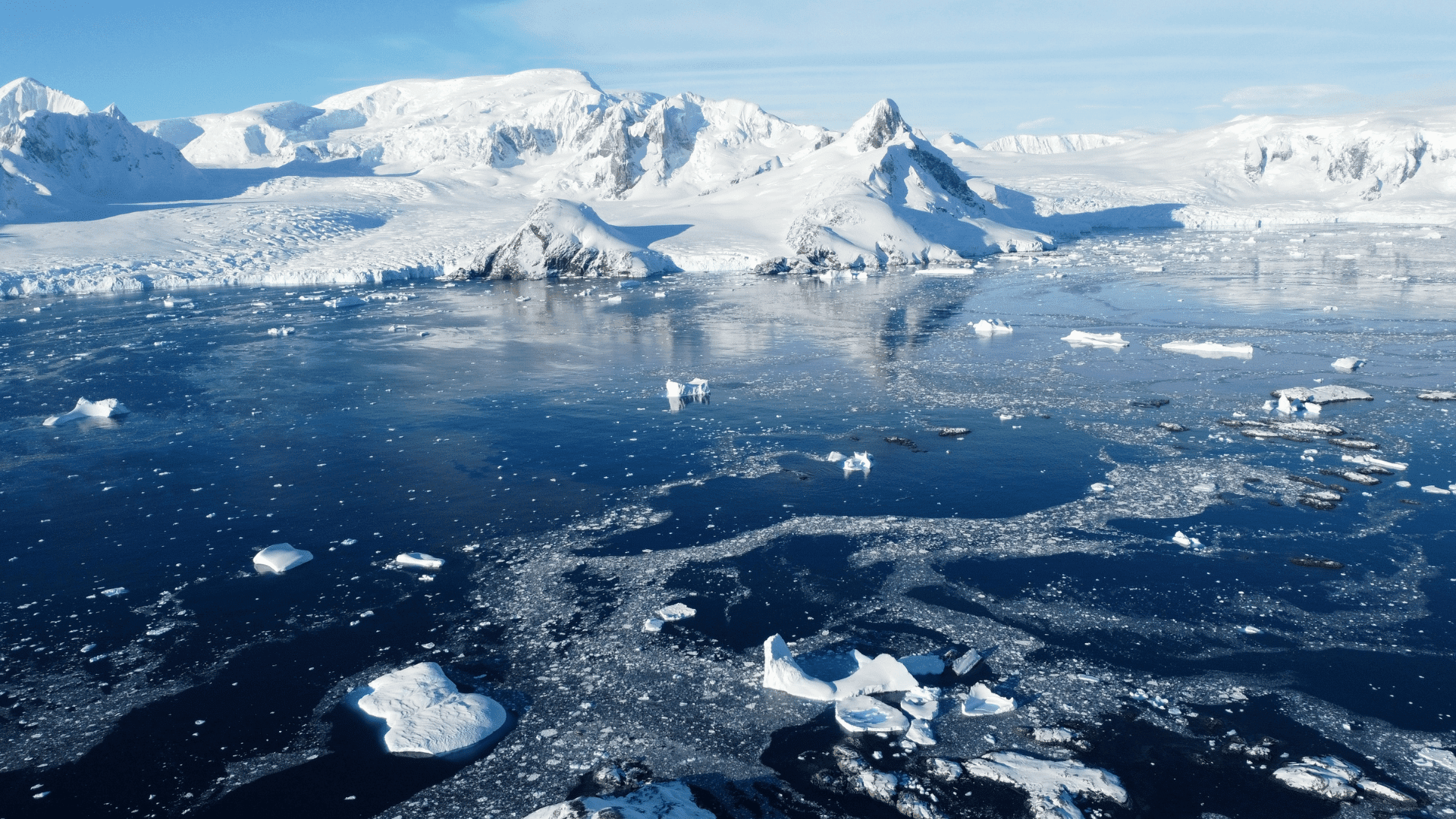
An international team led by researchers from the University of Edinburgh has created the most detailed map to date of the hidden continent buried under miles of ice. The study reveals massive mountain ranges, deep canyons, and wide valleys. Specifically, they identified about 30,000 smaller hills and valleys that were previously unknown.
“Because making scientific observations through ice is difficult, we know less about the landscape hidden beneath Antarctica than we do about the surface of Mars or Venus,” Dr. Helen Ockenden, a researcher at L’Institut des Géosciences de l’Environnement, who led the work, said. “So it’s really exciting that this new method allows us to use satellite measurements of the ice surface to fill all of the gaps in our maps, revealing new details about mountain ranges, canyons and geological boundaries.”
Seeing Through the Ice
To get this view without drilling thousands of holes, the team used a technique called Ice Flow Perturbation Analysis (IFPA).
First, they looked at the surface of the ice using satellite data. When ice flows over a hill or into a valley deep below, it changes the shape of the surface slightly. By reading those surface bumps and ripples, the researchers could map the terrain underneath.
“This method to project ice surface information from satellites down to the base of the ice provides a completely new way to see through ice sheets,” Professor Andrew Curtis from the University of Edinburgh said. “Over several years we have proven that it works well in detailed tests and this application across all of Antarctica demonstrates its power.”
Rough Patches Matter
Additionally, it turns out that the texture of the ground matters a lot for the future.
Rough terrain acts like a brake. Jagged hills and sharp ridges create friction that slows down the ice as it slides toward the ocean. By knowing exactly where the rough spots are versus the smooth plains, scientists can better predict how the ice sheet will react to a warming climate.
“Understanding the landscape beneath Antarctica is really important for ice-sheet models,” said co-author Professor Mathieu Morlighem from Dartmouth College. “In particular, rougher areas with more hills can really slow down the retreat of the ice sheet, and so this new map will help our models to produce better projections of where and how much sea levels will rise in the future.”
The research was funded by the UK’s Natural Environment Research Council (NERC) and the Evans Family Foundation.