Why Toy Creation Is More Complex Than It Looks
Toy creation looks simple from the outside: make something fun, ship it, watch kids smile. Inside the walls of a global children’s entertainment company, the process is slower, deeper, and far more strategic. With 18-month development cycles and global safety demands, teams must predict what will delight kids two years from now, not just today.
Designing for an 18-Month Future of Play
That’s where Spin Master’s approach stands out. They blend consumer research, creative ideation, and manufacturing reality into a disciplined funnel. Early playtests with “small humans” surface what’s intuitive, what’s confusing, and what keeps attention beyond five minutes. Ideas are many, but only those that pair clear play patterns with manufacturable tech move forward.
Finding White Space in the Toy Market
Forecasting play requires more than trend decks. Spin Master hunts for white space—categories with unmet needs or room for a fresh mechanic—then translates adult innovations into kid-safe magic. The trick is timing: engineers must know when a technology becomes reliable and affordable at scale without losing wonder.
Turning Adult Technology Into Kid-Safe Magic
The team pairs brand marketing scouts, designers, and developers to evaluate potential across price, safety, and repeat play. They test early and often, letting real reactions guide refinement.
Why Failure Is a Feature of the Innovation Funnel
In this model, failure isn’t waste; it’s a filter that sharpens the hits and protects the launch window from costly misfires.
From Novelty to Franchise: Spin Master’s Brand Evolution
The company’s history proves the model. What began with novelty items grew into phenoms like Bakugan, Hatchimals, and the preschool juggernaut Paw Patrol. Each success fused a distinct play pattern with a story kids could carry home.
How Bakugan and Paw Patrol Built Closed-Loop Play
Advertisement
Bakugan combined a transforming mechanism with a collecting-and-battle loop reinforced by television. Paw Patrol took the same transformation magic into a preschool world of jobs, teamwork, and vehicles, translating screen moments into hands-on missions. The result is not just merchandise, but a closed loop between narrative, characters, and tactile play that deepens engagement and extends the brand’s life cycle.
Hatchimals and the Power of Wonder Through Technology
Hatchimals illustrates the pursuit of wonder through technology. The original hatch was a category-shifting moment, making the unboxing itself a performance. The latest Hatchimals Alive Mystery Hatch pushes that further with smoke effects, responsive interactions, and post-hatch modes that turn the event into ongoing play.
It’s not technology for its own sake; it’s technology as narrative fuel. The moment of emergence feels magical, and then the toy offers music, lights, and modes that keep kids experimenting. Parents notice, too, because delight is contagious when a whole room goes quiet waiting for a surprise to arrive.
Bitzee: When Technology Leads and Story Follows
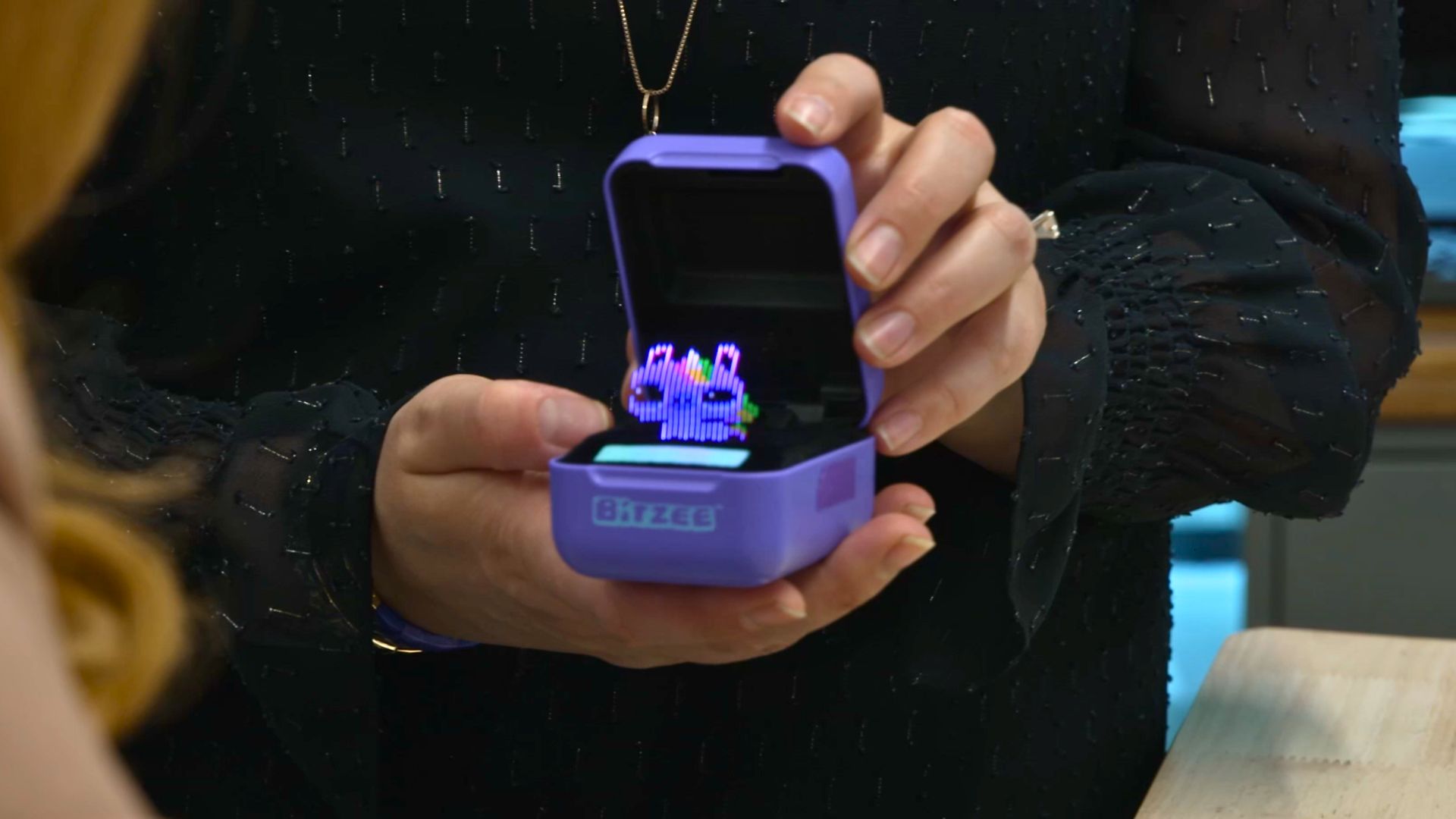
Bitzee shows the opposite path: a technology-first spark refined into a toy with story baked into the system. An engineer spotted a novel display and haptics approach; the design team turned it into a pet you can nurture with touch and gestures. That core loop—care, growth, and play—enables 25 characters, expansion sets, and themed editions like Bitzee Disney.
Crucially, the experience remains tactile and affordable. The company evolves the line by adding interactions that feel new without sacrificing the clarity of the original loop. That balance keeps the product fresh and preserves what made it lovable.
How Spin Master Uses AI Without Replacing Creativity
What about AI? The team treats it as a tool, not a muse. There’s value in speeding research, visualization, and iteration, but protecting IP, children’s privacy, and the company’s creative engine comes first.
Designers and engineers still lead concept creation; AI assists where it can compress time or broaden options without compromising safety or originality. In practice, that means using vetted tools to move faster from sketch to model, refine instructions, or explore variants, while leaving core invention to human judgment.
Why Wonder Remains the Core of Great Play
Ask what the next big toy innovation will be, and you’ll hear one word: wonder. Not card tricks or gimmicks, but moments that feel impossible and invite kids to ask what happens next.
Today, that might be a hatch sequence with effects or a transform that clicks just right. Tomorrow, it could be a new kind of sensory feedback, a clever material, or a hybrid of digital cues with physical motion. The constant is respect for play: build systems that reward curiosity, enable storytelling, and endure beyond the first unboxing. Try many things, learn fast, and ship the ideas that turn technology into joy.
This blog post was generated using Buzzsprout’s CoHost AI tool and is based directly on content from the associated podcast interview. This article has been reviewed and edited by Tomorrow’s World Today staff.
 Read Exclusive Stories
 Bookmark & Save Articles For Later